Jump directly to content

Robust fire protection of wooden structures

fire safety

When building with combustible materials such as wood, extra care must be taken in both design and construction to achieve robust fire protection, details must be properly executed and fire protection systems must work over time. Robust fire protection is an important component for increasing the use of wood in a sustainable society. Fire classification of construction products is important for fire safety but is not sufficient to achieve robust fire protection.

Four key classifications

There are four basic fire safety classifications for structures and one classification specifically developed for timber structures. The first deals with ignition and fire spread on the surface of the structure, sometimes referred to as 'reaction to fire'. This classification can be used to select appropriate finishes in escape routes, for example, to minimise the risk of rapid fire spread that could impede evacuation. The extent to which a finish or building product contributes to the development of a fire when installed on both the walls and ceiling of a standardised room is the starting point for the classification. Exposed wood in escape routes must be treated to ensure a sufficiently low risk of ignition and fire spread.

The second classification concerns the fire resistance of the structure. It classifies the ability of a structure or building component to maintain its function when subjected to a standardised fire exposure. The standardised fire exposure is called the standard fire curve which can be seen as a kind of simplified representation of a fully developed fire in a room. The standard fire curve is simulated using fire test furnaces. After testing, the structure receives a classification where the most common classes are R the load-bearing capacity, E the integrity and I the insulating capacity. The different classes are always followed by a time indication, for example, when a wall that does not carry any load has the class EI90, it means that it encloses and isolates the standard fire for 90 minutes.

The third classification, the so-called K-class originally developed for timber structures, relates to fire resistance. The classification indicates how long a protective layer protects the structure from ignition at the standardised fire exposure.

The fourth classification refers to the resistance of the façade structure, including any air gaps, to vertical fire spread. This property is tested in a facade rig where a 6 metre high and 4 metre wide facade is exposed to flames emanating from a window during a fully developed fire in a room. The classifications of finishes, structures and fire resistance can be determined using standardised fire tests. The fire resistance class can also be determined by theoretical calculations according to the instructions in the common European construction rules, the Eurocodes. We therefore have a common European system for both classifications and theoretical calculations, but each country decides which requirement level should apply nationally. Only the fire classification of facade structures is done according to national standards.

Achieving robust fire protection - more than just classifications

A common approach to meeting fire resistance requirements is to use different types of protective layers such as plasterboard to form a protective membrane that delays the spread of fire, protects the supporting structure and prevents fire from entering hidden spaces in the structure. All installations, penetrations through the membrane and all connection details between elements must be fire rated, designed and installed correctly as they could otherwise jeopardise the performance of the protective layer. A German study (from 2006 for different types of houses) showed that 50 % of the installations inspected in the study compromised the fire protection membrane. During the lifetime of a building, there is a risk of damage to the fire protection membrane, for example through holes from removed or new installations. If there are combustible materials behind the protective membrane, the risk of a possible fire continuing and spreading in the timber structure increases.Post-extinguishing in structures where the fire has spread through the protective membrane to the timber frame requires more effort than in completely non-combustible frames.

Experience from previous high damage fire incidents shows that improvements to a few strategic details would have significantly reduced the spread of fire A robust and well thought-out fire protection strategy that stands the test of time is an important step in the sustainability and insurability of timber multi-storey buildings. A strategy to keep track of all important details should be the first step for the whole industry.

This is an article from our magazine Trävärden, view it here! (Link)

Robert McNamee

Affärsutvecklare
+46 10 516 50 53 Read more about Robert
Profile image

Contact Robert

CAPTCHA

* Mandatory 

By submitting the form, RISE will process your personal data.

Alar Just

Forskare
Read more about Alar

Contact Alar

CAPTCHA

* Mandatory 

By submitting the form, RISE will process your personal data.
Fire safety Sekundär områdes navigation:
Built environment
Wood technology

Increasingly tall timber buildings

high houses in wood

Interest in building with timber is growing and players in the construction industry are choosing to distinguish themselves by taking on the challenge of building really high with timber, up to and above 20 floors. The challenge drives development and advances timber construction. In a series of projects, RISE together with academia, building system suppliers, consultants and clients have studied the challenges, developed and described technical solutions for a number of them.

Taller buildings with timber frames are still uncommon, although examples as high as 20 storeys can be found in Sweden, but buildings up to eight storeys are very widely built. Building high, regardless of the materials used, poses some new challenges compared to building lower buildings. Challenges drive the development of construction in timber, which benefits construction in general for the industry.

For high-rise timber buildings, the challenges are mainly related to stabilisation, fire safety and production aspects. The "High-rise timber buildings" project has established that it is entirely possible to design and build 22-storey buildings with a timber frame that meet the requirements for stability, vibration and fire safety. Two critical aspects were fire safety and the risk of movement caused by wind loads at the top of the building. RISE and the consulting companies BRIAB and Brandskyddslaget have developed guidelines for fire safety challenges that have been developed to support similar design processes. Wind-induced movements proved to be a challenge already at 10-12 storeys, but became manageable even for 22-storey buildings with the help of related projects. The magnitude of wind-induced movements depends on the weight, stiffness and damping of the building, but due to the few other examples of tall timber buildings, there is great uncertainty as to how large the damping can be. To increase the understanding, it was studied in a European co-operation project, with RISE as coordinator, by evaluating the damping in eight large timber buildings in Europe.

In Sweden, Linnaeus University and RISE carried out measurements in a building in Mariestad to evaluate the properties of the building with respect to wind load. Results from the project will be summarised in recommendations for how calculation models for wind load of tall buildings should be designed to best describe the actual load. Funding Formas, Vinnova, Energimydnigheten and ForestValue.

Further reading
Tall timber buildings - concept study (Link)

This is an article from our magazine Trävärden, view it here! (Link)

Marie Johansson

Forskare
+46 10 516 62 51 Read more about Marie
Profile image

Contact Marie

CAPTCHA

* Mandatory 

By submitting the form, RISE will process your personal data.
Wood technology Sekundär områdes navigation:
Fire safety
Production and manufacturing

Carbon dioxide fire fighting experimental evaluation

COFFEE

Electrification of transport sector has a strong momentum with rapidly growing quantity of Electric Vehicles (EV) being transported in marine vehicle carriers between the continents and near the coasts. This project aims to ensure a safe transportation of Lithium-Ion Battery (LIB) driven vehicles in cargo spaces of marine vehicle carriers.

Coordinator
Completed
Maritime
2,5 years
4 200 000 SEK
Division: Division Safety and Transport
Final webinar where the project results are presented (in English)

Specifically, this project will study if traditional low-pressure carbon dioxide fire suppression systems are adequate for supressing battery fires in cargo spaces of vehicle carriers. To achieve this goal, this project will involve approaches including (i) literature study, (ii) battery cell-level experiments (iii) small- and large-scale carbon dioxide fire suppression experiments, (iv) multi-physics simulations and (v) reference group meetings and open webinar and co-author of peer-reviewed articles.

In the short term, this project will lead to increased knowledge of lithium-ion battery fires and mitigation strategies at sea. This project will deliver fact-based evaluation about effectiveness of carbon dioxide fire suppression systems for ship owners, crew, battery and vehicle producers, fire protection system suppliers, marine insurance companies, and so on.

In the long term, this project will lead to increased safety of marine vehicle carriers transporting lithium-ion battery driven vehicles and assist in achieving climate goals globally.
The project will be led and carried out by RISE with in-kind support from the industrial partners in forms of donation of battery cells, modules and packs and vehicles for tests and work hours for participation in project meetings and review of report and articles. Moreover, bilateral dialogue with stakeholders will be conducted in this project in forms of regular reference group meetings, open workshops, and co-authoring peer-reviewed articles.

The project result will give input to International maritime Organization (IMO) for harmonization of gas-extinguishing systems in cargo spaces on vehicle carriers.

Publications within the project: 

Anna Karlsson

Brandingenjör
+46 10 516 69 73 Read more about Anna
Profile image

Contact Anna

CAPTCHA

* Mandatory 

By submitting the form, RISE will process your personal data.
Funders without URL:
Swedish Transport Administration
Stiftelsen Sveriges Sjömanshus
Project end date: Fire safety Sekundär områdes navigation:
Energy storage
Mobility
Maritime
Risk and security

Assessment of fire-damaged concrete

Fire damage assessment of concrete
Fire-damaged garage joist structure

After fires, qualified fire assessment are needed to determine the condition of structures and the need for renovation. RISE has competent assessors who can examine concrete structures that have been damaged in fires. RISE has inspected several different fire-damaged structures including garages, residential buildings and industrial facilities.

In general, concrete structures have good resistance to fire. This applies to normal fire temperatures, which are often around 800°C and during exposure times of up to one or two hours. Even in the case of much longer and more severe fires, the concrete frames usually remain in place. However, they may have been damaged in various ways, reducing their load-bearing capacity after the fire.

RISE usually performs visual inspection, damage mapping and removal of drill cores when assessing fire-damaged concrete. Drill cores are then often used for further analysis in RISE's laboratory. This methodology allows for a more detailed assessment of the extent and nature of the damage and helps to understand the performance of the concrete after the fire.

RISE fire assessments are usually compiled in verified survey reports with condition assessment and renovation proposals.

Per Martinell

Utredare
+46 10 516 68 29 Read more about Per
Profile image

Contact Per

CAPTCHA

* Mandatory 

By submitting the form, RISE will process your personal data.
Division (OLD): Do not use - Division Built Environment Division: Do not use - Division Built Environment Fire safety

EGOLF - CEN/TS 1187

EGOLF CEN/TS 1187

There are many factors which may affect the results of a reaction-to-fire test. Due to the labour intensive nature of fire testing, many factors are operator dependent. The training, experience and attitude of the operator are therefore crucial to eliminate such variables that may significantly affect the degree of uncertainty of measurements.

In order to reach common interpretations and minimize the operator generated uncertainties, EGOLF (European Group of Organisations for Fire testing, inspection and certification), is arranging a harmonized course in CEN/TS 1187 test method 2. This test method is included in the fire classification of construction products and building elements according to Part 5 Classification using data from external fire exposure to roofs test, EN 13501-5.

The course is open for both EGOLF and non-EGOLF members.

The course is held in English.

The course includes a theoretic part regarding CEN/TS 1187, test method 2 and hands on work in the laboratory.

Course, In-person,
5
English
EGOLF - CEN/TS 1187, test method 2, 30 September 2026
Brinellgatan 4 Borås Sverige
30 Sep 2026
09:00-15:00
0 € (excluding VAT)
2 out of 6
Course
In-person
5
English
Division: Division Safety and Transport

Kaisa Pekkadotter Kaukoranta

Administratör
+46 10 516 50 80 Read more about Kaisa
Profile image

Contact Kaisa

CAPTCHA

* Mandatory 

By submitting the form, RISE will process your personal data.

Susanne Blomqvist

Projektledare
+46 10 516 50 84 Read more about Susanne
Profile image

Contact Susanne

CAPTCHA

* Mandatory 

By submitting the form, RISE will process your personal data.
kaisa.pekkadotter.kaukoranta@ri.se
/en/node/9711
webid: 48687 categoryid:
293582
307585
352356
352356
352356
427304
Fire safety

Fire testing of batteries - battery testing

Name of service (page headline, shown in promos – maximum of 70 characters incl. spaces): Fire testing of batteries - battery testing Lead (include SEO-words and the main benefits for your target groups. Stick to one paragraph, maximum 2-3 sentences):

The purpose of fire testing of batteries is to investigate the safety and performance of a battery under various conditions. This is a kind of safety-critical testing that often leads to severe fire and, in some cases, explosion.

Purpose/Benefit:

Before a battery is approved for use and put into service, it needs to be tested for fire testing and thermal propagation. This type of battery testing is an important part of battery development and is included in several battery standards.

What is fire testing of batteries?

Fire testing of a battery involves exposing the battery to open flames from an external fire for a period of time. This simulates a situation where the battery catches fire, which can occur during use. Such a situation could be, for example, in a vehicle crash or when there is a fire in a stationary energy store. An important part of fire tests is to see how the cells in a battery are protected by the enclosing casing.

Method (what/which methods are used to perform the service):

We perform fire tests on batteries in our safety critical testing lab. The lab has a large capacity and can house testing objects up to the size of a full-scale vehicle. The lab has extra thick walls, thick reinforcement and steel doors, allowing us to safely handle testing up to 8 MW. As the test environment is indoors, the environment is controlled and constant, which allows for repeatable tests and reliable results.

We offer sustainable fire testing

Fire testing causes toxic gases such as carbon monoxide, nitrogen dioxide, hydrochloric acid, hydrofluoric acid, hydrogen cyanide, benzene and toluene. In addition to safely handling these toxic and flammable gases, we make sure to minimize the environmental impact of our testing. Flue and gas are taken care of in our unique flue gas cleaning facility. We collect the extinguishing water from the test, and separate hazardous particles and send them to a landfill. All to test in the most possible sustainable way. 

Delivery (what does the client get after performed service – e.g. a report, certificate etc.):

You will receive a digitally signed technical report with test results. The report can be delivered in either Swedish or English.

On our area page for batteries you can read more about our work within batteries.

Here you can read more about safety-critical battery testing at RISE.

Area: Batteries Contact person (Enter one name per field. Activated personal contact pages will appear automatically):
Magnus Ling
Patrik Johansson, Affärsutvecklare
Batteries at RISE - fire and thermal propagation testing
Field measurements: No Price type: 1 Division: Division Safety and Transport Preparation: No preparation required Link to order form: Contact us Standards:

UN ECE R100
GTR 20
GB38031-2020
KMVSS-Art 18-3
SAE J2464
UL2580

Certification and marking: Other Certifications Type of service: Testing / Analysis / Evaluation Instrument: Voltage references General area:
Electricity
Combustion
Temperature
Order information: Want to learn more about battery fire testing? URL: Contact us Divison (OLD): Division Safety and Transport Delivery level:
Accredited
Non-accredited
magnus.ling@ri.se
/en/node/9710
9. Industry, innovation and infrastructure
11. Sustainable cities and communities
12. Responsible consumption and production
13. Climate action
Purpose - Header: What is fire testing of batteries? Metod - Header: We perform fire testing on large objects Delivery - Header: Test results
Request for quote
form
Batteries Sekundär områdes navigation:
Electromobility
Metrology
Fire safety
Risk and security
Tjänstetyp tagg: Provning

NoMR! - Improved Wildfire Preparedness through Cross-Sectoral Dialogue

NoMR!-Improved Wildfire Preparedness
Fire in undergrowth

The project aims to form a holistic description of vulnerability that is quantifiable and transferable from spatial and temporal variables. Using this as a basis, the distribution of responsibility and roles of actors can be described and processed in the cross-sectoral dialogue.

Participant
Active
Fire safety Climate adaptation
Not applicable
4 years
11 933 000 SEK
Division: Division Safety and Transport

The research project

The Formas project "Not My Responsibility! (NoMR!) - Improved Wildfire Preparedness through Cross-Sectoral Dialogue" aims to form a holistic description of vulnerability that is quantifiable and transferable from spatial and temporal variables. Using this as a basis, the distribution of responsibility and roles of actors can be described and processed in the cross-sectoral dialogue.

The climate and vegetation fires

Future climate is expected to prolong wildfire seasons in Sweden and increase the occurrence of severe dry spells. This will increase society’s vulnerability against wildfires which in turn requires climate change adaptation strategies among the public, home-owners, municipalities as well as land owners. What these climate adaptation strategies are, how they will be implemented and or who’s responsibility it is to maintain them is not clear.

Risk and vulnerability

In this project, we seek to add all subcomponents that together affects the risk and vulnerability against wildfires. We also seek to gather different actors from different sectors having different interests to form a cross-sectoral dialogue enabling a common understanding och knowledge base to assess vulnerability and determine responsibility between the different actors. The project aims to form a holistic description of vulnerability that is quantifiable and transferable from spatial and temporal variables.

Information and dialogue

The project will also start a programme for fire safe communities where educational material for climate adaptation on a local (homes and settlements), regional (land managers) and national perspectives will be provided. The project will also, in addition to preparedness, contribute with knowledge for guidance of suppression activities in the wildlandurban interface.

Per Blomqvist

Enhetschef
+46 10 516 56 70 Read more about Per
Profile image

Contact Per

CAPTCHA

* Mandatory 

By submitting the form, RISE will process your personal data.
11. Sustainable cities and communities
13. Climate action
Project end date: Climate adaptation Sekundär områdes navigation:
Fire safety
Risk and security
Service innovation

Battery Safety Testing

RISE co-workers monitoring abuse testing in battery safety lab Photo: David Lagerlöf

Testing of batteries, approval, and certification according to standards are becoming increasingly important with society´s electrification. At RISE and SEEL we offer sustainable battery testing in our safe and modern test environments.


Battery testing to ensure safe batteries

Battery testing is necessary to ensure that the batteries used in our society are safe. Battery testing is carried out to ensure an acceptable level of safety for the end user but also in the handling and production of batteries. 

Unbiased and reliable battery testing

RISE is an independent institute, which guarantees unbiased and objective tests. Furthermore, our indoor environment enables controlled and repeatable tests, which means reliable test results. 

TISAX-certified laboratory

Our Battery Safety Lab is TISAX certified. TISAX is a global information security standard that ensures information security within the EU automotive industry. The ENX Association administers the certification and confirms our commitment to robust information security processes, as well as our ability to support customers with secure and innovative solutions.

Do you have questions about battery testing?

Contact me with questions and queries about battery testing!

Would you like to meet via Teams? Here you can book a meeting with me!

You can also e-mail magnus.ling@ri.se or call me at +46 73 076 06 14.
 

Fire- and thermal battery testing

+

Mechanical testing of batteries

+

Environmental testing of batteries

+

Electrical testing of batteries

+


Safe battery testing

The battery testing is performed in our safety-critical testing labs. The labs have a large capacity and can accommodate up to a full-size vehicle. For your and the personnels' safety, the labs have extra-thick walls, steel doors and strong reinforcments bars. The roof has safety hatches that open in the event of an explosion.

Sustainable battery testing

When you hire us for battery testing, you perform sustainable battery testing. This is possible due to our state-of-the-art cleaning facilities, where both flue gases and extinguishing water are captured and purified before leaving the plant. In other words - battery testing at RISE is sustainable and cares for the environment.

Flexible battery testing

Our modern laboratories are designed to allow you, as a customer, to be on-site during the battery testing. Adjacent to our test areas are comfortable and secure control rooms, conference rooms, and workspaces. Being on-site enables a dialogue with our knowledgeable technicians, project managers, and researchers. This means great opportunities for adjustment and learning throughout the test.

Profile image

Contact Magnus

CAPTCHA

* Mandatory 

By submitting the form, RISE will process your personal data.
Hide menu: Off Contact form:
CAPTCHA
By submitting the form, RISE will process your personal data.
Contact form title: Fill in this form to contact us Hantering av personuppgifter: /en/about-rise/operations/mission-governance/policy-documents/privacy-policy
bg_7
Division: Division Safety and Transport Område:
Batteries
Fire safety
Certification
Energy
Testing
Batteries Sekundär områdes navigation:
Electromobility
Metrology
Fire safety
Risk and security

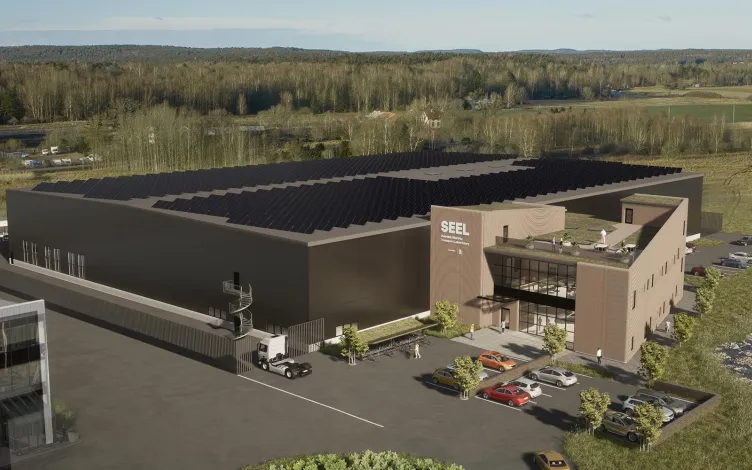
World-unique test facilities will accelerate electrification

SEEL

A unique opportunity to develop new electromobility products and services has opened up. In September 2023, three new test centers for electric vehicles and components were inaugurated within the initiative SEEL, Swedish Electric Transport Laboratory. The goal is clear: The testbed is to comprise one of the few open meeting places for collaboration and innovation in Europe. 

“It's been a crazy time to make a billion dollar investment like this. But we are extremely proud and happy to now be able to open the doors to three new test environments for electromobility. And the interest, well, that’s grown more than the construction index and timber prices,” says Henrik Svenningstorp. 

Full-scale vehicle testing 

Henrik Svenningstorp is CEO of SEEL,owned by RISE and Chalmers University of Technology and which in 2023 will begin testing vehicles and components for electromobility on a full scale in Gothenburg, Borås and Nykvarn. 

“We’re not trying to be the best at making batteries or electric motors, we’re simply trying to be the best at measuring them. In Säve, we have facilities covering some 15,000 square metres with essentially everything you need to test whatever needs to be tested within electromobility: batteries, shafts, vehicles, electrical components, noise and vibration, charging systems… The facility in Nykvarn is a little smaller, with a focus on heavy vehicles. This is where, for example, we have the most powerful equipment for testing electric motor shafts. The only thing we can’t do in Gothenburg or Nykvarn is safety-critical and destructive testing. That we do in Borås.” 

"The lab for safety-critical testing in Borås is a world-leading test environment with the greatest possible concern for the environment. All tests take place in a controllable and fully repeatable indoor environment, and thanks to a state-of-the-art treatment plant, both flue gases and extinguishing water are taken care of, which means the highest possible environmental friendliness when testing batteries", says Michael Rahm, department manager for Fire and Safety at RISE.

The fume treatment plant can handle 170,000 cubic metres of smoke an hour. This makes it possible to incinerate an entire passenger car in an orderly fashion, taking care of all the fumes and measuring their composition. Since the facility is run by RISE, certification will be possible from the outset. The long-term ambition is to accumulate extensive technical expertise that will enable the testbed to offer virtual testing as well. 

We want to be a neutral meeting place conducive to new collaborations

The goal: A neutral meeting place for small, innovative companies to meet major players 

“Our goal is clear: We want to be a neutral meeting place conducive to new collaborations, whether between large and small companies or industry, academia and institutes. Europe has relatively few open and accessible testing facilities of this size. And we’re well aware that large companies appreciate the innovation boost they can gain from collaborating with smaller, innovative companies. Similarly, smaller companies may need to test their ideas in the environments in which major players are found while protecting their future patents,” Svenningstorp explains. 

In collaboration with RISE, it will be possible to support small companies seeking funding for their first major investments. SEEL will be judged by its owners on how well it succeeds in encouraging collaboration. Four major industrial companies are involved in the project as guaranteed customers, and their testing needs are extensive. Parallel to this, there is room for other companies of different sizes, and should space prove to be limited as time goes by, there are ambitions to expand.  

Sharply increased interest in recent years 

“There’s a great deal going on right now. Since receiving our EU approval in 2019, interest has only increased. We’re also busy on several fronts. In Säve, parts of the laboratory are even prepared for hydrogen and fuel cells, a possible replacement power source for all large vehicles with internal combustion engines currently trafficking the roads that need to transition. We’ve entered into a partnership with the shipping industry and signed an MoU (memorandum of understanding) with several stakeholders.”  

Initial contact has been made with the aviation industry. Svenningstorp underlines that while there are major differences between truck and jet engines, the differences between electric motors for different types of transport are smaller. 

“In principle, if we can measure rotational speed, torque, current and voltage, then we can test a powertrain regardless of whether it’s for a vehicle, a ship or an aircraft.” 

“We’ll also be able to test infrastructure, such as charging stations. For some areas of the recycling industry, our labs may prove necessary when making new products from what is currently treated as waste. The same applies to the energy industry, which is developing vehicle-to-load and vehicle-to-grid – different systems for using electric vehicle batteries for energy storage.” 

Facilities designed for education and training 

On top of all this, there is a need to train the workforce for all the battery factories and other operations in the growing electromobility industry. The testbed facilities are designed to enable education and training. 

“We are now ready to open our three sites with grand openings in September. These are exciting times,” Svenningstorp ends. 

SIGNING UP FOR THE NEW TESTBED

Many stakeholders are currently expressing great interest in testing solutions for different aspects of electromobility. 

Founded on the combined expertise of RISE and Chalmers University of Technology and with four guaranteed major industrial customers, the testbed now has the capacity to help small, medium and large organisations with both small and large-scale electromobility innovation projects. 

The testbed can help customers with all types of electric vehicle testing activities. 

Henrik Svenningstorp

Chef inom strategisk forskning och affärsutveckling
+46 73 840 59 14 Read more about Henrik
Profile image

Contact Henrik

CAPTCHA

* Mandatory 

By submitting the form, RISE will process your personal data.
Profile image

Contact Magnus

CAPTCHA

* Mandatory 

By submitting the form, RISE will process your personal data.
Electromobility Sekundär områdes navigation:
Metrology
Fire safety
Energy storage
Production and manufacturing

Sustainability aspects of fire

Sustainability aspects of fire
etanol fire on field for practice

Accidental fire impacts society in obvious ways, such as destroying or contaminating parts of the built and natural environments, and in more subtle ways, such as displacing people and disrupting the economy. There is much to learn about how to optimise efforts to mitigate the negative impacts of fire in a balanced and responsible manner.

Our challenge

The consequences of unwanted fire range from atmospheric (smoke), aquatic and terrestrial contamination (fire water run-off) to loss of material, jobs and homes. When considering the need to replace burned objects in the built environment, fire can impose a very large economic burden on society, which is not always shared equitably by all parts of society.  

State of the art 

Agenda 2030 is driving interest in finding sustainable solutions to the problem of unwanted fire. Sustainability of buildings, i.e., finding the balance between “green” buildings while providing adequate fire protection, is currently an active international research area. There are tools available online to help provide answers to some aspects of sustainability, but with few exceptions they are not focused on fire. ISO/TC 92/SC 3 “Fire threat to people and environment” provides standards documents that indirectly address some of the sustainability issues of unwanted fire. 

Our approach 

Starting with in-house competence in lifecycle assessment (LCA), lifecycle costing (LCC), environmental risk assessment (ERA), which is focused on fire and we will expand our expertise through collaborations both internal and external to RISE.

At RISE Societal Safety, several research projects have been conducted that target some aspects of sustainability and fire. For example, RISE contributed either environmental or economic/ environmental assessments to:  

  • the FP7 DEROCA project, which developed a novel method of formulating flame retarded thermoplastics loaded with carbon nanotubes,  

  • the H2020 POLYGRAPH project, which developed new thermosetting plastics loaded with graphene-based materials, 

  • the EIT Raw Materials WAPOL project, which developed flame retarded plastics for the automotive industry using industrial waste, 

  • the Brandforsk/NFPA project ENVECO, in which a spreadsheet-based tool was created that estimates the environmental and economic impacts of warehouse fires, 

  • the Brandforsk/NFPA project FIRE IMPACT tool, which extended the ENVECO tool to include vehicle and enclosure fires,  

  • the MSB project M-KURS, which developed an environemntal course for the rescue service and made the FIRE IMPACT tool more accessible to Swedish users,  

  • the H2020 LASHFIRE project, an ongoing project that aims to improve the fire safety conditions on board ro-ro cargo, ro-pax, and vehicle carrier ships.   

Stakeholders

Stakeholders such as authorities, first responders, and fire protection engineers are increasingly finding themselves responsible for providing sustainable solutions to handle the consequences of fire. Many of these stakeholders do not currently have the expertise to make optimal decisions when fire safety measures are designed or an incident occurs or to develop training programs, although this limitation is changing as priorities shift due to Agenda 2030. 

Tove Mallin

Enhetschef
Read more about Tove

Contact Tove

CAPTCHA

* Mandatory 

By submitting the form, RISE will process your personal data.

Per Blomqvist

Enhetschef
+46 10 516 56 70 Read more about Per
Profile image

Contact Per

CAPTCHA

* Mandatory 

By submitting the form, RISE will process your personal data.
More information:

Our expertise:

  • Standards 
  • Modelling
  • Risk Assessment
  • Hazardous substances (e.g. PFAS, PAH, Dioxins, particualate matter (PM), etc)
  • Chemical Analysis (FTIR, GC-MS, LC-MS)
  • Fire chemistry and flame retardants
  • Transport & treatment (soil, water, air)
  • Life Cycle Assessment (LCA)
  • Measurement and characterization of particles

Published material:

FIRE IMPACT tool

Division (OLD): Division Safety and Transport Division: Division Safety and Transport Fire safety