Jump directly to content

Digitalization by Intelligence for PowerElectronic Within Value Chains

PowerizeD
Consortium Kick-off

PowerizeD is to take the sustainability and resilience of the European energy value chain, from generation to application, to a new level and strengthen Europe‘s technological sovereignty.

National coordinator
Completed
Digital infrastructure Digitalisation Electromobility Electronics Mobility Sensors and sensor systems
36 months
72 752 837 € - KDT JU grant agreement No 101096884
Division: Division Digital Systems and Societal Transformation

European Perspective

PowerizeD focuses on intelligence in power electronics and thus want to contribute to the decarbonization of European society and the protection of our climate. 62 research partners from 13 European countries are involved in the major European project with an overall volume of 72 million euros. PowerizeD addresses a new level of technology and relies increasingly on the digitalization of power applications. Infineon Technologies AG initiated the project, is an active participant with several corporate divisions and is also the overall project coordinator.

Application areas

The project partners are focusing on applications from the fields energy and mobility. 17 demonstrator paths are concerned among other things with improvement of drives for the rail industry, charging systems for the automotive industry, liquid batteries for the energy industry as well as drives for the manufacturing industries. The research partners will take an interdisciplinary approach with topics including modeling and Digital Twin, Federated Learning that is lead by RISE, as well as reliability and sustainability.

Objectives

The newly developed key technologies are to be realized and demonstrated in concrete form, and are to be evaluated in terms of a large number of universally applicable results. 
The immediate project objectives include:
• Reduction of power loss in power conversion by 25 percent
• Extension of the service lives of devices and systems by 30 percent
• Reduction of chip size by at least 10 percent
• Shortening development times by a challenging 50 percent

Cristina Rusu

Senior Expert
+46 70 915 18 26 Read more about Cristina
Profile image

Contact Cristina

CAPTCHA

* Mandatory 

By submitting the form, RISE will process your personal data.
7. Affordable and clean energy
9. Industry, innovation and infrastructure
11. Sustainable cities and communities
Press release
Projekt logo: PowerizeD Attach document:

Press release (pdf, 179.97 KB)

Project end date: Power production Sekundär områdes navigation:
Electromobility
Data Science
Semiconductors and power electronics
Production and manufacturing

Inspections reduce the risks of offering electric vehicle charging

Charging station

Housing cooperatives, hotels and restaurant chains – these are just a few of the new charging station providers. RISE can help these many inexperienced organisations with regular function and safety inspections.

What’s the worst thing that could happen? Magnus Nilsson, a unit head at RISE, hesitates a little, but then answers: 

“The worst-case scenario is someone hacking a number of electric vehicles being charged in an indoor car park. They overcharge the batteries and set fire to the entire car park. And if you have a residential building above, well, things can develop pretty quickly.” 

“When an electric vehicle ignites, it produces an extremely fierce and toxic fire that’s difficult to extinguish.”  

In October 2024, Sweden had more than 45,000 registered charging points. This is still less than the EU recommendation of one public charging point for every ten vehicles*, so we can expect to see a continued expansion over the next few years.  

This means that countless organisations and associations, with no previous experience of providing this type of service, will become charging providers. The board of a housing cooperative, hoteliers, restaurant branch managers and others are to suddenly understand and plan for the risks associated with providing electric vehicle charging. 

“This knowledge is often lacking,” says Nilsson.  

There are multiple risk factors that both providers and users need to be protected from: incorrect settings that can cause personal injury or property damage, cyber attacks, unauthorised charging, complicated handling and more. 

Package offering with inspections and certification 

Accordingly, RISE is now launching a package offering with regular charging station inspections as well as the certification and testing of charging components and infrastructure.  

Ted Strandberg is a project manager at RISE with a focus on cyber security. He says that the current NIS directive** and new EU regulations will mean mandatory safety requirements for everything from product development and operation to incident management. 

There is good reason to prepare for the stricter rules that are on their way in, he says. 

The cyber threats that charging providers need to be prepared for mainly concern payments (incorrect fees, free charging), the overcharging of batteries resulting in fire, and disruptions to the power grid. 

“Someone could hack the charging station via the vehicle, or vice versa, hack the vehicle via the charging station,” says Strandberg. 

“If someone manages to hack their way in and disrupt the charging stations by switching the charging function on and off for several vehicles at the same time, it could have a major impact on the power grid and risk damaging equipment.” 

At the moment, countless charging posts are being installed before all the regulations are in place

The goal: Harmonised regulations across the EU 

One goal is to achieve harmonised regulations, at either EU or national level, Nilsson explains. 

“At the moment, countless charging posts are being installed before all the regulations are in place. My personal opinion is that the two should go hand in hand.” 

He explains that there is concern in the industry that stations are being installed by insufficiently qualified individuals. 

“This is why we started a project group for charging stations. To help the market see what rules are coming and to ensure that consumers get the energy they pay for.” 

Verification services an existing offering 

RISE has long offered trade and industry verification services for, among other things, scales and fuel meters. 

“In the case of standard petrol and diesel pumps, for example, we check whether the right software version is installed. The right electronics? Are all installations in order? Is it truly type-approved?” 

The equivalent service will now be offered for charging stations. 

“We’ve developed mobile equipment that we’re currently field testing. We’re collecting measurement data from different types of charging stations to form a picture of the market situation. Will we find meters that can’t be tested? Is everything installed correctly? What do the meters show?” 

How long does a regular charging station inspection like this take? 

Nilsson says that RISE is testing about 100 different charging stations from various manufacturers. Then they will establish a standard method. 

“At the moment, we’re timing the inspections. But they don’t take several hours. We’re looking at being able to test several charging stations at the same time. The inspections need to be optimised, efficient and effective.” 


*As of October 2024, Sweden had about 14 vehicles per charging point. 

**NIS2 has been adopted by the European parliament and includes, among other things, higher penalty fees. 

Magnus Nilsson

Enhetschef
+46 10 516 61 27 Read more about Magnus
Profile image

Contact Magnus

CAPTCHA

* Mandatory 

By submitting the form, RISE will process your personal data.

Ted Strandberg

Projektledare
+46 10 516 60 93 Read more about Ted
Profile image

Contact Ted

CAPTCHA

* Mandatory 

By submitting the form, RISE will process your personal data.
Electromobility Sekundär områdes navigation:
Energy transmission
Metrology
Cybersecurity
Risk and security

Special initiative for improved cyber security in charging stations

Charger for electric cars Photo: Magnus Gotander

The expansion of charging infrastructure is not only driving the transition within transportation. It is also providing hackers with new targets. Accordingly, RISE is launching a special initiative for enhanced cyber security for charging stations in Sweden. 

Within the framework of the EU plan for the green transition, Fit for 55, the EU parliament’s committee on transport and tourism has stated that it would like to see a faster expansion of the charging infrastructure along Europe’s main roads. The goal of having short distances between charging stations and fast chargers entails great business opportunities for charging station suppliers.  

However, to be allowed to sell the products, they need to be tested and certified in compliance with regulations and standards concerning, for example, electrical safety, electromagnetic compatibility (EMC), functionality and electricity metering. They also need to be tested in terms of cyber security. This is to avoid hackers being able to use the charging stations to gain access to the vehicles being charged or, worse still, to overcharge the vehicle’s battery resulting in a high fire risk. 

“We need to prevent a number of undesirable events and threats,” says Anders Nilsson, senior business developer at RISE. 

Battery storage an exciting feature that entails risks 

RISE can both test and certify charging components in compliance with regulations and standards concerning, for example, electrical safety, electromagnetic compatibility (EMC), functionality and electricity metering. We also offer a special additional service within cyber security — an area that not only attracts innovative hackers, but also faces a range of new regulations. 

Ted Strandberg, a project manager at RISE with a focus on cyber security, has, for example, examined how connected electric vehicles could act as battery storage for the power grid, via the vehicle-to-grid (V2G) system. In future scenarios, technology is often presented as an important flexibility service. 

In practice, a charging station manufacturer or provider could offer such battery storage as backup for the power grid. Vehicle owners would also be able to buy and sell electricity at favourable times. 

“If we consider it in terms of cyber security, there are risks. Imagine if this entire battery storage system was hacked and all vehicles sent power back to the grid at the same time. If you get too far outside the power grid frequency, damage will occur.” 

Third-party scrutiny offers peace of mind to buyer and seller alike

Multiple cyber security standards 

Strandberg says that there are a number of cyber security standards for which RISE is already accredited and can test compliance with. 

“We’re also preparing to be able to test compliance with the EU’s new cyber security regulations, which will come into force over the next few years.” 

“I also believe that third-party scrutiny offers peace of mind to buyer and seller alike. Buyers feel that they aren’t alone in making their decision. And sellers gain a certificate showing that they’ve done what they can.” 

In recent years, the EU has started to regulate increasingly more aspects of data use, in the shape of data protection, AI and cyber security. Strandberg also mentions the revised version of the so-called NIS2 directive as a further tightening of safety requirements within, for example, transportation and energy. 

“The directive states, among other things, that you are obliged to implement incident management procedures and report an incident [in Sweden, to MSB, the Swedish Civil Contingencies Agency]. I think this will help create preparedness at companies to handle attacks.” 

Risk management rule breaches can lead to fines 

In the updated directive, companies breaching the risk management rules or failing to submit an incident report risk hefty fines of up to ten million euros, or two percent of their global sales. The GDPR and the AI Act have similar mechanisms. 

Strandberg also mentions the radio directive’s new cyber security requirements, which need to be met to sell products containing radio communication components.

“We focus on evaluating cybersecurity in products and organizations to ensure compliance with regulations. We also offer penetration testing of charging stations, where an ethical hacker attempts to breach the system and, based on identified vulnerabilities, produces a report,” says Strandberg. 

Ted Strandberg

Projektledare
+46 10 516 60 93 Read more about Ted
Profile image

Contact Ted

CAPTCHA

* Mandatory 

By submitting the form, RISE will process your personal data.
Cybersecurity Sekundär områdes navigation:
Electromobility
Energy storage
Digital infrastructure
Risk and security

World-unique test facilities will accelerate electrification

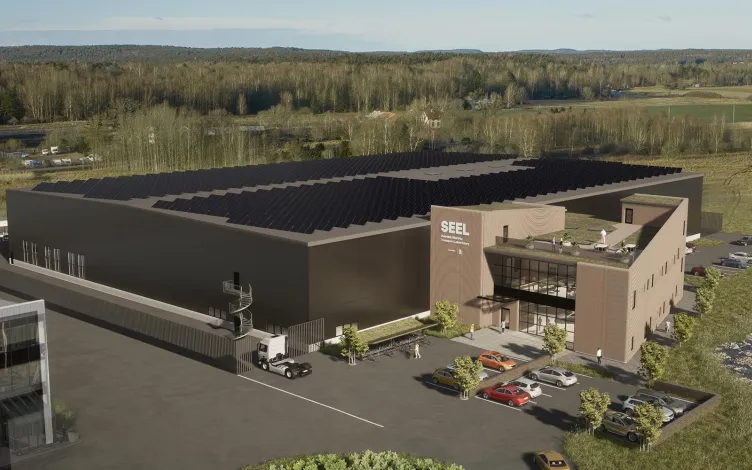
SEEL

A unique opportunity to develop new electromobility products and services has opened up. In September 2023, three new test centers for electric vehicles and components were inaugurated within the initiative SEEL, Swedish Electric Transport Laboratory. The goal is clear: The testbed is to comprise one of the few open meeting places for collaboration and innovation in Europe. 

“It's been a crazy time to make a billion dollar investment like this. But we are extremely proud and happy to now be able to open the doors to three new test environments for electromobility. And the interest, well, that’s grown more than the construction index and timber prices,” says Henrik Svenningstorp. 

Full-scale vehicle testing 

Henrik Svenningstorp is CEO of SEEL,owned by RISE and Chalmers University of Technology and which in 2023 will begin testing vehicles and components for electromobility on a full scale in Gothenburg, Borås and Nykvarn. 

“We’re not trying to be the best at making batteries or electric motors, we’re simply trying to be the best at measuring them. In Säve, we have facilities covering some 15,000 square metres with essentially everything you need to test whatever needs to be tested within electromobility: batteries, shafts, vehicles, electrical components, noise and vibration, charging systems… The facility in Nykvarn is a little smaller, with a focus on heavy vehicles. This is where, for example, we have the most powerful equipment for testing electric motor shafts. The only thing we can’t do in Gothenburg or Nykvarn is safety-critical and destructive testing. That we do in Borås.” 

"The lab for safety-critical testing in Borås is a world-leading test environment with the greatest possible concern for the environment. All tests take place in a controllable and fully repeatable indoor environment, and thanks to a state-of-the-art treatment plant, both flue gases and extinguishing water are taken care of, which means the highest possible environmental friendliness when testing batteries", says Michael Rahm, department manager for Fire and Safety at RISE.

The fume treatment plant can handle 170,000 cubic metres of smoke an hour. This makes it possible to incinerate an entire passenger car in an orderly fashion, taking care of all the fumes and measuring their composition. Since the facility is run by RISE, certification will be possible from the outset. The long-term ambition is to accumulate extensive technical expertise that will enable the testbed to offer virtual testing as well. 

We want to be a neutral meeting place conducive to new collaborations

The goal: A neutral meeting place for small, innovative companies to meet major players 

“Our goal is clear: We want to be a neutral meeting place conducive to new collaborations, whether between large and small companies or industry, academia and institutes. Europe has relatively few open and accessible testing facilities of this size. And we’re well aware that large companies appreciate the innovation boost they can gain from collaborating with smaller, innovative companies. Similarly, smaller companies may need to test their ideas in the environments in which major players are found while protecting their future patents,” Svenningstorp explains. 

In collaboration with RISE, it will be possible to support small companies seeking funding for their first major investments. SEEL will be judged by its owners on how well it succeeds in encouraging collaboration. Four major industrial companies are involved in the project as guaranteed customers, and their testing needs are extensive. Parallel to this, there is room for other companies of different sizes, and should space prove to be limited as time goes by, there are ambitions to expand.  

Sharply increased interest in recent years 

“There’s a great deal going on right now. Since receiving our EU approval in 2019, interest has only increased. We’re also busy on several fronts. In Säve, parts of the laboratory are even prepared for hydrogen and fuel cells, a possible replacement power source for all large vehicles with internal combustion engines currently trafficking the roads that need to transition. We’ve entered into a partnership with the shipping industry and signed an MoU (memorandum of understanding) with several stakeholders.”  

Initial contact has been made with the aviation industry. Svenningstorp underlines that while there are major differences between truck and jet engines, the differences between electric motors for different types of transport are smaller. 

“In principle, if we can measure rotational speed, torque, current and voltage, then we can test a powertrain regardless of whether it’s for a vehicle, a ship or an aircraft.” 

“We’ll also be able to test infrastructure, such as charging stations. For some areas of the recycling industry, our labs may prove necessary when making new products from what is currently treated as waste. The same applies to the energy industry, which is developing vehicle-to-load and vehicle-to-grid – different systems for using electric vehicle batteries for energy storage.” 

Facilities designed for education and training 

On top of all this, there is a need to train the workforce for all the battery factories and other operations in the growing electromobility industry. The testbed facilities are designed to enable education and training. 

“We are now ready to open our three sites with grand openings in September. These are exciting times,” Svenningstorp ends. 

SIGNING UP FOR THE NEW TESTBED

Many stakeholders are currently expressing great interest in testing solutions for different aspects of electromobility. 

Founded on the combined expertise of RISE and Chalmers University of Technology and with four guaranteed major industrial customers, the testbed now has the capacity to help small, medium and large organisations with both small and large-scale electromobility innovation projects. 

The testbed can help customers with all types of electric vehicle testing activities. 

Henrik Svenningstorp

Chef inom strategisk forskning och affärsutveckling
+46 73 840 59 14 Read more about Henrik
Profile image

Contact Henrik

CAPTCHA

* Mandatory 

By submitting the form, RISE will process your personal data.
Profile image

Contact Magnus

CAPTCHA

* Mandatory 

By submitting the form, RISE will process your personal data.
Electromobility Sekundär områdes navigation:
Metrology
Fire safety
Energy storage
Production and manufacturing

Safe and eco-friendly battery tests

Battery safety lab at RISE

RISE’s new test facility in Borås will affirm Sweden’s position as a leader in vehicle safety. This is where the batteries of the future will be shocked, shaken and pushed to extreme temperatures in a controlled environment.
“The safety lab is due to be inaugurated in the second half of 2023 and will be internationally unique”, says Director of Total Defence Franz Evegren.

The European battery industry is growing at a rapid rate. There are plans for no fewer than fifty factories spread across sixteen countries. Annual battery cell production capacity is estimated at 2,100 GWh by 2030, enough to power more than 30 million electric vehicles.

Many companies are focused on the automotive industry – including manufacturers of utility vehicles for the shipping, rail and aviation industries – but there is also a strong focus on stationary energy storage and industrial applications, such as within forestry and mining.

A massive transition

For RISE, the new safety lab is a way to contribute expertise in the value chain for batteries. Electrification is giving rise to new battery technologies as well as new manufacturers alongside established industrial companies.

“Electrification entails a massive transition. The automotive industry hasn’t seen such a major technology shift for over a century; a shift that fundamentally alters vehicle designs. This includes cars, trucks, tractors, mining machines, construction machines, agricultural machines and even stationary machines”, says Franz Evegren.

The safety lab is one of three facilities included in the RISE and Chalmers testbed for technology and concepts within electrified transport. The lab in Borås will be focused on safety tests related to charging and discharging, vibrations, mechanical shocks, thermal runaway and fire risks.

Max Rosengren, safety and transport project manager at RISE, came up with the idea for the lab. An idea based on the actual risks affecting battery technology in the shape of overpressure leading to a state of thermal runaway with uncontrollable temperature increases, gas leakage and fire as a result.

“These are similar to the risks seen in vehicles with internal combustion engines. However, this type of testing requires premises and equipment that can handle these types of fire and overpressure risks,” Rosengren explains.

The lab is prepared for circumstances in which things go terribly wrong

An internationally unique facility

In concrete terms, the lab’s three buildings are crammed with many wonderful things for test personnel: vibrators, shaker rigs, chambers and cabinets of various sizes to simulate heating and cooling, equipment for running battery cycles and, the jewel in the crown, a test chamber measuring 130 m² with half-metre-thick concrete walls for running destructive tests.

“The safety lab is of our own invention. Say, for example, that a battery needs to be shaken in a shaker rig. There are standards for this, standards that attempt to emulate real-life conditions. If a car manufacturer were to perform the same test with charged batteries in a facility that isn’t designed for such safety-critical testing, things could go terribly wrong if a fire were to break out,” Evegren explains.

“The lab is prepared for circumstances in which things go terribly wrong. Were a battery to enter a state of thermal runaway, the lab is designed to prevent anything being destroyed.”

Both RISE experts say, quite simply, that it would not be financially viable to build such a resource for an individual company.

“In terms of performance, there’s no other facility in Sweden that can match it, with the possible exception of within the military industry,” Rosengren says.

“Customers won’t only be from the automotive industry. They could be from just about any sector, and it need not involve batteries. If you want to shock something with up to 800 kilonewtons, in a rapid and extremely powerful impact, you can do so at this facility.”

Reliable and eco-friendly

The fact that the facility is fully enclosed offers a couple of competitive advantages. On the one hand, the tests are more reliable and easier to repeat under identical conditions, and on the other hand, toxic fumes can be captured and purified using water.

Until now, the alternative has been to perform such tests outdoors. To allow untreated fumes and extinguishing water into the environment.

“Very many countries in Europe permit outdoor testing. Here, the idea is to do right by nature, and to do so in a controlled environment under conditions that are constant and repeatable”, Rosengren ends.

Max Rosengren

Projektledare
Read more about Max
Profile image

Contact Max

CAPTCHA

* Mandatory 

By submitting the form, RISE will process your personal data.
Batteries Sekundär områdes navigation:
Electromobility
Metrology
Risk and security
Production and manufacturing

Silicon carbide powering the energy revolution

SiC wafer with a transparency.

Silicon carbide is a material used to create new types of energy-efficient semiconductors that can save up to 20 percent of the battery time for electric cars. The Swedish startup Ascatron manufactures wafers and components in silicon carbide. In 2020, the semiconductor developer was acquired by the American electronics giant II-VI. But their journey began as a part of RISE. 

Christian Vieider

"The display in my electric car didn't work this morning; there was probably something wrong with a semiconductor," Ascatron co-founder Christian Vieider says with a chuckle. 

Semiconductors are found in almost all electronics, in everything from refrigerators to cars. Silicon is the most common semiconductor material. Over two thousand silicon chips are required to enable the energy conversion in an electric car. As more features are introduced in vehicles, such as self-driving, even greater numbers of chips in more energy-efficient materials are needed. The next generation of silicon carbide semiconductors consumes less energy and has more transistors. 

Christian walks up the spiral staircase at Isafjordsgatan 22 in Kista. It leads to the Electrum lab, a test bed for nanoconductor and semiconductor technology operated by RISE in close collaboration with KTH (Royal Institute of Technology). This is where Ascatron's journey began ten years ago. At the time, Christian was working with the commercialization of RISE technology for energy-efficient silicon carbide. 

In 2011, Ascatron was formed by four employees from Acreo, now part of RISE Research Institutes of Sweden. Ascatron has been owned by II-VI (two-six) since 2020, and they now mainly manufacture silicon carbide wafers, a key technology in many power electronics applications. 

Commercialization of silicon carbide – from material development to components 

Christan turns in towards the corridor on the fifth floor. There, Ascatron and RISE researchers are working side by side in the Electrum lab. He walks into a meeting room and sits down. 

At the Electrum lab, Christian and the research team manufacture the epitaxial layer of the semiconductor, that is, the active layer in the component that determines how much voltage it can withstand. This technology laid the foundation for Ascatron, which was spun off from RISE in 2011.  

"The market was ready," says Christian, leaning back in his chair. "There was a demand for silicon carbide, and RISE already had customers buying this semiconductor material. The initial idea was to build a factory to scale up the manufacturing technology and then form a company. The next step was to find investors." 

Ascatron was early in creating larger epitaxial wafers and went from making wafers of 100 millimeters to wafers of 150 millimeters. It enabled twice as many components per wafer, and the company gained an advantageous position in the market. Ascatron initiated collaboration with major component manufacturers, such as ABB.  

"We had come as far as we could with material manufacturing, and in 2015, we started developing silicon carbide components on our epitaxial wafer," continues Christian. "The components should not only be efficient and have as little energy loss as possible in their electricity conversion, but they also have to be reliable and robust."  

With silicon carbide, you save power and remove about two-thirds of the energy loss compared to silicon chips

Silicon carbide – an enabler for the fossil-free society 

Society's transition from fossil fuels to electricity is expected to create a sharp rise in electricity use, according to the Swedish Energy Agency, forecasting that electricity use will double by 2050. But to achieve a fossil-free society, energy also needs to be used efficiently, which is why Sweden aims to reach 50 percent more efficient energy use by 2030. 

"The electrification of our society will create new demands on what power electronics need to be able to handle," says Christian. "We are facing a huge challenge in the energy revolution now underway. If Sweden is to increase its electricity production, this type of component is needed to convert the electricity." 

Conversion of electricity causes losses of up to ten percent. When the power from an electrical outlet reaches, for example, an electric car, about ten percent of the energy has already been lost. But components built with the next generation semiconductor materials are more energy efficient. 

"With silicon carbide, you save power and remove about two-thirds of the energy loss compared to silicon chips," he explains. "This means, for example, that you can drive ten to twenty percent longer with your electric car or save the same amount on battery usage. It makes our technology very attractive to the electric car market."  

Electronics giant II-VI invests in Ascatron's silicon carbide technology 

"After a decade, we had come as far as we could with our own development operations," says Christian. "We needed a long-term owner to develop commercial products. It also had to be an established player to be of interest to potential customers such as Volvo or Volkswagen."  

Ascatron's advanced epitaxy wafers in silicon carbide attracted the interest of US semiconductor manufacturer II-VI. The electric car market had taken off. With the acquisition of Ascatron in 2020, II-VI could lift itself into the value chain and offer wafers and components in silicon carbide to manufacturers of electric vehicles.  

"What distinguishes our technology is that we have developed materials that can withstand really high voltages," Christian says. "With this technology, you can develop components that can handle over ten kilovolts, which makes us unique in the market."  

II-VI now has 22 employees in Kista who work with silicon carbide power components and epitaxy production as part of the company's development department. The next step is to continue growing. 

"We will scale up our production in Kista, and we will be able to move from pilot production to delivering on a large scale to our customers. We are now determining where the volume production will be based, but I hope some will be in Sweden, and we can create more jobs here."  

It is essential for Europe to become independent in semiconductor production

II-VI collaboration with RISE at the Electrum lab 

The fluorescent tubes cast a cold light on the computer screens, microscopes, and machines that line the walls of the Electrum Lab's 1,300 square meter cleanroom. The equipment is used to grow the epitaxial layer of the semiconductor wafers and to process components. Bright yellow pillars and an azure blue epitaxy reactor break with the white and metal grey ISO-certified cleanroom environment. The international standard ensures high quality for the industrial production of semiconductor materials. II-VI collaborates with RISE and KTH experts, clad in ice blue overalls. The protective clothing ensures that the clean manufacturing environment never exceeds ten thousand particles per cubic meter. It can be compared to a typical office with an equivalent volume of millions of particles. 

The power electronics lab, run by RISE, is one floor above the cleanroom. Here, II-VI tests its prototypes with the support of experts from RISE for testing and electrical characterization of its power electronics components. 

After the processed wafer has been cut down into chips, the pieces are encapsulated in, for example, metal oxide semiconductor field effect transistors (MOSFET). The experts test the transistors to measure the properties of the components and how well they work when under load. Klas Brinkfeldt is a unit manager at RISE and is responsible for the tests: 

"We provide expertise in the entire chain, from manufacturing and characterizing components to reliability tests, simulations, and material analysis," says Klas. "We're unique in Sweden in being able to offer a complete package and are thus helping with the development of the next generation of power electronics systems."      

RISE's long-term development of wafer manufacturing and fault analysis is now further accelerating in an extended collaborative agreement with II-VI. 

"We hope that we will have even closer collaboration with II-VI in the development and testing of the next-generation silicon carbide components," continues Klas. "We also see that it can create rings in the water and strengthen the entire ecosystem in Kista, thus helping to provide a larger arena for fault analysis of electronic components."  

Christian Vieider explains that collaboration with RISE has been essential for the company's success: 

"The collaboration with RISE has been a crucial success factor for us as our technology is based on 20 years of research at RISE. Access to customers, expertise, and equipment helped us to enter the market quickly."  

"The development of functional and reliable components based on new semiconductor materials is important for us in being able to conserve energy in the power electronics systems of the future," says Klas Brinkfeldt. "New materials such as silicon carbide require in-depth knowledge and new building methods. It will change the electronics industry and how we design, build, and produce wafers and circuits." 

RISE, II-VI, and the South Korean research Institute KATECH (Korea Automotive Technology Institute) have initiated research collaboration in semiconductor technology. The project will increase the efficiency of electric vehicles' power electronics systems.  

"We will manufacture components based on our fundamental technology and jointly design them with RISE," says Christian Vieider. "In the project, we will receive direct feedback from an end customer about how our components work in their application. This collaborative arrangement is invaluable in developing better products." 

Possibilities for the EU's independent semiconductor production 

Since 2021, there has been a shortage of semiconductors, which has crippled the production of electronic products, not least among electric vehicle manufacturers. The semiconductor shortage is expected to ease, but forecasts indicate that the problem will continue for years. The European Commission presented the European Chips Act, a proposal for measures to secure the European innovation and production capacity of semiconductors. 

"It is essential for Europe to become independent in semiconductor production," says Christian. "The production is knowledge-intensive. An example of this is that half of our staff are doctoral researchers. We have a high level of expertise in Europe, which creates good conditions for a European semiconductor manufacturing industry, and our operations can contribute to local silicon carbide production. This morning, my electric car didn't work, probably because there was something wrong with a semiconductor. This tells me the important role semiconductors play in our everyday lives."  

Advanced electronics Sekundär områdes navigation:
Electromobility
Production and manufacturing
Composites

Increased electrification through new type of bipolar plates

Eelectrification

To ensure energy supply while also achieving global climate goals, fossil fuel energy sources must be replaced with renewable energy. One technology for achieving increased electrification of our vehicles is hydrogen and fuel cell technology.

In a hydrogen-powered fuel cell, a chemical reaction takes place between hydrogen and oxygen, which produces electricity to power an electric car – while the residual product is no more hazardous than water vapour. For the process to work, so-called bipolar plates are needed in the fuel cell.

Advantages of composite

The Swedish start-up SSAC has developed a concept for a new type of bipolar plate made of composite, a material that is unusually strong in relation to its weight. The company is also further developing its concept in order to offer bipolar plates in bio-based composite – which makes the plates strong and lightweight, and therefore an environmentally friendly and cost-effective alternative to other materials.

“At SSAC, we work with composites, but a few years ago I was with a company that worked on fuel cells, so I was interested in combining these two business areas to see whether composite materials could be used in fuel cells,” says Martin Skrikerud, CEO of SSAC.

Reduced cost is an important factor

The work has shown that the concept gives the plates good properties for a fuel cell, and will allow for mass production in a way that is scalable and cheaper than the materials used today, such as metal or graphite. Cost is an important factor, since one obstacle to the wider use of fuel cell-powered vehicles is that they are relatively expensive at present. And the bipolar plates account for a fairly large part of the costs in a fuel cell.

“It’s a bit like other technologies such as solar cells or batteries, which have been around for a long time but were previously far too expensive to have a large area of use,” explains Skrikerud.

“Similarly, fuel cells have been used for a long time, but the unique thing about our solution is that you can mass produce at a reasonable cost. Potentially, we can almost halve the current costs –
we aren’t making a better product than what exists today, but we make it faster and cheaper.”

Fokus on CO2 emissions in the manufacturing process

In addition to being a cost-effective alternative, SSAC addresses another problem: CO2 emissions in the manufacturing process. For a long time, the focus has very much been on eliminating emissions in the user phase, through batteries or fuel cells, and less on emissions from materials and manufacturing.

“The next step is to find materials and processes for manufacturing that are also CO2 neutral,” says David Mattsson, Research and Business Developer at RISE. “This is what we are trying to achieve in the next step, with materials that are bio-based and can also be recycled.”

Together with RISE, SSAC first performed an evaluation test, which showed good results – initially on a small scale and eventually at larger scales. RISE’s testbed for sustainable composite manufacturing was one of the systems used to test the plates. And according to Skrikerud, there are several strengths in the collaboration:

“RISE has good knowledge of the processes and materials we want to use. And besides, we don’t have the staff or machines to do everything we want to do, so we must enlist the help of others. RISE has the expertise we need.”

Mattson also highlights these strengths:

“Here at RISE, we can easily connect the skills and resources needed for each customer – we have everything under one roof. No matter the development needs we encounter, in most cases we have the solutions within RISE. Seeking out this expertise yourself is not always easy.”

Testbed with many opportunities

At the testbed in Piteå, researchers and companies are able to test, develop, and demonstrate new sustainable materials and manufacturing processes.

“Here, you can work with existing material mixtures or develop your own materials that can be adapted to a certain process,” says Mattsson. “We can also help establish collaborations throughout the value chain, with material suppliers, the automotive industry and end users.

We can also put together research projects and look at things with a lower technology maturity and over a longer term. Plus, we can also offer customers opportunities to work in bilateral projects together with us when product development approaches the final phase. With SSAC, we work with a combination of these working methods, and it’s good to have such a combination throughout, since it allows you to constantly produce new technology from the ground up.”

David Mattsson

Enhetschef
Read more about David
Profile image

Contact David

CAPTCHA

* Mandatory 

By submitting the form, RISE will process your personal data.
Last published: Hydrogen Sekundär områdes navigation:
Electromobility
Production and manufacturing
Biobased materials

Control and verification of charging stations

Name of service (page headline, shown in promos – maximum of 70 characters incl. spaces): Control and verification of charging stations Lead (include SEO-words and the main benefits for your target groups. Stick to one paragraph, maximum 2-3 sentences):

Independent control and verification ensure that the charging station is functioning correctly and billing customers accurately. Our comprehensive control and verification services makes it safe and reliable to charge at your charging stations.

Purpose/Benefit:

The number of electric cars on our roads is increasing rapidly, and charging must be safe and secure. Independent control and verification ensure that customers can trust that the equipment at your public charging station is safe and that the correct amount of energy is delivered when they charge their cars. Independent control ensure that the charging station meets the requirements of your internal quality system.

We are present from Malmö in the south to Luleå in the north and offer comprehensive on-site control and calibration services across the country. The services are flexible and can be tailored for you, whether you have one or a few charging points or an entire network of charging stations. We can utilise RISE's collective expertise to create a comprehensive solution that meets your needs.

Method (what/which methods are used to perform the service):

Control and verification of charging stations in accordance with ISO 17020 and other existing and upcoming standards and regulations.

  • Ensuring that the charging station measures accurately and reliably.
  • Ensuring that billing is carried out correctly and securely.
  • Ensuring safety, such as wear and corrosion on cables and connectors.
Delivery (what does the client get after performed service – e.g. a report, certificate etc.):

The result is compiled in a control report.

Area:
Batteries
Inspection
Cyber security
Fossil free fuels
Infrastructure
Calibration
Control
Mobility
Product safety
Contact person (Enter one name per field. Activated personal contact pages will appear automatically):
Magnus Nilsson, Enhetschef
Mats Olsson, Enhetschef
Charging station field inspection
Field measurements: Yes Price type: 1 Division: Division Safety and Transport Preparation: No preparation required Standards:

ISO 17020

Certification and marking: Not applicable Type of service:
Inspection
Calibration
Instrument: Not applicable General area: Not applicable Order information: Please contact us to discuss how we can help you. You will find contact details at the bottom of the page. Divison (OLD): Division Safety and Transport Delivery level: Not applicable
magnus.nilsson@ri.se,mats.olsson@ri.se
/en/node/9710
More information:
Application of interest
form
Electromobility Sekundär områdes navigation:
Energy transmission
Metrology
Risk and security
Tjänstetyp tagg: Kontroll

Testing and certification of charging stations

Name of service (page headline, shown in promos – maximum of 70 characters incl. spaces): Testing and certification of charging stations Lead (include SEO-words and the main benefits for your target groups. Stick to one paragraph, maximum 2-3 sentences):

The sale of electric vehicles is on the rise, and the transportation industry is facing a major electrification. This requires accessible, safe, and reliable charging infrastructure with charging stations and charge points. We have extensive expertise in testing and certification and can assist you with all existing and upcoming standards.

Purpose/Benefit:

What can we do for you?

We offer a broad range of services for testing and certification of charging stations and other charging infrastructure. With our collective expertise in electrical safety, environmental durability, EMC, radio, electrical measurement, cybersecurity, and functional safety, we help you ensure that your products meet existing and upcoming standards and other safety and quality requirements. 

We advise you on how requirements should be applied and how to prepare your operations and products for future regulations in areas such as electrical measurement and cybersecurity, so you can stay ahead. Naturally, our solutions are flexible to suit your specific needs.

Evaluation of cybersecurity and functional safety

RISE conducts accredited testing and evaluation of cybersecurity for charging stations and public charging points.

Cybersecurity testing is performed according to relevant standards, such as:

  • ETSI 303645
  • SS-EN IEC 62443-4-2
  • EN 18031-1, -2, -3

We also offer penetration testing of charging stations, where an ethical hacker attempts to breach the system and, based on identified vulnerabilities, produces a report.

For functional safety, we perform accredited evaluations and risk analyses according to IEC 61508.

Cybersecurity is characterized by rapid development, which also applies to regulations. The Radio Equipment Directive and the upcoming Cyber Resilience Act impose new cybersecurity requirements. RISE’s expertise and experience help you stay up to date with the latest legal requirements. Together, we can find the best solution for your specific needs.

Method

Evaluation according to standards is conducted under accreditation according to ISO/IEC 17025 in our laboratories in Borås.

Delivery

The results of our evaluation are compiled into an accredited report.

Test of electricity meters for
CE-marking

We offer testing and certification of electric meters in charging stations according to Swedish and international standards. 

RISE is accredited for testing electric meters and certification to meet the Measuring Instruments Directive (MID). We are a notified body for MID and can issue approvals for the entire EU. Testing and certification can be performed for the electric meter module in AC charging stations according to MID. Charging stations are not yet covered by MID, but there is an ongoing process to implement them in the directive.

Method   

The test is accredited according to ISO/IEC 17025 and performed in our labs in Borås.

Delivery

Accredited test report and MID-certificate

EMC and radio communication: testing and certification for CE- marking

We conduct accredited EMC and radio testing of AC charging stations to comply with the EMC Directive and the Radio Equipment Directive (RED), where we are also a notified body. 

EMC testing is performed according to IEC 61851-21-2. 

Radio testing is conducted according to relevant ETSI standards, for example:

  • ETSI EN 300 328
  • ETSI EN 300 330
  • ETSI EN 301 908 

RISE is a Telecommunications certified body for the FCC and has access to FCC- and ISED-recognized testing labs in the USA and Canada. Through partners, we offer services for Global Market Access (GMA).

Method  

The test is accredited according to ISO/IEC 17025 and performed in our labs in Borås.

Delivery

RISE delivers an accredited test report, which can be used as the basis for certification.

Electrical safety and environmental durability testing

In electrical safety and environmental durability testing, we ensure that the charging station is safe from electric shock and fire. We assist with:

  • Accredited electrical safety testing of AC charging stations to meet the Low Voltage Directive (LVD).
  • Testing according to SS-EN IEC 61851-1 Electric Vehicle - Conductive Charging (harmonized standard under LVD). The manufacturer certifies compliance with the directive through self-declaration.
  • Environmental durability and IP testing according to generic standards as a complement for protection against heat, cold, moisture, water, and dust, as well as shocks and vibrations (partially included in SS-EN IEC 61851-1).

Method

The tests are accredited according to ISO/IEC 17025.

Delivery

RISE delivers an accredited test report, which can form the basis of the certification of compliance with the directive by self-declaration.

Method (what/which methods are used to perform the service):

Accredited testing and evaluation.

Delivery (what does the client get after performed service – e.g. a report, certificate etc.):

Accredited report. Certificate if relevant.

Area:
Batteries
Certification
Electromobility
Electronics
Testing
Contact person (Enter one name per field. Activated personal contact pages will appear automatically):
Ted Strandberg, Projektledare
Tommi Anttila, Högskoleingenjör
Charging
Field measurements: No Price type: 1 Division: Division Safety and Transport Preparation: No preparation required Standards:

Cyber security and functional security

ETSI 303645, SS-EN IEC 62443-4-2, EN 18031-1,-2,-3, IEC 61508

Electricity meters: testing and certification

MID-certificate

EMC and radio communication: testing and certification 

IEC 61851-21-2, ETSI EN 300 328, ETSI EN 300 330, ETSI EN 301 908, 

Electrical safety and environmental durability

SS-EN 61851-1

Certification and marking: Product certification Type of service:
Certification
Testing / Analysis / Evaluation
Instrument: Not applicable General area: Not applicable Order information: Please contact us to discuss how we can help you. You will find our contact details at the bottom of the page. URL: Here you will find all our services within EMC IKT Divison (OLD): Division Safety and Transport Delivery level: Accredited
ted.strandberg@ri.se,tommi.anttila@ri.se
/en/about-rise/operations/mission-governance/policy-documents/privacy-policy
Documents:

Product information (pdf, 350.26 KB)

More information - Header: Software Evaluation:
Request for quote
form
Electromobility Sekundär områdes navigation:
Metrology
Cybersecurity
Energy and electrification
Advanced electronics
Tjänstetyp tagg:
Certifiering
Provning

The Battery Safety Lab

The Battery Safety Lab
Security lab in Borås

The battery safety lab in Borås is part of the SEEL* initiative. The lab is equipped to evaluate products for thermal propagation, fire exposure, vibration, cycling, and climate variation. The lab’s water- and smoke-cleaning system is world-leading, meeting stringent environmental and sustainability requirements.

Isolated testbeds (IT) Laboratory testbeds (LT)
Not applicable
Profile image

Contact Magnus

CAPTCHA

* Mandatory 

By submitting the form, RISE will process your personal data.

Patrik Johansson

Affärsutvecklare
+46 10 516 50 92 Read more about Patrik
Profile image

Contact Patrik

CAPTCHA

* Mandatory 

By submitting the form, RISE will process your personal data.
Off
Division: Division Safety and Transport

The electrification of society is increasing, and the transition must be as safe and sustainable as possible. We must do everything we can to prevent accidents and uncontrolled events that could arise from electrification. 

Here, you can learn more about our offer for safety-critical battery testing.

The Battery Safety Lab in Borås

The Battery Safety Lab at RISE was built and developed to meet the market's needs for research, development, and standardized testing. There are three areas connected to the lab resource to complete the offer to customers and partners:

  • Involvement in the development of standards
  • Inspection activities, which support ensuring the quality of product manufacturing
  • Certification activities, which offer certification within various product areas

Sustainability and safety are key aspects in the lab

Sustainability and safety are key aspects of the battery safety lab. All waste from testing is handled in an advanced purification plant where smoke particles and toxic components of extinguishing water are separated and deposited. Safety is of the highest standard, with thick walls, steel doors and roof hatches that open at high pressure, as well as control rooms located at a safe distance from the testing area.

The battery safety lab has unique equipment

The battery safety lab is equipped with the market's leading test rigs. These enable the evaluation of products under various conditions, including charging, short circuits, vibrations, mechanical shock, extreme temperatures, and fire risks. The lab has powerful vibration equipment, walk-in chambers, and climate and cycling equipment. The lab's large abuse hall is protected against pressure increase and can handle fires up to 8 MW. Additionally, there are areas for customers, including preparation and post-mortem labs, conference rooms, and offices. 

The testing environment enables repeatability

Performing tests indoors in the battery safety lab ensures a controlled testing environment and optimal conditions for repeatability. This is essential for test results to be reliable.

Extreme testing capabilities

The lab's design meets the high standards needed for testing battery systems and other test objects. When testing batteries in electric vehicles, for example, they must be pushed to their limits and subjected to extreme stress. It's necessary to be able to set fire to the vehicle in a controlled way and then let the fire run its natural course. During these tests, there is a high risk of explosion, and powerful, uncontrolled fires can occur. 


*SEEL Swedish Electric Transport Laboratory is a test centre for research and development in the field of electromobility. The test centre is owned and run by Chalmers and RISE as a joint venture. SEEL has established three facilities in Sweden: in Säve, Nykvarn, and Borås. Read more about SEEL Swedish Electric Transport Laboratory 

Automotive and transport Energy and Clean Tech Manufacturing Materials Process industry Security and defence
Batteries Fire safety Electronics Energy Climate adaptation Production and manufacturing Product safety Risk and safety Hydrogen
Not applicable
2023

Address

Brinellgatan 4, Borås

Division (OLD): Division Safety and Transport Batteries Sekundär områdes navigation:
Electromobility
Metrology
Fire safety
Automotive and future transport
Risk and security
Production and manufacturing
Total defence and crisis preparedness