Jump directly to content

Inspections reduce the risks of offering electric vehicle charging

Charging station

Housing cooperatives, hotels and restaurant chains – these are just a few of the new charging station providers. RISE can help these many inexperienced organisations with regular function and safety inspections.

What’s the worst thing that could happen? Magnus Nilsson, a unit head at RISE, hesitates a little, but then answers: 

“The worst-case scenario is someone hacking a number of electric vehicles being charged in an indoor car park. They overcharge the batteries and set fire to the entire car park. And if you have a residential building above, well, things can develop pretty quickly.” 

“When an electric vehicle ignites, it produces an extremely fierce and toxic fire that’s difficult to extinguish.”  

In October 2024, Sweden had more than 45,000 registered charging points. This is still less than the EU recommendation of one public charging point for every ten vehicles*, so we can expect to see a continued expansion over the next few years.  

This means that countless organisations and associations, with no previous experience of providing this type of service, will become charging providers. The board of a housing cooperative, hoteliers, restaurant branch managers and others are to suddenly understand and plan for the risks associated with providing electric vehicle charging. 

“This knowledge is often lacking,” says Nilsson.  

There are multiple risk factors that both providers and users need to be protected from: incorrect settings that can cause personal injury or property damage, cyber attacks, unauthorised charging, complicated handling and more. 

Package offering with inspections and certification 

Accordingly, RISE is now launching a package offering with regular charging station inspections as well as the certification and testing of charging components and infrastructure.  

Ted Strandberg is a project manager at RISE with a focus on cyber security. He says that the current NIS directive** and new EU regulations will mean mandatory safety requirements for everything from product development and operation to incident management. 

There is good reason to prepare for the stricter rules that are on their way in, he says. 

The cyber threats that charging providers need to be prepared for mainly concern payments (incorrect fees, free charging), the overcharging of batteries resulting in fire, and disruptions to the power grid. 

“Someone could hack the charging station via the vehicle, or vice versa, hack the vehicle via the charging station,” says Strandberg. 

“If someone manages to hack their way in and disrupt the charging stations by switching the charging function on and off for several vehicles at the same time, it could have a major impact on the power grid and risk damaging equipment.” 

At the moment, countless charging posts are being installed before all the regulations are in place

The goal: Harmonised regulations across the EU 

One goal is to achieve harmonised regulations, at either EU or national level, Nilsson explains. 

“At the moment, countless charging posts are being installed before all the regulations are in place. My personal opinion is that the two should go hand in hand.” 

He explains that there is concern in the industry that stations are being installed by insufficiently qualified individuals. 

“This is why we started a project group for charging stations. To help the market see what rules are coming and to ensure that consumers get the energy they pay for.” 

Verification services an existing offering 

RISE has long offered trade and industry verification services for, among other things, scales and fuel meters. 

“In the case of standard petrol and diesel pumps, for example, we check whether the right software version is installed. The right electronics? Are all installations in order? Is it truly type-approved?” 

The equivalent service will now be offered for charging stations. 

“We’ve developed mobile equipment that we’re currently field testing. We’re collecting measurement data from different types of charging stations to form a picture of the market situation. Will we find meters that can’t be tested? Is everything installed correctly? What do the meters show?” 

How long does a regular charging station inspection like this take? 

Nilsson says that RISE is testing about 100 different charging stations from various manufacturers. Then they will establish a standard method. 

“At the moment, we’re timing the inspections. But they don’t take several hours. We’re looking at being able to test several charging stations at the same time. The inspections need to be optimised, efficient and effective.” 


*As of October 2024, Sweden had about 14 vehicles per charging point. 

**NIS2 has been adopted by the European parliament and includes, among other things, higher penalty fees. 

Magnus Nilsson

Enhetschef
+46 10 516 61 27 Read more about Magnus
Profile image

Contact Magnus

CAPTCHA

* Mandatory 

By submitting the form, RISE will process your personal data.

Ted Strandberg

Projektledare
+46 10 516 60 93 Read more about Ted
Profile image

Contact Ted

CAPTCHA

* Mandatory 

By submitting the form, RISE will process your personal data.
Electromobility Sekundär områdes navigation:
Energy transmission
Metrology
Cybersecurity
Risk and security
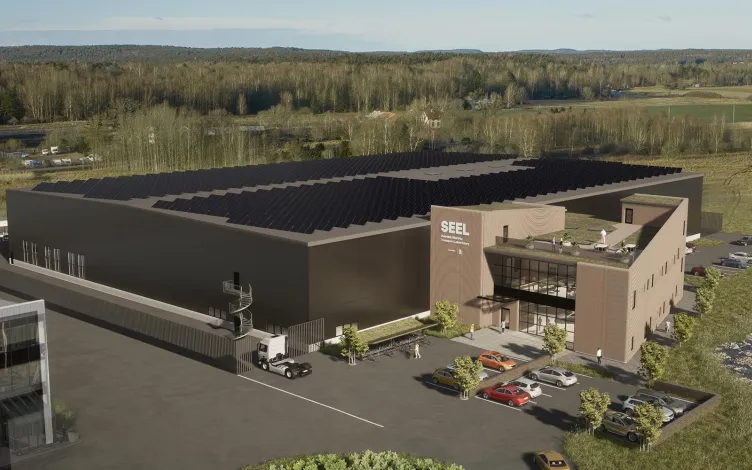
World-unique test facilities will accelerate electrification

SEEL

A unique opportunity to develop new electromobility products and services has opened up. In September 2023, three new test centers for electric vehicles and components were inaugurated within the initiative SEEL, Swedish Electric Transport Laboratory. The goal is clear: The testbed is to comprise one of the few open meeting places for collaboration and innovation in Europe. 

“It's been a crazy time to make a billion dollar investment like this. But we are extremely proud and happy to now be able to open the doors to three new test environments for electromobility. And the interest, well, that’s grown more than the construction index and timber prices,” says Henrik Svenningstorp. 

Full-scale vehicle testing 

Henrik Svenningstorp is CEO of SEEL,owned by RISE and Chalmers University of Technology and which in 2023 will begin testing vehicles and components for electromobility on a full scale in Gothenburg, Borås and Nykvarn. 

“We’re not trying to be the best at making batteries or electric motors, we’re simply trying to be the best at measuring them. In Säve, we have facilities covering some 15,000 square metres with essentially everything you need to test whatever needs to be tested within electromobility: batteries, shafts, vehicles, electrical components, noise and vibration, charging systems… The facility in Nykvarn is a little smaller, with a focus on heavy vehicles. This is where, for example, we have the most powerful equipment for testing electric motor shafts. The only thing we can’t do in Gothenburg or Nykvarn is safety-critical and destructive testing. That we do in Borås.” 

"The lab for safety-critical testing in Borås is a world-leading test environment with the greatest possible concern for the environment. All tests take place in a controllable and fully repeatable indoor environment, and thanks to a state-of-the-art treatment plant, both flue gases and extinguishing water are taken care of, which means the highest possible environmental friendliness when testing batteries", says Michael Rahm, department manager for Fire and Safety at RISE.

The fume treatment plant can handle 170,000 cubic metres of smoke an hour. This makes it possible to incinerate an entire passenger car in an orderly fashion, taking care of all the fumes and measuring their composition. Since the facility is run by RISE, certification will be possible from the outset. The long-term ambition is to accumulate extensive technical expertise that will enable the testbed to offer virtual testing as well. 

We want to be a neutral meeting place conducive to new collaborations

The goal: A neutral meeting place for small, innovative companies to meet major players 

“Our goal is clear: We want to be a neutral meeting place conducive to new collaborations, whether between large and small companies or industry, academia and institutes. Europe has relatively few open and accessible testing facilities of this size. And we’re well aware that large companies appreciate the innovation boost they can gain from collaborating with smaller, innovative companies. Similarly, smaller companies may need to test their ideas in the environments in which major players are found while protecting their future patents,” Svenningstorp explains. 

In collaboration with RISE, it will be possible to support small companies seeking funding for their first major investments. SEEL will be judged by its owners on how well it succeeds in encouraging collaboration. Four major industrial companies are involved in the project as guaranteed customers, and their testing needs are extensive. Parallel to this, there is room for other companies of different sizes, and should space prove to be limited as time goes by, there are ambitions to expand.  

Sharply increased interest in recent years 

“There’s a great deal going on right now. Since receiving our EU approval in 2019, interest has only increased. We’re also busy on several fronts. In Säve, parts of the laboratory are even prepared for hydrogen and fuel cells, a possible replacement power source for all large vehicles with internal combustion engines currently trafficking the roads that need to transition. We’ve entered into a partnership with the shipping industry and signed an MoU (memorandum of understanding) with several stakeholders.”  

Initial contact has been made with the aviation industry. Svenningstorp underlines that while there are major differences between truck and jet engines, the differences between electric motors for different types of transport are smaller. 

“In principle, if we can measure rotational speed, torque, current and voltage, then we can test a powertrain regardless of whether it’s for a vehicle, a ship or an aircraft.” 

“We’ll also be able to test infrastructure, such as charging stations. For some areas of the recycling industry, our labs may prove necessary when making new products from what is currently treated as waste. The same applies to the energy industry, which is developing vehicle-to-load and vehicle-to-grid – different systems for using electric vehicle batteries for energy storage.” 

Facilities designed for education and training 

On top of all this, there is a need to train the workforce for all the battery factories and other operations in the growing electromobility industry. The testbed facilities are designed to enable education and training. 

“We are now ready to open our three sites with grand openings in September. These are exciting times,” Svenningstorp ends. 

SIGNING UP FOR THE NEW TESTBED

Many stakeholders are currently expressing great interest in testing solutions for different aspects of electromobility. 

Founded on the combined expertise of RISE and Chalmers University of Technology and with four guaranteed major industrial customers, the testbed now has the capacity to help small, medium and large organisations with both small and large-scale electromobility innovation projects. 

The testbed can help customers with all types of electric vehicle testing activities. 

Henrik Svenningstorp

Chef inom strategisk forskning och affärsutveckling
+46 73 840 59 14 Read more about Henrik
Profile image

Contact Henrik

CAPTCHA

* Mandatory 

By submitting the form, RISE will process your personal data.
Profile image

Contact Magnus

CAPTCHA

* Mandatory 

By submitting the form, RISE will process your personal data.
Electromobility Sekundär områdes navigation:
Metrology
Fire safety
Energy storage
Production and manufacturing

Are you certain on the measurement uncertainty?

Non-contact temperature measurement

A central concept in metrology is measurement uncertainty, which is not about being unsure, but about being very sure of what you do and do not know.

Many factors affect measurements: the human factor, temperature, humidity, properties of the object being measured, the measuring instrument we use, etc. But no matter how good the measuring instruments we use are or how ideal the conditions are, it is not possible to know that the measured value is the true one.

“There are many concepts that describe quality in measurements, but one of the most central for us metrologists is measurement uncertainty. Note that it is uncertainty, not accuracy or precision. All measurements have systematic or random errors, and the word uncertainty confirms this fact”, says Jan Johansson, responsible for the National Laboratories at RISE.

All measurements have systematic or random errors, and the word uncertainty confirms this fact.

Measured value and measurement uncertainty give measurement result

The measurement uncertainty indicates how much the measured value of the measuring instrument can differ from the true value with a certain probability (usually 95 percent). The measured value together with the measurement uncertainty gives a measurement result. The measurement result 5.00 m +- 0.02 m means that the true value is, with great probability, between 4.98 and 5.02 meters.

“If you are going to build a porch, you need to think about which plank lengths, tools, measuring methods and measuring instruments are available. With the right measurement methods and calibrated measuring instruments, it possible to reduce the measurement uncertainty, but this comes at a cost. In the case of the porch, the measurement uncertainty may be at a reasonable level with an ordinary tape-measure ruler, the cost of buying a new measuring instrument and calibrating it may be greater than the benefit”, says Jan Johansson.

The right level of measurement uncertainty

The National Laboratories at RISE offer calibration services with the lowest possible measurement uncertainties to business, academia, and society. A lot of the research conducted here aims to reduce measurement uncertainty in different fields. But the level of measurement uncertainty that the national laboratories can offer, at a level of parts per million or parts per billion, is not necessary in most cases.

“No, being aware of the measurement uncertainty and using that knowledge to make measurements with the right level of measurement uncertainty is what’s most important. What level of measurement uncertainty does the production process require in your company? It is a balancing act between the cost of reducing measurement uncertainty and the cost of having to discard products when they are outside the tolerance requirements”, says Jan Johansson.

National Metrology Institute and National Laboratories

As the National Metrology Institute of Sweden RISE maintains metrological traceability through the National Laboratories for different physical quantities. Chains of calibrations, national standards and international comparisons makes certain that a kilogram is a kilogram and a meter a meter everywhere. 

Last published: Metrology Sekundär områdes navigation: Production and manufacturing

Courses in metrology

-

We offer several courses in metrology aimed at those who work with measurement, testing and quality assurance.

The courses include everything from how to mount sensors to advanced measurement uncertainty analysis. Take the opportunity to invest in your own skills and contribute to better economy and higher quality in your production processes.

Corporate training

Contact us via the form to the right for a discussion about flexible solutions regarding time, place and content for your particular educational needs.

Kurskalendern 2026 (pdf, 245.08 KB)

Viktoria Jonasson

Projektledare
+46 10 516 56 39 Read more about Viktoria
Profile image

Contact Viktoria

CAPTCHA

* Mandatory 

By submitting the form, RISE will process your personal data.

Lena Gamalielsson

Administratör
+46 10 516 60 02 Read more about Lena
Profile image

Contact Lena

CAPTCHA

* Mandatory 

By submitting the form, RISE will process your personal data.

Advanced course in physical measurement uncertainty

mätosäkerhet fördjupning

Measurement uncertainty is a way to be able to make the necessary decisions about the quality of measurements and calibrations. This is an intermediate level course for those who already have basic knowledge of measurement uncertainty and who want to extend their skills further.

When making a measurement uncertainty calculation, there are several common questions that arise, such as calculating sensitivity coefficients, significant differences between measurements, measurement results versus requirement limits, and more.

During these days, we go deeper into uncertainty analysis and statistical aids. We discuss and explain the most common problems and issues encountered in a measurement uncertainty calculation. These include overlaying of different distributions, Monte Carlo simulation, analysis of situations when contributions are correlated and where and how to find information about the different input measurement uncertainty contributions.

The course is given in Swedish, but can be ordered in English as customized course at the clients premises.

Target audience 
For those of you who work with measurements, analysis or calibration of measuring instruments and have basic knowledge of measurement uncertainty but want to learn more.

Course, In-person,
Course certificate
sv
26-27 januari 2027
26 Jan 2027 - 27 Jan 2027
19000 SEK (excluding VAT)
30 out of 30
Course
Course certificate
sv
Division: Division Safety and Transport
Per Olof Hedekvist

Per Olof Hedekvist

Senior scientist, RISE
Karin Cedergren

Karin Cedergren

Scientists, RISE

We will show different software available to perform measurement safety calculations. A large part of the course content consists of work with examples in smaller groups. The exercises deal with the different elements that are part of an uncertainty calculation.

Lena Gamalielsson

Administratör
+46 10 516 60 02 Read more about Lena
Profile image

Contact Lena

CAPTCHA

* Mandatory 

By submitting the form, RISE will process your personal data.

Per Olof Hedekvist

Enhetschef
+46 10 516 57 42 Read more about Per Olof
Profile image

Contact Per Olof

CAPTCHA

* Mandatory 

By submitting the form, RISE will process your personal data.
webid: 37672 categoryid:
217358
237652
267663
267663
309536
358054
413228
456589
Metrology Sekundär områdes navigation: Production and manufacturing

Basic Physical Measurement Uncertainty

Uncertainty of measurement

It may sound provoking, but we argue that a measurement result is worth nothing, unless the blurry zone surrounding the measured value is estimated, i.e. the measurement uncertainty. This applies in every measurement, both when used for calibration and in regular use of the instruments.

This one-day course is self-contained but can advantageously be combined with our course b1 Measuring equipment and calibration, which is held the day before

In this course you will get an understanding of the different concepts used. For much of the day, we work with examples, analyze measurement safety components, and apply practical step-by-step checklist.

Target audience

This day is for those who work with measurements, measurement results and measuring instruments. Both in industry and in calibration labs.

The course is held in Swedish on November 11 and in English on December 3.

Course, In-person,
Course certificate
sv
11 november 2026
RISE - Da Vinci, Brinellgatan 4, Borås - ingång via vår reception
11 Nov 2026
9560 SEK (excluding VAT)
21 out of 30
Course
Course certificate
sv
3 December In English
RISE - Da Vinci, Brinellgatan 4, Borås - ingång via vår reception
03 Dec 2026
9560 (excluding VAT)
Course
Course certificate
Engelska
Division: Division Safety and Transport
Per Olof Hedekvist

Per Olof Hedekvist

Senior scientist, RISE
Gustav Jönsson

Gustav Jönsson

Forskare, RISE

8.00 Meet up, registration and coffee

8.30 Introduction

  • What is the actual purpose of calculating measurement uncertainty?  Basic concepts such as error, uncertainty, and some statistics (mean, distribution, standard deviation, etc.)
  • Workshop, exercises with applications (integrated with the lecture)
  • Measurement Uncertainty Analysis. Fundamental ideas behind measurement uncertainty analysis according to standards.
    How do you estimate different sources of measurement uncertainty?
    How do you weigh up and combine these contributions into an uncertainty interval?
    How is measurement uncertainty reported in documentation?
    A practical step-by-step checklist.

12.00 Lunch

13.00 Workshop: Exercise Examples of Applications of Measurement Uncertainty
Analyze components of measurement uncertainty in both calibration and measurement scenarios.
Includes calculations and practical use of a checklist.
(Coffee will be served during the exercise)

16.15 - 16.45 Summary

Do you have an interesting measurement scenario where the measurement uncertainty needs to be analyzed? This could involve both calibration and the use of measuring equipment. Feel free to email a few lines about the application to per.olof.hedekvist@ri.se, and we might be able to discuss it during the exercises. You also have the opportunity to specify your preferences regarding the focus of the exercises when registering.

Lena Gamalielsson

Administratör
+46 10 516 60 02 Read more about Lena
Profile image

Contact Lena

CAPTCHA

* Mandatory 

By submitting the form, RISE will process your personal data.

Per Olof Hedekvist

Enhetschef
+46 10 516 57 42 Read more about Per Olof
Profile image

Contact Per Olof

CAPTCHA

* Mandatory 

By submitting the form, RISE will process your personal data.
webid: 37943 categoryid:
219997
237653
267759
267759
309761
327686
309761
358072
381620
417484
Metrology Sekundär områdes navigation: Production and manufacturing

Internal audit for accredited activities

-

Internal audit can be one of the company's most important tools for improvement!

During the course, we cover the basics of audit methodology and how you can plan and carry out internal audits in a good way. We mix the theoretical bases with practical exercises, and the goal is to have a good understanding of how to plan, carry out and monitor an audit in a practical and effective way.

After the physical course, you conduct a small mini-audit at your workplace and then, in a digital follow-up session, we discuss how it went and also address other issues that have come up in the meantime.

We take ISO/IEC 17025:2018 as a starting point, but see that the course is also applicable to other standards. To benefit the most from the course, you should have participated in an audit.

The course is given in Swedish.

Course, In-person,
Course certificate
sv
13-14 oktober 2026 samt digitalt 3 december
RISE - Da Vinci, Brinellgatan 4, Borås - ingång via vår reception
13 Oct 2026 - 14 Oct 2026
15985 SEK (excluding VAT)
20 out of 30
Course
Course certificate
sv
Division: Division Safety and Transport
Margareta Antonsson

Margareta Antonsson

Quality specialist, RISE
Magnus Holmgren

Magnus Holmgren

Konsult, Magnus Holmgren Kvalitetssäkrings AB

Lena Gamalielsson

Administratör
+46 10 516 60 02 Read more about Lena
Profile image

Contact Lena

CAPTCHA

* Mandatory 

By submitting the form, RISE will process your personal data.

Viktoria Jonasson

Projektledare
+46 10 516 56 39 Read more about Viktoria
Profile image

Contact Viktoria

CAPTCHA

* Mandatory 

By submitting the form, RISE will process your personal data.
webid: 37684 categoryid:
217466
237651
267665
309540
358059
413237
Metrology Sekundär områdes navigation:
Innovation management
Service innovation

Metodvalidering

Metodvalidering

RISE har sedan flera år en omfattande utbildningsverksamhet inom mätkvalitet och kemisk analys. Våra utbildningar är starkt behovsstyrda och ger kunskap som är direkt applicerbar i deltagarnas egna miljöer.

Kursen syftar till att öka kunskapen om hur man för en kemisk analysmetod tar fram krav/behov, lägger upp valideringsplan, utvärderar valideringsdata och sätter ihop en valideringsrapport. Inriktningen är främst kemiska analysmetoder, och exempel och övningar är hämtade härifrån. Målet är att varje deltagare tar fram en valideringsrapport för en av det egna laboratoriets rutinmetoder som sedan kan användas som mall för att validera andra metoder.

Kursen ges som en fysisk kurs. (Möjligheten att ge den som en web-baserad kurs kan diskuteras med kursansvarig.)

I kursen ingår arbete både före och efter kurstillfället. Materialet skickas in för uppföljning och deltagarna får individuell återföring från kursansvarig.

Som kurslitteratur används Metodvalidering Handbok för laboratoriet, RISE Rapport 2020:1.

Innehåll: 

  • Genomgång av terminologi för validering och spårbarhet
  • Grundläggande statistik för utvärdering av valideringsdata
  • Framtagande av krav, analysbehov, valideringsplan och utkast till valideringsrapport för en av laboratoriets rutinmetoder

Kursen håller på 2,5 dagar (dag 1 är en halvdag, och dag 2 och 3 är heldagar). Dag 1 börjar vi 12.30 och dag 3 slutar vi 16.00.  

En viktig del av kursen är att deltagarna har möjlighet att fråga och diskutera med kursledaren kring deltagarnas egna metoder.

Kursen ges normalt två gånger per år (på våren i Stockholm och på hösten i Borås).

Vanligtvis arrangerar vi kurser med deltagare från olika företag men vi tar också fram skräddarsydda utbildningar efter kunders önskemål.

Kommande kurstillfälle: Planerad till Stockholm, mars 2027

För er som arbetar på laboratorium med framtagande av nya mätmetoder och med metodvalidering.

Kurs, Fysiskt,
sv
5-7 oktober 2026 - Borås
05 Oct 2026 - 07 Oct 2026
12:30-16:00
17850 SEK (excluding VAT)
1 out of 9
Course
Kursintyg
sv
9-11 november 2026 - Borås
09 Nov 2026 - 11 Nov 2026
12:30-16:00
17850 SEK (excluding VAT)
4 out of 9
Course
sv
Division: Division Material och industri

Eskil Sahlin

Forskare
+46 10 516 52 65 Read more about Eskil
Profile image

Contact Eskil

CAPTCHA

* Mandatory 

By submitting the form, RISE will process your personal data.
eskil.sahlin@ri.se
webid: 45461 categoryid:
230134
245254
263194
280440
302757
323341
354787
354787
374779
406623
432076
448677
Kemisk och biologisk analys Sekundär områdes navigation:
Metrologi och mätteknik
Hälsa och Life Science

Measurement Quality in Laboratories SS-EN ISO/IEC 17025:2018

-

The title of the standard is "General requirements for the competence of testing and calibration laboratories," but ISO/IEC 17025 is much broader than that and has been very useful. Based on the standard, we address the entire chain in ensuring measurement quality.

In addition to the requirements in ISO/IEC 17025, which we review "cover to cover," we also address the latest updates to regulations, EA documents, and guides, and make small deep dives into important, somewhat complex, and perhaps not entirely obvious topics such as the calculation of measurement uncertainty. An important section is also the internal and external quality control applicable in several areas. Course documentation is available to you digitally.

This is a course both for those who already work in an accredited laboratory and want to refresh and increase their knowledge of the application of ISO/IEC 17025, and for those who are relatively new to the field.

Target Group

Laboratory managers, measurement technicians, laboratory assistants, QA personnel, internal auditors, and more.


Course, In-person,
Course certificate
sv
20-22 oktober 2026
RISE - Da Vinci, Brinellgatan 4, Borås - ingång via vår reception
20 Oct 2026 - 22 Oct 2026
20515 SEK (excluding VAT)
11 out of 30
Course
Course certificate
sv
Division: Division Safety and Transport
Eskil Sahlin

Eskil Sahlin

Forskare, Kemi och tillämpad mekanik, RISE
Gustav Jönsson

Gustav Jönsson

Forskare, Mätteknik, RISE
Mikolaj Wozniak

Mikolaj Wozniak

Ingenjör, Mätteknik, RISE
Margareta Antonsson

Margareta Antonsson

Kvalitetsspecialist, RISE
Kalle Sandell

Kalle Sandell

Ingenjör, Mätteknik, RISE

Among the lecturers, you will find experienced assessors of accredited labs, both in physical and chemical measurement techniques. Since there are clear parallels to ISO 9001 in some parts, we also include experiences from its application.

Lena Gamalielsson

Administratör
+46 10 516 60 02 Read more about Lena
Profile image

Contact Lena

CAPTCHA

* Mandatory 

By submitting the form, RISE will process your personal data.
webid: 47354 categoryid:
239308
265332
266147
270161
307666
309773
332565
332565
358064
413085
413342
Metrology Sekundär områdes navigation: Health and life science

Mätosäkerhet från kontrollprov o valideringsdata

Mätosäkerhet från kontrollprov och valideringsdata

RISE har sedan flera år en omfattande utbildningsverksamhet inom mätkvalitet och kemisk analys. Våra utbildningar är starkt behovsstyrda och ger kunskap som är direkt applicerbar i deltagarnas egna miljöer.

Kursen syftar till att ge ett bra verktyg för beräkning av mätosäkerhet för kemiska analyser. Målet är att utifrån kraven göra en bra men enkel uppskattning av mätosäkerheten till en rimlig kostnad för laboratoriet. Beräkningen av mätosäkerhet som tas upp på kursen baseras på data från kontrollprov/kontrolldiagram och validering (dvs. det krävs att dessa data finns) och är lämpligt för metoder som används rutinmässigt där man använder kontrollprov och kontrolldiagram för metoden. Beräkningen av mätosäkerhet görs för en av laboratoriets kemiska rutinmetoder och kan sedan användas som mall för att beräkna mätosäkerhet för andra kemiska metoder. Inriktningen är främst kemiska analysmetoder, och exempel och övningar är hämtade härifrån.

I kursen ingår arbete både före och efter kurstillfället. Materialet skickas in för uppföljning och deltagarna får individuell återföring från kursansvarig.

Som kurslitteratur används Nordtest TR537 – Handbok för beräkning av mätosäkerhet vid miljölaboratorier, SP rapport 2017:45. Svensk och engelsk version finns att hämta på http://www.nordtest.info/

En viktig del av kursen är att deltagarna har möjlighet att fråga och diskutera med kursledaren kring deltagarnas egna metoder.

Kursen ges normalt två gånger per år (på våren i Stockholm och på hösten i Borås).

Kommande kurstillfälle: Planerad till Stockholm, april 2027

Vanligtvis arrangerar vi kurser med deltagare från olika företag men vi tar också fram skräddarsydda utbildningar efter kunders önskemål.

För er som skall ta fram mätosäkerhet för era kemiska analysmetoder.

Kurs, Fysiskt,
Kursintyg
sv
3-4 nov 2026 - Borås
Brinellgatan 4 Borås Sverige
03 Nov 2026 - 04 Nov 2026
09:00-16:00
16200 SEK (excluding VAT)
5 out of 10
Course
Fysiskt
Course certificate
sv
Division: Division Material och industri

Innehåll:
Genomgång av terminologi
Översikt över olika sätt att beräkna mätosäkerhet
Grundläggande statistik
Beräkning av mätosäkerhet utifrån kontrollprovsresultat och validering för egen vald metod

Eskil Sahlin

Forskare
+46 10 516 52 65 Read more about Eskil
Profile image

Contact Eskil

CAPTCHA

* Mandatory 

By submitting the form, RISE will process your personal data.
eskil.sahlin@ri.se
webid: 43682 categoryid:
221254
234678
249912
266199
285540
306389
330109
357686
378997
408348
438649
Metrologi och mätteknik Sekundär områdes navigation: Hälsa och Life Science

Category 2 measuring systems

Kurs Mätsystem som tillhör kategori 2

To achieve credibility between market participants, demands are made on the quality of the measurements of electricity. This is a two-day basic course for you who are a technician in inspection bodies or grid companies.

In the electricity market, metering and collecting measurement values play an essential role. To achieve credibility between market players, demands are made on the quality of measurements, which is also reflected by the authorities' regulations that set up "maximum permissible errors". We will especially look at category 2 in this course..

The course covers basic statistics, measurement of power, energy and the structure of the measurement system. The regulations for measurements in the electricity market, software for calculating measurement errors and measurement uncertainty with practice examples are addressed. We will also address measurements in the field, work environment issues and classification of instruments for control measurement. Theory is interspersed with the practical use of software. You yourself will carry out checks on measurement systems for category 2.

Target audience 
Electric power technicians who work with measurement, measurement issues and quality assurance of energy and electric power or people who meet the subject through, for example, orders and want to know more about checking electricity meteríng systems.

Course, In-person,
Course certificate
sv
17-18 november 2026
RISE - Da Vinci, Brinellgatan 4, Borås - ingång via vår reception
17 Nov 2026 - 18 Nov 2026
16700 SEK (excluding VAT)
10 out of 15
Course
Course certificate
sv
Division: Division Safety and Transport
Jonas Cedergren

Jonas Cedergren

Senior Engineer, RISE
Kristofer Holmberg

Kristofer Holmberg

Engineer, RISE
Stefan Svensson

Stefan Svensson

Scientists, RISE
Andreas Nilsson

Andreas Nilsson

Project manager, RISE
Davis Svensson

Davis Svensson

Forsknings- och utvecklingsingenjör, RISE AB

Ola Hedberg

-, E.ON Energidistribution AB

The course is given in Swedish.

Lena Gamalielsson

Administratör
+46 10 516 60 02 Read more about Lena
Profile image

Contact Lena

CAPTCHA

* Mandatory 

By submitting the form, RISE will process your personal data.
lena.gamalielsson@ri.se
webid: 36774 categoryid:
217373
239326
265542
265542
307664
311774
332550
355055
355055
358065
407463
419575
419836
Metrology Sekundär områdes navigation:
Energy and electrification
Digital infrastructure

Measurement systems belonging to categories 3-5

Electricity

Now there is an opportunity to be trained for the control of energy measurement systems belonging to Categories 3-5 directly in connection with the course for Category 2. It is an efficient opportunity to get both courses at the same time with only one extra course day. Please note that this course is only open to those who are registered for the c

In the electricity market, measurements and the collection of measurement data play a significant role. To achieve credibility among market participants, requirements are placed on the quality of measurements, which is also reflected in the regulations set by authorities that establish requirements for "maximum error" for different power or customer categories.

The course covers basic statistics, measurement of power and energy, voltage transformers, current transformers, energy meters, and the construction of the measurement system. The regulations for measurements in the electricity market, software for calculating measurement errors and measurement uncertainty with practice examples, as well as field measurements, are addressed. Theory is mixed with practical electrical measurements and the use of software. You will perform control on categories 3-5 yourselves. We will specifically look at categories 3-5 in this course, both two- and three-system connections.

Taget Group
Electrical power technicians who work with measurement, measurement issues, and quality assurance of energy and electrical power.

If you are accredited to control energy measurement systems according to Swedac's regulation STAFS 2022:9, this course is excellent for helping your staff acquire the necessary knowledge. The ISO 17020 standard sets requirements for accreditation that personnel must have sufficient knowledge.

Prerequisites
Please note that this course is only open to those who are registered for the Measurement Systems Category 2 course.

This course is held in Swedish.

Course, In-person,
Course certificate
sv
18-19 november 2026
RISE - Da Vinci, Brinellgatan 4, Borås - ingång via vår reception
18 Nov 2026 - 19 Nov 2026
11950 SEK (excluding VAT)
9 out of 15
Course
Course certificate
sv
Division: Division Safety and Transport
Andreas Nilsson

Andreas Nilsson

Ingenjör, RISE
Kristofer Holmberg

Kristofer Holmberg

Ingenjör, RISE
Stefan Svensson

Stefan Svensson

Forskare, RISE
David Svensson

David Svensson

Forsknings- och utvecklingsingenjör, RISE AB

Boo Johansson

-, One Nordic Mätteknik AB

Lena Gamalielsson

Administratör
+46 10 516 60 02 Read more about Lena
Profile image

Contact Lena

CAPTCHA

* Mandatory 

By submitting the form, RISE will process your personal data.
Profile image

Contact Andreas

CAPTCHA

* Mandatory 

By submitting the form, RISE will process your personal data.
webid: 39961 categoryid:
231710
265331
291466
311773
311775
332555
332555
358066
407465
419832
419837
Metrology Sekundär områdes navigation:
Energy and electrification
Digital infrastructure

Measurement equipment and calibration ISO9001:2015 (b1)

b1 Mätutrustning och kalibrering

Anybody working with quality management systems, e.g. ISO9001 would know that instrument calibration is important, but there are more aspects in the standards than must be addressed.

On this day we will thoroughly investigate the requirements of the standard, mostly regarding measurements and equipment, and translates this to practical examples. We will also see how ISO9001 relates to the management systems in other standards.

This one-day course is solitary, but can be combined with course b2, Measurement uncertainty the day after.

Target group

This course is suitable for staff working with measurements, results and equipment in organizations which are or plans to become ISO9001 certified or are working with organizations that are. Both in industry and in calibration laboratories.

This open course is presented in Swedish, but is also available to book a customized version in English on customer premises.


Course, In-person,
Course certificate
sv
10 november 2026
RISE, Brinellgatan 4 Borås.
10 Nov 2026
9560 SEK (excluding VAT)
16 out of 30
Course
Course certificate
sv
Division: Division Safety and Transport
Per Olof Hedekvist

Per Olof Hedekvist

Senior scientist, Mätteknik, RISE

The course is given in Swedish.

Lena Gamalielsson

Administratör
+46 10 516 60 02 Read more about Lena
Profile image

Contact Lena

CAPTCHA

* Mandatory 

By submitting the form, RISE will process your personal data.

Per Olof Hedekvist

Enhetschef
+46 10 516 57 42 Read more about Per Olof
Profile image

Contact Per Olof

CAPTCHA

* Mandatory 

By submitting the form, RISE will process your personal data.
lena.gamalielsson@ri.se
webid: 37951 categoryid:
219971
234242
234254
267712
309669
309669
358068
413347
Metrology Sekundär områdes navigation: Production and manufacturing

Force and torque measurement in practice

Force and torque measurement in practice

In all types of measurements, there is a lot to gain if one already has a good idea of which requirements are set on the result and what they are to be used for.

The course aims to provide a better understanding and insight into how force and torque measurement systems work. The course is focused on practical applications and aims to give you more options to choose a suitable measurement system for your application and to realize which limitations your measurement system has.

We present different techniques for force and torque measurement with a focus on practical understanding through lectures and laboratory sessions. We will deal with the interpretation of sensor specifications and how to choose the right transducer and measurement system based on measurement requirements. The course will also include discussion on how to prepare your measurement so that the conditions for a successful measurement are the best. A large part of the course is devoted to practical exercises and discussions about problems and results. Examples of how to carry out a measurement uncertainty analysis are also included.

The course is given in Swedish.

Target audience

Measurement and testing technicians

Course, In-person,
Course certificate
13
sv
24 -25 november 2026
24 Nov 2026 - 25 Nov 2026
19000 SEK (excluding VAT)
30 out of 30
Course
13
Course certificate
sv
Division: Division Safety and Transport
Mikolaj Wozniak

Mikolaj Wozniak

Engineer, RISE, Measurement Science and Technology
Maahir Cusmaan Cumar

Maahir Cusmaan Cumar

Engineer, RISE, Measurement Science and Technology

Lena Gamalielsson

Administratör
+46 10 516 60 02 Read more about Lena
Profile image

Contact Lena

CAPTCHA

* Mandatory 

By submitting the form, RISE will process your personal data.

Mikolaj Wozniak

TIC- ingenjör
+46 10 516 62 07 Read more about Mikolaj
Profile image

Contact Mikolaj

CAPTCHA

* Mandatory 

By submitting the form, RISE will process your personal data.
webid: 35917 categoryid:
229266
265461
309533
358084
420168
Metrology Sekundär områdes navigation: Production and manufacturing

Statistik och kvalitetskontroll

Kontrolldigram

RISE har sedan flera år en omfattande utbildningsverksamhet inom mätkvalitet och kemisk analys. Våra utbildningar är starkt behovsstyrda och ger kunskap som är direkt applicerbar i deltagarnas egna miljöer.

Kursen syftar till att öka kunskapen inom den grundläggande statistiken för kvalitetskontroll, metodvalidering och mätosäkerhetsberäkning på ett kemilaboratorium. Huvuddelen av kursen ägnas åt hur man effektivt tar fram, arbetar med och utvärderar kontrollprov.

Kursen ges som en fysisk kurs. (Möjligheten att ge den som en web-baserad kurs kan diskuteras med kursansvarig.)

I kursen ingår arbete både före och efter kurstillfället. Materialet skickas in för uppföljning och deltagarna får individuell återföring från kursansvarig.

Som kurslitteratur används den s.k. ”Trollboken” (Nordtest rapport TR 569 Intern kvalitetskontroll – Handbok för kemilaboratorier).

Innehåll: 

  • Grundläggande statistik
  • Terminologi
  • Kontrollprov och kontrolldiagram (X-diagram och R-diagram)
  • Regler för godkännande av kontrollprov
  • Långtidsutvärdering

En viktig del av kursen är att deltagarna har möjlighet att fråga och diskutera med kursledaren kring deltagarnas egna metoder.

Kursen ges normalt två gånger per år (på våren i Stockholm och på hösten i Borås).

Vanligtvis arrangerar vi kurser med deltagare från olika företag men vi tar också fram skräddarsydda utbildningar efter kunders önskemål.

Kommande kurstillfälle: Planerad till Borås, sep 2027

För er som arbetar på kemilaboratorium med intern kvalitetskontroll och behöver en bättre statistisk grund att stå på.

Kurs, Fysiskt,
Kursintyg
sv
9 februari 2027 - Stockholm
Drottning Kristinas väg 61
09 Feb 2027
09:00-16:30
9100 SEK (excluding VAT)
Unlimited
Course
Fysiskt
Course certificate
sv
Division: Division Material och industri

Eskil Sahlin

Forskare
+46 10 516 52 65 Read more about Eskil
Profile image

Contact Eskil

CAPTCHA

* Mandatory 

By submitting the form, RISE will process your personal data.
eskil.sahlin@ri.se
webid: 45330 categoryid:
229515
242065
260556
275301
299524
318065
346876
366174
400380
426482
454109
Kemisk och biologisk analys Sekundär områdes navigation:
Metrologi och mätteknik
Produktion och tillverkning

Pressure calibration

Pressure calibration

What do you need to consider when calibrating pressure sensors and how do you avoid sources of error? What needs to be included in a calibration certificate and how do you set up a measurement uncertainty budget?

In this course we will cover the basics of pressure calibration. We will look at the design of different types of pressure sensors and principles used for calibration. Part of the course is laboratory sessions where you get apply some of the theoretical sections in practice. Traceability and basic measurement uncertainty are also important parts of the course, as well as the content of calibration certificates.

The course aims to give you basic knowledge in pressure calibrations. After the course, you should have sufficient knowledge to choose a calibration strategy and be able to interpret and establish an uncertainty budget. You should also understand different measurement principles for pressure sensors, as well as for different types of calibration equipment for pressure.

Target group

The course target you who performs calibrations or controls of pressure sensors and those who work with pressure measurements who need a better understanding of the importance of calibrations for the measurement result. The course targets new employees as well as those who want to immerse themselves in the subject, and both those who work in the field or in a laboratory environment.

The course is given in Swedish.

Course, In-person,
Course certificate
sv
3-4 november 2026
RISE, Brinellgatan 4 Borås.
03 Nov 2026 - 04 Nov 2026
19000 SEK (excluding VAT)
Course
Course certificate
sv
Division: Division Safety and Transport
David Szabo

David Szabo

Engineer, RISE
Mats Manhem

Mats Manhem

Ingenjör, RISE

During the course practical elements are mixed with theory. All this gives you a good knowledge base in your daily work.

Lena Gamalielsson

Administratör
+46 10 516 60 02 Read more about Lena
Profile image

Contact Lena

CAPTCHA

* Mandatory 

By submitting the form, RISE will process your personal data.
Profile image

Contact David

CAPTCHA

* Mandatory 

By submitting the form, RISE will process your personal data.
webid: 37677 categoryid:
189710
237629
266093
266093
309662
358077
413346
Metrology Sekundär områdes navigation:
Energy and electrification
Production and manufacturing
Chemical products and processes

The Pressure Balance -use, theory, and practice

The Pressure Balance – Application, Theory, and Practice

Pressure Balances are stable and accurate devices used to measure pressure, but how are these measurements performed correctly, and what is to be avoided? During the course, theory is mixed with practice. You will learn what pitfalls to avoid and how to calculate the pressure.

In the course, we will describe the design and functionality of the pressure balance and how to calculate the reference pressure based on information provided from a calibration certificate and the pressure balance equation. We will also go through the handling, operation, cleaning, and maintenance-procedures of the pressure balance. In addition, it includes among other things, the handling of sources of error and estimation of measurement uncertainty. A large part of the course will consist of laboratory sessions and practical parts.  

Objectives and purpose

The course aims to give you knowledge about the basics of handling and using a pressure balance. After the course, you should be able to calibrate pressure sensors with the help of a pressure balance and be able to assess the influence of external factors such as local gravity.

Target group

The course targets you who use pressure balances for calibrations in your work or who are responsible for calibration laboratories with pressure balances, and who need to deepen your competence in the field. Also, people who are tasked with estimating measurement uncertainty budgets benefit greatly from this course.

The course is given in Swedish.

Course, In-person,
Course certificate
sv
9-10 februari 2027
RISE, Brinellgatan 4 Borås.
02 Feb 2027 - 03 Feb 2027
19000 SEK (excluding VAT)
Course
Course certificate
sv
Division: Division Safety and Transport
Mikolaj Wozniak

Mikolaj Wozniak

Engineer, Mätteknik RISE
David Szabo

David Szabo

Engineer, Mätteknik, RISE

Lena Gamalielsson

Administratör
+46 10 516 60 02 Read more about Lena
Profile image

Contact Lena

CAPTCHA

* Mandatory 

By submitting the form, RISE will process your personal data.

Mikolaj Wozniak

TIC- ingenjör
+46 10 516 62 07 Read more about Mikolaj
Profile image

Contact Mikolaj

CAPTCHA

* Mandatory 

By submitting the form, RISE will process your personal data.
webid: 37674 categoryid:
236840
307575
358067
413386
Metrology Sekundär områdes navigation: Production and manufacturing

Water metering for the water and wastewater sector

Vattenmätare

The development in water metering is progressing rapidly. New measurement technologies, increasing regulatory requirements, and a growing focus on digitalization and data security are placing new demands on water and wastewater operations.

This course provides you with an up-to-date and practical overview of how water metering works today—and what you need to be aware of in your work.

During the course, we will review different types of water meters, their installation and operation, as well as the principles behind volume and flow measurement. We will also take a closer look at regulations and requirements related to type approval, calibration, and market surveillance in accordance with SWEDAC, as well as current topics such as NIS2, data classification, and the Drinking Water Directive.

Through concrete examples and real-world case scenarios, we will discuss common challenges, measurement uncertainties, and legal aspects—all to give you a clearer overall understanding and practical insights that you can apply directly in your operations.

Target Group
The course is aimed at those who work with billing and invoicing of water and heat, with technology and/or administration. It is intended for those who work at municipalities and waterworks, with meter replacement, meter control, billing and follow-up, who have customer contacts, in customer service or as complaint handlers.

This course is held in Swedish

Course, In-person,
Course certificate
sv
1-2 december 2026
Göteborgs museum
01 Dec 2026 - 02 Dec 2026
14170 SEK (excluding VAT)
22 out of 30
Course
Course certificate
sv
Division: Division Safety and Transport
Olle Penttinen

Olle Penttinen

Forskare, RISE AB
Niklas Vernholt

Niklas Vernholt

Projektledare, RISE AB

"The purpose of the course is to provide support for answering and addressing customers' questions about meter readings, invoices, disconnections, and similar issues. The days will give you a basic insight into the existing regulations, and you will hear about experiences of what happens when agreements cannot be reached. Last but not least, some practical tips will be provided on handling customer calls and visits, with a focus on difficult conversations with angry, sometimes threatening, and dissatisfied customers.

The price includes documentation, lunch, coffee/tea, and a Christmas buffet at Hôtel Eggers on day 1.

Lena Gamalielsson

Administratör
+46 10 516 60 02 Read more about Lena
Profile image

Contact Lena

CAPTCHA

* Mandatory 

By submitting the form, RISE will process your personal data.

Olle Penttinen

Forskare
+46 10 516 50 47 Read more about Olle
Profile image

Contact Olle

CAPTCHA

* Mandatory 

By submitting the form, RISE will process your personal data.

Viktoria Jonasson

Projektledare
+46 10 516 56 39 Read more about Viktoria
Profile image

Contact Viktoria

CAPTCHA

* Mandatory 

By submitting the form, RISE will process your personal data.
lena.gamalielsson@ri.se
webid: 39658 categoryid:
201189
231142
270471
310399
310399
359720
427051
Water Sekundär områdes navigation:
Metrology
Data Science
Sensors and sensor systems

Basic Course in Surface Structure

Basic course in surface structure

Do you want to understand the technical details behind surface structure, measurement methods, and standards that govern today's industry? This course provides you with an insight into how surface structure affects the functionality and quality of the product.

Whether you work in manufacturing, quality assurance, or research, this course provides you with the knowledge you need to work effectively with surface structure analysis and improve your measurement results.

Part 1: Theory

What is surface structure, ISO GPS, and standards 25178-1; the new profile standard 21920-1 and differences from the older 1302.

Measurement methods, workflow for requirements setting and control, parameters, symbols, and tolerances.

Part 2: Practice

  • Measurement with profile (reference plate demo) and area
  • Calibration and traceability, the foundation for obtaining comparable measurement results
  • Evaluation of surface structure (Areal Dental surfaces, turned, ground profile)

    The course material will be in English

Target Audience:

Designer, preparer, manufacturing, quality, or measurement technician.

This course is held in Swedish

sv
8 oktober 2025
08 Oct 2025
08:00-17:00
13000 SEK (excluding VAT)
18 out of 18
sv
Division: Division Safety and Transport
Helena Björk

Helena Björk

Projektledare, RISE AB
Stefan Rosén

Stefan Rosén

Manager Toponova , Toponova

Surface Metrology expert.SIS Standard Developer/ SIS Training Partner

stefan@toponova.se

Johan Fast Berglund

Johan Fast Berglund

PhD, RISE AB

Forskare inom mätning och analys av ytstruktur

johan.fast.berglund@ri.se

Lena Gamalielsson

Administratör
+46 10 516 60 02 Read more about Lena
Profile image

Contact Lena

CAPTCHA

* Mandatory 

By submitting the form, RISE will process your personal data.

Helena Björk

Projektledare
+46 10 516 58 12 Read more about Helena
Profile image

Contact Helena

CAPTCHA

* Mandatory 

By submitting the form, RISE will process your personal data.
lena.gamalielsson@telia.com
/en/node/9710
webid: 74233 categoryid:
377510
389137
Metrology Sekundär områdes navigation:
Production and manufacturing
Materials and durability

Vacuum Technology

-

The course Vacuum Technology is aimed at those who need to understand the basic properties of vacuum and how different types of vacuum couplings, vacuum pumps and vacuum sensors work and are used.

The course will help you select and maintain vacuum equipment to achieve the right quality at a reasonable cost. You will also gain an understanding of how to ensure reliable measurements from your vacuum gauges.

Goal and purpose

Upon completing the course, you will have knowledge of key concepts in vacuum technology, an understanding of basic techniques and designs for vacuum generation, as well as tools to evaluate your vacuum measurements.

Target Group

This course is aimed at those who work with, maintain, or design vacuum systems and who need a comprehensive foundational understanding of the technology and physics behind vacuum.
 

This course is standalone but also serves well as a continuation of the course Pressure Calibration.

The course is conducted in Swedish.

Course, In-person,
Course certificate
sv
10 februari 2026
10 Feb 2026
9560 SEK (excluding VAT)
30 out of 30
Course
Course certificate
sv
Division: Division Safety and Transport
Gustav Jönsson

Gustav Jönsson

Forskare, Mätteknik
David Szabo

David Szabo

Mätteknik

Lena Gamalielsson

Administratör
+46 10 516 60 02 Read more about Lena
Profile image

Contact Lena

CAPTCHA

* Mandatory 

By submitting the form, RISE will process your personal data.

Gustav Jönsson

Forskare
+46 10 516 51 53 Read more about Gustav
Profile image

Contact Gustav

CAPTCHA

* Mandatory 

By submitting the form, RISE will process your personal data.
webid: 37679 categoryid:
237564
265446
265446
307608
332544
332544
332544
413071

Electrical Measurements

Electrical measurement

When measuring electrical quantities, a measurement error always occurs depending on the chosen equipment and measurement method. The course focuses on the selection of instruments, how measurement errors arise, and how they can be minimized.

Target Group
The course is intended for anyone who performs electrical measurements in their work and who requires a deeper understanding of how measuring equipment functions in practice. It provides insight into both the limitations that may affect measurement results and the possibilities offered by modern measurement technology, enabling participants to carry out safe, reliable, and accurate measurements in various work environments.

This course is offered only in Swedish

sv
5 november 2026
Hus 7 lokal Ampere Brinellgatan 4 Borås Sverige
05 Nov 2026
9560 SEK (excluding VAT)
29 out of 30
Course certificate
sv
Division: Division Safety and Transport
Eric Wahlberg

Eric Wahlberg

Forskare, RISE AB
Omer Alkarkhi

Omer Alkarkhi

TIC-ingenjör, RISE AB

Lena Gamalielsson

Administratör
+46 10 516 60 02 Read more about Lena
Profile image

Contact Lena

CAPTCHA

* Mandatory 

By submitting the form, RISE will process your personal data.
lena.gamalielsson@ri.se
webid: 84187 categoryid: 432671

Surface Under Control

Surface under Conrol

Basics of Surface Texture and ISO GPS
A foundational course that gives you structure, concepts, and context for surface texture according to ISO GPS

Introduction

In this course, you will gain the knowledge that makes the difference between components that perform — and components that fail. You will learn how surface texture is created in manufacturing and how to use the ISO GPS standards to define the right requirements from the start.
The focus is on modern profile and area standards such as ISO 21920, 25178, and 1302, guiding you through key concepts like profiles, filters, wavelengths, and parameters. Through practical measurement exercises and interpretation of real measurement data, you will gain the tools to make faster, safer, and more well‑founded decisions in your daily work.

This course is offered only in Swedish

sv
5 november 2026
RISE, Brinellgatan 4 Borås. Hus 7
05 Nov 2026
09:00-16:30
11600 SEK (excluding VAT)
10 out of 10
sv
Division: Division Safety and Transport
Helena Björk

Helena Björk

Project Manager, RISE AB
Stefan Rosén

Stefan Rosén

Manager , Toponova

Lena Gamalielsson

Administratör
+46 10 516 60 02 Read more about Lena
Profile image

Contact Lena

CAPTCHA

* Mandatory 

By submitting the form, RISE will process your personal data.

Helena Björk

Projektledare
+46 10 516 58 12 Read more about Helena
Profile image

Contact Helena

CAPTCHA

* Mandatory 

By submitting the form, RISE will process your personal data.
lena.gamalielsson@telia.com
webid: 82866 categoryid:
426286
444201

Surface precision is no coincidence

Precision is no coincidence

In a world where tolerances are becoming increasingly tighter and the demands on surface functionality continue to grow, it is no longer sufficient to simply measure. One must measure correctly.

This course provides a comprehensive approach to surface texture measurement in accordance with the latest ISO standards. It is an advanced course, Level 2, covering surface measurement, calibration, and measurement uncertainty.

The course is held in Swedish

sv
16-17 september 2026
RISE, Brinellgatan 4 Borås. Hus 7 Brinellgatan 4 Borås Sverige
04 Nov 2026 - 05 Nov 2026
15500 SEK (excluding VAT)
8 out of 10
Course certificate
sv
Division: Division Safety and Transport
Helena Björk

Helena Björk

Project Manager, RISE AB
Stefan Rosén

Stefan Rosén

Manager , Toponova

Lena Gamalielsson

Administratör
+46 10 516 60 02 Read more about Lena
Profile image

Contact Lena

CAPTCHA

* Mandatory 

By submitting the form, RISE will process your personal data.

Helena Björk

Projektledare
+46 10 516 58 12 Read more about Helena
Profile image

Contact Helena

CAPTCHA

* Mandatory 

By submitting the form, RISE will process your personal data.
lena.gamalielsson@ri.se
webid: 82869 categoryid: 426306

Function begins at the surface

Function starts at the surface

How does a component perform in real-world conditions—under contact, in motion, in friction, in sealing, or in wear? Whether the goal is to reduce energy losses, increase service life, or ensure reliable function in critical environments, the answer begins in the same place: the surface.

This is an advanced course that requires certain prior knowledge corresponding to Levels 1 and 2.

The course is held in Swedish

sv
13 october 2026
RISE – Argongatan, Mölndal
22 Oct 2026
15500 SEK (excluding VAT)
7 out of 10
Course certificate
sv
Division: Division Safety and Transport
Johan Fast Berglund

Johan Fast Berglund

Forskare, RISE AB
Stefan Rosén

Stefan Rosén

Manager , Toponova

Lena Gamalielsson

Administratör
+46 10 516 60 02 Read more about Lena
Profile image

Contact Lena

CAPTCHA

* Mandatory 

By submitting the form, RISE will process your personal data.

Helena Björk

Projektledare
+46 10 516 58 12 Read more about Helena
Profile image

Contact Helena

CAPTCHA

* Mandatory 

By submitting the form, RISE will process your personal data.
lena.gamalielsson@ri.se
webid: 82870 categoryid: 426315
viktoria.jonasson@ri.se
/behandling-av-personuppgifter-marknadsforing
Division: Division Safety and Transport

Words and concepts in Metrology

Words and concepts in Metrology
Calibrating weights, National Laboratory for Mass

Measurement uncertainty, traceability and measurement results are just some of the words and concepts found in metrology.

Decision Rule

+

Calibration

+

Correction

+

Metrology

+

Measurement error

+

Measurement device

+

Measurement uncertainty

+

Measurement result

+

Standard, measurement standard

+

Realize, realization of a unit

+

Traceability, traceable measurements, traceability chain

+

Statement / Declaration of Conformity

+
More information:

Here are the terms and conditions for our customer website KWP.

Division (OLD): Division Safety and Transport Division: Division Safety and Transport Metrology

Calibration of Scales

Name of service (page headline, shown in promos – maximum of 70 characters incl. spaces): Calibration of Scales Lead (include SEO-words and the main benefits for your target groups. Stick to one paragraph, maximum 2-3 sentences):

We provide accredited calibration services for your laboratory or industrial scales. We meet your needs for accredited and traceable calibrations of instruments used directly in production. The calibration is performed on-site at your facility to minimize disruption to your operations.

Purpose/Benefit:

We offer fast and flexible calibration services designed to minimize the impact on your business. Calibration of your scales is carried out on-site using our mobile equipment.

For calibrations outside the areas we cover, or where stricter measurement uncertainty requirements apply, we are happy to connect you with the national metrology institute, which is also part of the RISE organization. This allows us to offer a complete calibration resource with access to RISE’s combined metrological expertise, tailored to all conceivable needs and requirements.

Method (what/which methods are used to perform the service):

As an accredited calibration laboratory, we work with methods that have been reviewed and approved by Swedac.

Delivery (what does the client get after performed service – e.g. a report, certificate etc.):

Calibrations are carried out at our customers’ premises.

Delivery time:

By Agreement with the Customer.

Area: Calibration Contact person (Enter one name per field. Activated personal contact pages will appear automatically): Contact calibration
Calibration of Scales
Field measurements: Yes Price type: 1 Division: Division Safety and Transport Preparation: No preparation required Certification and marking: Not applicable Type of service: Calibration Instrument: Balances General area: Mass / Weight Order information: Beställning skickas till risekalibrering@ri.se, eller genom förfrågan via ärendehanteringen i vår kundwebbplats Kalibrering. Divison (OLD): Division Safety and Transport Delivery level: Accredited
risekalibrering@ri.se,
/en/node/9710
Purpose - Header: Fast and Flexible Calibration Metod - Header: Accredited Methods Delivery - Header: On-Site at Your Facility
Request for quote
form
Metrology Tjänstetyp tagg: Kalibrering

Training in vibration analysis

illustration of vibration

RISE offers a new training in vibration analysis, with a thorough review of the theory about signal processing, structural dynamics and vibration fatigue during three full days.

The training has three parts in a logical order. It is strongly recommended to participate in part 1 and 2 before taking on part 3. Part 1 and 2 are more generally applicable, while the final part is dedicated to the vibration integrity and fatigue impact. Hence, one could profit from part 1 and 2 only, for participants not interested in vibration fatigue. All parts are as useful for analysis of experimantal data as for post-processing of simulation results.

  1. Signals. Fundamentals and strategies for signal processing in vibration analysis, for the purpose of data explanation and data reduction. Signal classification, random vibration theory, Fourier transform, frequency and order spectra are covered, together with practical considerations on processing parameters.
  2. Structures. Explanation of how structures react to vibration and the resonance phenomenon and how linear vibration response can be simplified by superposition of independent eigenmodes. How we can identify structural properties from experiments using Experimental Modal Analysis, with or without measured forces, or Operational Deflection Shape analysis. Treatment of some non-linearities are covered briefly.
  3. Vibration fatigue. Learn about vibration test tailoring using Fatigue Damage Spectrum, for comparison of damaging potential between different vibration inputs, i.e. how to describe a measured vibration environment for a component and how to specify a damage equivalent vibration test. Also virtual vibration testing is covered, with frequency domain FEA, using random vibration base excitation, and fatigue post-processing. 

Objective

Participants will get good overview and structure of the rather wide subject scope, detailed knowledge of fundamental parts of vibration analysis and reference material to return to when needed. The training contains detailed review of theory and mathematics. Exercises are left for the students to perform after the training as the compressed schedule only allows for demonstration exercises by the teachers.

Target group

The training is suitable for test and calculation engineers with a university degree, both young and experienced. Also managers to specialists have good use of the overview and subject structure.

Teachers

Martin Olofsson is a researcher at RISE department Chemistry and Applied Mechanics, with extensive experience from vibration analys in product development work.

Kjell Ahlin is an internationally renowned expert in both digital signal processing and structural dynamics and appreciated lecturer. Former professor at Blekinge Technical University.

Martin Olofsson

Forskare
+46 10 516 53 10 Read more about Martin
Profile image

Contact Martin

CAPTCHA

* Mandatory 

By submitting the form, RISE will process your personal data.

Anne Vainonen

Administratör
Read more about Anne

Contact Anne

CAPTCHA

* Mandatory 

By submitting the form, RISE will process your personal data.
martin.olofsson@ri.se
/en/node/8686
Division: Division Materials and Industry

Major gains with energy-efficient mixer taps

Faucet

Energy-efficient mixer taps can reduce domestic hot water consumption by almost thirty percent. Something that saves water, energy and money. However, it is important that the manufacturer can show that this holds true. RISE has helped Gustavsberg to certify the energy efficiency of two series of mixer taps, giving Gustavsberg major competitive advantages. 

At a time when both water and energy are in short supply, any way to save either is of great interest, to property owners both large and small. 

“Many people consider replacing windows or adding more insulation to save money, but replacing a mixer tap is often both easier and cheaper than many other measures. What’s more, it offers a very short return on investment,” says Mattias Virsgård, who works with business development and sustainability at Gustavsberg. 

Tap water behind a fifth of energy consumption 

The company’s customer base includes many large property management companies, and already in the 1990s Gustavsberg began developing patents to ensure that its mixer taps used less energy and water. In a typical apartment building, tap water accounts for a fifth of energy consumption, and if older mixer taps are installed, switching to energy-labelled models can reduce hot water consumption by almost thirty percent. 

“And that’s with the same standard of comfort,” Virsgård underlines. 

“There’s no point simply reducing the water flow. Instead, an energy-efficient mixer tap should feel just like a regular mixer tap. We conduct countless field tests, especially among people with long and thick hair, so that we can guarantee an equivalent shower experience.” 

These internal tests are all well and good, but to prove that what Gustavsberg says about these products holds true, they have chosen to let RISE certify their mixer taps for compliance with the Swedish standard for energy-efficient mixer taps. This standard was developed in 2010 and is intended to enable customers, whether private or corporate, to easily compare different mixer taps. 

“The final energy label looks just like those on a new cooker or fridge, with a scale from A to F where A is the best and F is the worst,” says Anders Hjörnhede, a unit manager at RISE. 

If we’ve certified a product, the end customer can rest assured that its quality is guaranteed

Certification offers great advantages 

As product development moves fast, standards for various types of mixer taps have been issued over the years, the most recent in 2020. Moreover, both RISE and Gustavsberg see great advantages in certifying mixer taps. 

“If we’ve certified a product, the end customer can rest assured that its quality is guaranteed. We’re accredited to both test and certify, and since we’re independent, an opinion from us carries more weight in a market context than the manufacturer simply making a claim of its own,” Hjörnhede explains. 

Markus Barkstedt, who works with certification matters at Gustavsberg, echoes this opinion. He also points out that efforts to ensure certification deliver benefits already during product development. 

“We always have preliminary meetings with RISE prior to a certification process. They offer us their professional opinion on not only how certification should be undertaken in Sweden, but also which tests should be done so that we can certify the products in other countries as well. This way, we save both time and money.” 

Greatly increased interest 

And the future of products with energy efficiency labels looks incredibly bright. Gustavsberg has seen greatly increased interest in this type of mixer tap in recent years and is now developing even more products with energy efficiency labels.  

“Increasingly more property management companies are now realising what a profitable investment this is. And for us, being able to show that our products are certified has been a competitive advantage. What’s more, it’s also nice knowing that our products help reduce energy and water consumption at the end-user stage, as this is where by far the greatest environmental impact takes place,” Virsgård ends.

Anders Hjörnhede

Enhetschef
+46 10 516 56 84 Read more about Anders

Contact Anders

CAPTCHA

* Mandatory 

By submitting the form, RISE will process your personal data.
Sekundär områdes navigation:
Metrology
Construction

Safe and eco-friendly battery tests

Battery safety lab at RISE

RISE’s new test facility in Borås will affirm Sweden’s position as a leader in vehicle safety. This is where the batteries of the future will be shocked, shaken and pushed to extreme temperatures in a controlled environment.
“The safety lab is due to be inaugurated in the second half of 2023 and will be internationally unique”, says Director of Total Defence Franz Evegren.

The European battery industry is growing at a rapid rate. There are plans for no fewer than fifty factories spread across sixteen countries. Annual battery cell production capacity is estimated at 2,100 GWh by 2030, enough to power more than 30 million electric vehicles.

Many companies are focused on the automotive industry – including manufacturers of utility vehicles for the shipping, rail and aviation industries – but there is also a strong focus on stationary energy storage and industrial applications, such as within forestry and mining.

A massive transition

For RISE, the new safety lab is a way to contribute expertise in the value chain for batteries. Electrification is giving rise to new battery technologies as well as new manufacturers alongside established industrial companies.

“Electrification entails a massive transition. The automotive industry hasn’t seen such a major technology shift for over a century; a shift that fundamentally alters vehicle designs. This includes cars, trucks, tractors, mining machines, construction machines, agricultural machines and even stationary machines”, says Franz Evegren.

The safety lab is one of three facilities included in the RISE and Chalmers testbed for technology and concepts within electrified transport. The lab in Borås will be focused on safety tests related to charging and discharging, vibrations, mechanical shocks, thermal runaway and fire risks.

Max Rosengren, safety and transport project manager at RISE, came up with the idea for the lab. An idea based on the actual risks affecting battery technology in the shape of overpressure leading to a state of thermal runaway with uncontrollable temperature increases, gas leakage and fire as a result.

“These are similar to the risks seen in vehicles with internal combustion engines. However, this type of testing requires premises and equipment that can handle these types of fire and overpressure risks,” Rosengren explains.

The lab is prepared for circumstances in which things go terribly wrong

An internationally unique facility

In concrete terms, the lab’s three buildings are crammed with many wonderful things for test personnel: vibrators, shaker rigs, chambers and cabinets of various sizes to simulate heating and cooling, equipment for running battery cycles and, the jewel in the crown, a test chamber measuring 130 m² with half-metre-thick concrete walls for running destructive tests.

“The safety lab is of our own invention. Say, for example, that a battery needs to be shaken in a shaker rig. There are standards for this, standards that attempt to emulate real-life conditions. If a car manufacturer were to perform the same test with charged batteries in a facility that isn’t designed for such safety-critical testing, things could go terribly wrong if a fire were to break out,” Evegren explains.

“The lab is prepared for circumstances in which things go terribly wrong. Were a battery to enter a state of thermal runaway, the lab is designed to prevent anything being destroyed.”

Both RISE experts say, quite simply, that it would not be financially viable to build such a resource for an individual company.

“In terms of performance, there’s no other facility in Sweden that can match it, with the possible exception of within the military industry,” Rosengren says.

“Customers won’t only be from the automotive industry. They could be from just about any sector, and it need not involve batteries. If you want to shock something with up to 800 kilonewtons, in a rapid and extremely powerful impact, you can do so at this facility.”

Reliable and eco-friendly

The fact that the facility is fully enclosed offers a couple of competitive advantages. On the one hand, the tests are more reliable and easier to repeat under identical conditions, and on the other hand, toxic fumes can be captured and purified using water.

Until now, the alternative has been to perform such tests outdoors. To allow untreated fumes and extinguishing water into the environment.

“Very many countries in Europe permit outdoor testing. Here, the idea is to do right by nature, and to do so in a controlled environment under conditions that are constant and repeatable”, Rosengren ends.

Max Rosengren

Projektledare
Read more about Max
Profile image

Contact Max

CAPTCHA

* Mandatory 

By submitting the form, RISE will process your personal data.
Batteries Sekundär områdes navigation:
Electromobility
Metrology
Risk and security
Production and manufacturing

Seal Strength and Peel Open tests

Name of service (page headline, shown in promos – maximum of 70 characters incl. spaces): Seal Strength test Lead (include SEO-words and the main benefits for your target groups. Stick to one paragraph, maximum 2-3 sentences):

The laboratory at RISE Packaging Excellence Centre is certified by ISTA and is one of the most well equipped and advanced laboratories in all of Scandinavia for testing packaging and packaging materials. We conduct tests in a controlled environment according to international standards.

Purpose/Benefit:

These test methods evaluate the force required to separate the seal on different types of packaging.

Method (what/which methods are used to perform the service):

The test is carried out in a tensile testing machine in a controlled climate.

Delivery (what does the client get after performed service – e.g. a report, certificate etc.):

Report received after completion of testing.

Delivery time:

The delivery time is about 2-4 weeks depending on the number of samples to be tested.

Area: Not applicable Contact person (Enter one name per field. Activated personal contact pages will appear automatically):
Elin Åkerlund, Forsknings- och utvecklingsingenjör
Contact for packaging testing
Field measurements: No Price type: 1 Division: Division Bioeconomy Preparation: No preparation required Standards:

ASTM F88 / F88M Standard Test Method for Seal Strength of Flexible Barrier Materials

ISO 11339 Adhesives – T-peel test for flexible-to-flexible bonded assemblies 

SS-EN 868-5 Packaging for terminally sterilized medical devices - Part 5: Sealable pouches and reels of porous materials and plastic film construction - Requirements and test methods

Certification and marking: Not applicable Type of service: Testing / Analysis / Evaluation Instrument: Not applicable General area: Not applicable Order information: Contact us at forpackningsprovning@ri.se to discuss more about seal strength tests. Divison (OLD): Division Bioeconomy Delivery level: Non-accredited
forpackningsprovning@ri.se
/en/node/9710
Request for quote
form
Pulp and paper Sekundär områdes navigation:
Metrology
Materials and durability
Tjänstetyp tagg: Provning