Jump directly to content

Major energy savings with altered behaviour

Thermostat

The demand for electricity is increasing – and technical solutions to enable us to consume energy smarter are being developed at a rapid rate. But technology is not the full solution. 
“We’ve been able to show extremely large differences in consumption that can only be explained by behavioural patterns,” says Monica Axell at RISE. 

“If all countries had the right policies and incentives in place together with existing technologies, the world would save as much energy as China currently uses.”

The above statement is from Dr Fatih Birol, Executive Director of the International Energy Agency (IEA), and underlines the fact that technological solutions are only part of the solution for managing the energy transition. At least as important – but far less popular to talk about – is people’s behaviour.

Reduced energy use the fastest way to free up energy 

“There’s such a focus on technology, fuels, electric vehicles and electrification. However, if we look at where we can get quick results, reducing energy use is the fastest way to free up energy where it’s needed. But technology is only part of the solution. Behavioural changes are at least as important,” says Monica Axell at RISE. 

Monica is as a business developer within energy and resources at RISE, and works with different types of energy efficiency improvement projects for municipalities, regions, property owners and larger enterprises. This work is often a matter of analysing the behaviour of certain types of users and devising scenarios – that is, developing and testing solutions that users accept, want and can implement. 

Monica Axell says that time and again the working group finds examples of how behavioural changes can dramatically reduce consumption. 

“Within certain groups, there can be a 50 percent difference in consumption, all other things being equal. We’ve taken measurements in identical terraced houses with similar household makeups. We’ve been able to demonstrate extremely large differences in water and electricity consumption that cannot be explained by anything other than the behavioural patterns of the residents.” 

The crisis showed how quickly changes can be achieved when people have a vested interest in changing their behaviour. 

Last winter’s electricity crisis showed the great potential of behavioural changes 

Monica recalls last winter’s electricity prices, when reductions in consumption of 20–40 percent could be seen among households as well as in trade and industry. The crisis showed how quickly changes can be achieved when people have a vested interest in changing their behaviour. 

“We found ourselves in a situation where it became pretty trendy lunchroom banter to discuss what temperature you could maintain at home. No one wants to have to adapt to these kinds of extreme conditions, but it shows what people are capable of when the incentives are right.” 

Subsidies fuel interest. Such as when Swedish state subsidies for solar collectors, which provide hot water directly from roof-mounted panels, were switched to solar cells. Today, while there are hardly any companies working with solar collectors, the market for solar cells has grown dramatically. 

“Often, in the end, the actual financial gain isn’t even that great. Instead, this kind of subsidy sends signals that make people feel like they’re doing their part.”  

The same feeling can be created among housing cooperatives by allowing them to compare their consumption, or in energy-guzzling industries by rolling out incentives for improvements among users to only turn on energy-guzzling machines when needed, to turn off the lights when leaving a room, or to reward suggestions that result in improvements. 

“The biggest changes can be achieved among the actual users.” 

The greatest consumption, in terms of kilowatt hours, is found in industry. However, great potential is also found among consumers. 

“They can exercise power in two ways: by choosing companies they believe stand for the right values and by changing their own behaviour. Moreover, although each individual consumer doesn’t have a great deal of impact, when large numbers all do the same thing, the results are tangible. As Dr Fatih Birol says, there are calculations showing that we have the potential to cut energy consumption by an amount equivalent to China’s total consumption – if we can change consumer behaviours and government policies on a global level.” 

Focus groups used to find acceptable solutions 

One key to achieving lasting change is understanding how a group of people behave and what can get them to change. RISE supports property owners and municipalities, entire towns or larger employers with user studies wherein various experts in human behaviour – behavioural scientists, environmental psychologists, sociologists – can involve users in focus groups and implement solutions that work. 

“Basically, it’s a matter of understanding how people work and what gets us to change our behaviour permanently,” Monica ends.

Carolina Hiller

Forskare
+46 10 516 51 46 Read more about Carolina
Profile image

Contact Carolina

CAPTCHA

* Mandatory 

By submitting the form, RISE will process your personal data.

Andreas Johansson

Chef strategisk forskning och affärsutveckling
+46 10 516 51 73 Read more about Andreas
Profile image

Contact Andreas

CAPTCHA

* Mandatory 

By submitting the form, RISE will process your personal data.
Sekundär områdes navigation: Service innovation

När elbilen flyttar in! Samordnad styrning av värmepumpar och elbilar

När elbilen flyttar in!
En person laddar sin elbil

Pristoppar på el och effekttariffer gör att det kan bli mer intressant och viktigt för hushåll att styra sin elanvändning för att minska kostnader. I det här projektet undersöker vi hur elbilen och värmepumpen i ett hus kan styras tillsammans för att hålla nere kostnader och samtidigt fungera i hushållens vardagsliv.

Projektledare
Completed
Byggd miljö Elektromobilitet Energi
2,25 år
2712000
Division: Använd ej - Division Samhällsbyggnad

Projektets mål

Målet med projektet är att ta fram en simuleringsmodell för att samstyra värmepumpen och elbilen i ett hushåll för att undvika effekttoppar och höga elpriser, baserat på kör/ladd-mönster, liksom elanvändningen för värmepumpen. Vi kommer att testa olika styrstrategier, exempelvis för hur man laddar bilen eller till vilken grad man vill optimera priset, och beräkna vilken effekt det har på hushållets elräkning. Hur en sådan här styrning kombineras med olika typer av flexibilitetstjänster*, för att det ska bli mest ekonomiskt fördelaktig för hushållet, kommer också undersökas. Ett annat mål är att undersöka hur styrningen skulle kunna fungera i praktiken genom att inkludera hushållens perspektiv, behov och aktiviteter i analysen av styrningens för- och nackdelar. Detta görs genom en användarundersökning där vi intervjuar hushåll för att förstå hur en eventuell styrning kan behöva utformas för att fungera i deras vardag. Ett ytterligare syfte med projektet är att öka det tvärvetenskapliga samarbetet mellan olika vetenskapliga discipliner, men också mellan akademi och intressenter från industrin, i forskning om flexibilitet och styrning av elanvändning.

Nya prismodeller för el påverkar kostnader i småhus

Bakgrunden till projektet är att förändringar i elsystemet samt ökad efterfrågan på el leder till att fler nätbolag och elhandelsbolag inför prismodeller och effekttariffer som ska ge incitament för hushåll att jämna ut sin elanvändning, snarare än att använda alla apparater i ett hem samtidigt. För hushåll i småhus är värmepumpar ett av de vanligaste sätten att värma upp hemmet, och en växande andel av dessa hushåll har numera också elbil. I sådana hushåll utgör oftast elbilen och värmepumpen också en stor del av en villas energi- och effektuttag, speciellt när värmepumpens tillsatsvärmare är i drift.  Det finns därför anledning att titta på om dessa kan styras på ett mer kostnadseffektivt sätt, för att inte bidra till ytterligare pris- och effekttoppar. Detta kan gynna både hushållens ekonomi och minska belastningen i elnätet, och samtidigt underlätta för användandet av förnybara energikällor och elektrifiering av samhället.

Samstyrning som tjänst

Vi är också intresserade av att undersöka förutsättningarna för samstyrning av elbil och värmepump som en framtida tjänst. För att en samstyrning ska kunna fungera och vara effektiv i verkligheten behöver dock hushållen vilja och kunna tillämpa en sådan styrning i sina vardagsliv. Tidigare forskning har visat att tekniska system som inte tar hänsyn till användarens behov och beteenden ofta blir mycket mindre effektiva än vad som beräknades. Dessutom kan sådana system ge icke önskvärda konsekvenser som till exempel förstärkta könsroller eller orättvis fördelning av kostnader i samhället. Därför arbetar vi tvärvetenskapligt i detta projekt med både tekniska och sociala perspektiv på samstyrningen.

I projektet samarbetar vi med forskare från Högskolan Dalarna samt med aktörer från branschen så som elnätsbolag, elhandelsbolag, energibolag, värmepumpsföretag, företag för smart styrning av energiteknik, och tillverkare av laddboxar till elbilar.

*Flexibilitetstjänster är tjänster där hushållen kan få en intäkt, eller kostnadsbesparing, genom att exempelvis vara flexibla i sin elanvändning.

Carolina Hiller

Forskare
+46 10 516 51 46 Read more about Carolina
Profile image

Contact Carolina

CAPTCHA

* Mandatory 

By submitting the form, RISE will process your personal data.
7.Hållbar energi för alla
Slutrapport När elbilen flyttar in
Attach document: Project end date: Elektromobilitet Sekundär områdes navigation:
Innovationsledning
Tjänsteinnovation
Digital infrastruktur

Regulatory sandbox

Regulatory sandbox
regulatory sandbox sandboxes

A regulatory sandbox is a tool that can be used to give actors the opportunity to test and experiment with, for example, new innovative products or services that would otherwise have been prohibited because they conflict with laws or other regulatory frameworks that actors have committed to follow.

Regulatory Sandboxes have recently gained increasing attention as an effective tool for dealing with new technological phenomena that are legally complex. In many ways, this constitutes a counterpoint or complement to traditional legislative work - which begins with a political assignment and, after processes such as referrals, culminates in legislation. Traditional legislative work takes a long time, can struggle to keep up with technological advancements, and faces challenges in finding the right level of rules that work in practice.

RISE is a natural collaborative partner for those curious about regulatory sandboxes and have an idea they want to test. We can offer knowledge about the process, tools and methods, evaluation, testing space, and more.

Regulatory sandboxes are a tool that can be used to explore new innovative products and services that stands in conflict with existing laws and regulations. This can be done through various forms of exemptions or under regulatory supervision. Regulatory sandboxes are delimited appropriately depending on the context with various types of conditions. The societal benefit of regulatory sandboxes is that an innovation can be tested in reality at an earlier stage, and that teething problems can be discovered before adaptations are made in the legislation. Through regulatory sandboxes, society thus obtains better functioning rules as part of the innovation process.

Regulatory sandboxes are now emerging in more and more areas such as fintech, automated vehicles, drones, energy, telecommunications, and health. Especially within digitalisation, the question of regulatory sandboxes is increasingly highlighted as a way to accelerate innovation (see, for example, recital 71-72 and article 53-55 in the current proposal for the European AI regulation).

Niklas Thidevall

Senior forskare/Rättslig expert
Read more about Niklas
Profile image

Contact Niklas

CAPTCHA

* Mandatory 

By submitting the form, RISE will process your personal data.
Division (OLD): Division Digital Systems and Societal Transformation Division: Division Digital Systems and Societal Transformation Service innovation

Interactive training and test of your company's preparedness for when digital product passports are introduced

Name of service (page headline, shown in promos – maximum of 70 characters incl. spaces): Support in preparation for digital product passports Lead (include SEO-words and the main benefits for your target groups. Stick to one paragraph, maximum 2-3 sentences):

How will your business and your relationships with customers and suppliers be affected when digital product passports are introduced in your sector and for your products? We help you acquire the latest facts about requirements for your particular product in your role in your company's value network. Based on we offer an interactive learning case.

Purpose/Benefit:

The purpose of our offer is to give competences and responsible roles in your company the opportunity to work together to build the competence and organization that will be required when digital product passports become a reality.

Background and context: In December 2019, the European Green Deal (COM (2019) 640 final) addressed "... an electronic product passport could provide information on a product's origin, composition, repair and disassembly options and end-of-life management...".

That in March 2020 saw the publication of the document European Action Plan for a Circular Economy (CEAP) (COM(2020) 98 final) which requires the single market to "... mobilize the potential for digitization of product information, including solutions such as digital passports".

Our offer addresses and prepares your company for this demand for digitization and sharing of product information in a simple and practical way.

Method (what/which methods are used to perform the service):

We will contact you to gain an understanding of your business and your products. We then design a suitable interactive role-playing situation, where your employees can try to introduce and collaborate within the framework of a digital product pass that affects you.

Delivery (what does the client get after performed service – e.g. a report, certificate etc.):

During the interactive role-play, you develop a plan together for how you will work when the demands come, and how you within the company will organize yourself most effectively to meet these demands. This will be your action plan to continue working with in your management team.

Delivery time:

The planning time depends on the complexity of your company, and the actual interactive execution is typically one and a half working days.

Area: Circular transition Contact person (Enter one name per field. Activated personal contact pages will appear automatically): Tatiana Nevzorova, Senior forskare
Digital product passports across Europe
Field measurements: No Price type: 1 Division: Do not use - Division Built Environment Preparation: Description of preparation Preparation information:

It is essential that the company is willing to share product and value chain information during the preparation for the interactive part. RISE and the company enter into a confidentiality agreement before this stage.

Link to order form: Mail to contact person Certification and marking: Not applicable Type of service: Innovation services Instrument: Not applicable General area: Not applicable Order information: Send mail as below URL: More information about digital product passports Divison (OLD): Do not use - Division Built Environment Delivery level: Not applicable
raul.carlsson@ri.se
/en/about-rise/operations/mission-governance/policy-documents/privacy-policy
Purpose - Header: Build up preliminary experience before the requirements become reality Metod - Header: Custom role play is based on current knowledge of the requirements that will apply to you Delivery - Header: An action plan for your organization
Request for quote
form
Service innovation Sekundär områdes navigation:
Circular transition
Innovation management
Data Science
Tjänstetyp tagg: Konsultuppdrag

FutureReady by RISE - an initiative for school leaders

FutureReady by RISE
kids in a kanon

he collaborative project aims to equip and strengthen school principals in their role as leaders of a society-shaping institution in a time of significant changes. FutureReady by RISE focuses on leadership and the needs of principals to future-proof their operations.

Projektledare
Active
Digitalisation Professional education
Not applicable
En pågående initiativ
Division: Division Digital Systems and Societal Transformation

In 2023, RISE Lifelong Learning has partnered with two school districts to jointly explore and create a platform where school leaders are prepared to face the future. The platform will address current future-related issues, and school leaders will be challenged to actively learn, explore, and prototype, both collectively and within their own institutions, in collaboration with experts from RISE.

The project will conclude in June 2024 after identifying needs, designing, and implementing a pilot program with principals from preschools, primary schools, and high schools.

Our collaborative partners in FutureReady by RISE are Lidingö Municipality and Academedia.

Lotta Fransson

Projektledare
+46 72 451 19 36 Read more about Lotta
Profile image

Contact Lotta

CAPTCHA

* Mandatory 

By submitting the form, RISE will process your personal data.
4. Quality education
Project end date: Lifelong learning Sekundär områdes navigation:
Innovation management
Service innovation

The reason for reducing food waste must be made clearer

Food waste

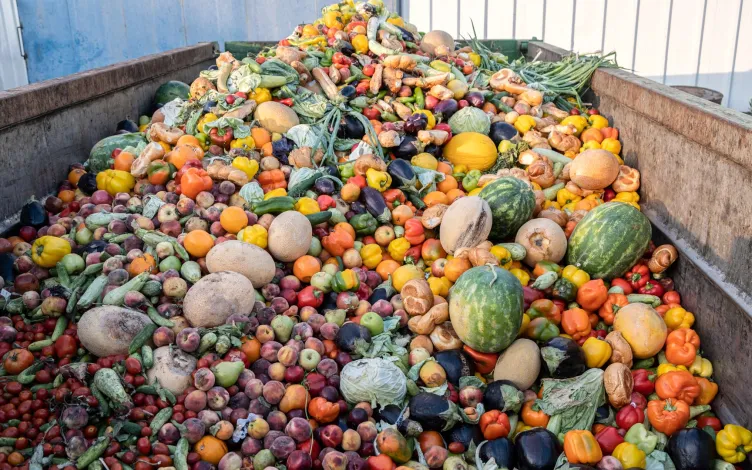
Up to a third of all the world’s food is discarded. Often completely unnecessarily. Although households are responsible for most food waste, there is much that can be done upstream to reduce post-consumer food waste.  
“It’s a major problem that no one can solve alone,” says Maria Nehme O'Neill at RISE. 

No one really wants to throw food away. Despite this, Swedish households produce around 60 kilograms of solid food waste per person per year. Of this, approximately 27 per cent is food waste – food that could have been eaten if it had been handled correctly. In addition, we pour out around 18 kilograms of liquid food per person per year down the drain, such as milk, sauces and leftover drinks.

About a third of all food grown is discarded 

Karin Östergren, a senior researcher and project manager at RISE, describes food waste as a result of several actions taken and poorly considered decisions made at various stages of the food chain. 

“Relatively small changes can have a major impact. If everyone were to save just a little more food than they do now, it would have an extremely positive impact on total food waste.” 

She believes that households are affected by the attitudes of different food stakeholders towards food. Which products are offered? How are they marketed? Are the packages thoughtfully designed with reduced food waste in mind? 

“Further upstream in the food chain, it’s very much about the financial aspects and making more informed decisions, while for consumers, it’s more about chance combined with a lack of knowledge and motivation.”  

Food producers have the power to change behaviours 

Internal measures and a deeper understanding of how and why food waste arises need to be put in place throughout the food chain. Maria Nehme O'Neill is a project manager at RISE:  

“This just hasn’t been achieved at a higher level. Efforts to tackle food waste by means of national policies haven’t yet achieved what we want, quite simply. There are many stakeholders within the system who are doing a great deal of good and scaling things up with pleasing results, such as by means of Sweden’s national platform for reduced food waste. However, many of those working in the food supply chain need more operational and strategic tools to achieve the best, most effective changes.”  

It’s still socially acceptable to waste food, which is something we need to discourage in every way we can.

Food waste still a part of everyday life 

While food industry stakeholders need dedicated leadership and a willingness to invest time and effort, they also need support in the shape of action plans, so that they can visualise a common thread and see the actual value in reducing food waste. 

“It’s still socially acceptable to waste food, which is something we need to discourage in every way we can. Discarding edible food should be a major loss for both the brand and its bottom line,” says Maria.  

The reason for reducing food waste must be communicated 

Changing attitudes towards food waste is a process that takes time. Maria says that public sector catering in Sweden has come a long way. However, the need to educate staff in both the public and the private sectors about why waste must be reduced remains, and this is something RISE is attempting to do via the initiatives Klimat 2030 (Climate 2030), Skolmatsakademin (The School Meals Academy) and Måltid Sverige (Meals Sweden). 

“You can’t simply introduce a procedure and hope for the best; you need leadership and knowledge about all types of food wastage. When we hold courses for different stakeholders in the food industry, we want them to ask themselves why they’re doing it. It’s not simply a matter of brand and identity. It’s also a matter of assuming greater social responsibility as an organisation and contributing to the green transition. Today, many people are interested in supporting organisations that take this kind of responsibility for sustainability.”  

Support within food waste for municipalities and companies 

Maria works as a coordinator within initiatives that include Klimat 2030, which supports municipalities and companies wanting to accelerate their climate transition. Food waste is then included as a concrete climate goal. 

“We even support small and medium-sized enterprises with limited resources of their own. We help them get the ball rolling and identify a starting point suited to their particular organisation. It’s almost impossible to develop a one-size-fits-all solution for such a complex problem.”  

HOW TO JOIN THE FIGHT AGAINST FOOD WASTE 

  1. Identify where food waste arises in the value chain. By identifying where in the value chain food losses arise – and why – you can take action. 
  2. All stakeholders within the food chain must contribute. Partnerships and networks are important pieces of the puzzle for being a forerunner.
  3. Follow the new waste ordinance. With a starting point in Sweden’s new waste ordinance (2020:614), IVL Swedish Environmental Research Institute, RISE and industry stakeholders are looking into how to reduce food waste in the retail trade by means of sustainable ways of using food. 
  4. Review the package design. Within the EU’s new MICROORC project, in which RISE is involved, packages will be refined.
  5. Do not prioritise by weight only. Food waste is about not only quantities, but also costs and greater environmental impact. RISE’s climate database can be used to compare different solutions for reducing food waste.
  6. Be innovative. Create tailored solutions to reduce food waste. Thanks to its broad technical expertise and experience within food, RISE can act as a sounding board.  

WASTE, WASTAGE OR LOSS? THE CONCEPTS TO BE AWARE OF 

There is widespread confusion about the concepts used within food waste. Here, we explain exactly what the most common terms mean. 

Food waste. Biodegradable waste comprised primarily of food. Food waste is the term used in instructions for sorting waste. In this context, the term food waste also encompasses biodegradable kitchen waste such as paper bags and flowers. 

Pre-consumer food waste. Food that has been produced as food but for various reasons does not move down the food chain and so is not eaten by humans. 

Food wastage. All foods – both solid and liquid – that have become waste. Waste encompasses any item or substance that the holder wishes to discard or is required to discard. Comprised in part of avoidable food waste that could have been eaten or drunk, such as leftover food and surplus products that are discarded. This category also includes unavoidable waste, such as inedible shells, bones and coffee grounds. 

Food loss. A term for the food waste that mainly arises further upstream in the food supply chain and that is not classified as food wastage. This could be vegetables or potatoes and bread that are used as animal feed rather than becoming food for humans.

Profile image

Contact Maria

CAPTCHA

* Mandatory 

By submitting the form, RISE will process your personal data.

Karin Östergren

Senior Forskare
+46 70 420 56 19 Read more about Karin
Profile image

Contact Karin

CAPTCHA

* Mandatory 

By submitting the form, RISE will process your personal data.
Food Sekundär områdes navigation:
Circular transition
Service innovation

Peek around the corner and plan for the future with foresight

Brick building corner

Can we see into the future? Perhaps not in the literal sense. But we can actually plan and prepare for tomorrow on a scientific basis. 

And the enabler is known as foresight. This is a scientific discipline that involves using tools such as external environment analysis and scenario planning to understand the consequences of current trends, uncertainties and developments.  

“Foresight can be used in combination with what we call strategic planning. This then involves three different perspectives. The first perspective involves working with trend and external environment analyses. The second perspective considers possible futures, and this is more focused on creating different scenarios. These are sometimes referred to as exploratory scenarios and alternative futures,” says Magnus Eriksson, a unit manager at RISE, and continues:  

“The third perspective concerns preferred futures. This involves working with, for example, visions and strategic objectives. By envisioning these various probable, possible and preferred futures, we create better conditions for facing a complex future and making more future-oriented decisions.” 

Foresight provides a concrete roadmap 

The idea behind envisioning probable, possible and preferred futures is to provide organisations in the public and private sectors with a scientific basis for making decisions. According to Magnus, many organisations focus on short-term perspectives in their efforts to deal with the imminent. This makes it more difficult to envision where the organisation will be in five to ten years and how it will get there. With the help of foresight, we can draw up both the goal and a concrete roadmap for getting there.  

Increasingly more people are starting to realise that foresight is a highly capable strategic planning tool that can help and simplify decision-making.

Today, RISE works with foresight linked to, for example, the transition to climate-neutral and circular systems and business. Foresight is also applied to other fields within transition, such as digitalisation and demographic changes. Questions that RISE can help answer include: “How can your organisation become tomorrow’s winner?”, “How can you transition to a more sustainable business faster?” and “Which emerging trends will affect your industry in the longer run?”  

“We have, for example, devised a way forward for the Swedish Transport Administration. The feedback from the client was that following the foresight project, it was easier for decision-makers to prioritise various technology developments and determine investment needs. For another client, a municipal company, we’re looking at how external factors and future developments will affect the design of future recycling systems,” says Magnus.  

A foresight project requires facts and expertise within the area in which the client operates. In the example concerning the Swedish Transport Administration, the project concerned transport, mobility and aviation.  

“Since we have access to 3,000 experts here at RISE, we can effectively gather facts about all imaginable areas. The foresight team consults these experts and extracts their knowledge to make it understandable to the client,” Magnus explains. 

“Foresight is an underused tool” 

Foresight is woven into to a number of related disciplines, all of which can be linked to a foresight project. Governance innovation, which entails strengthening and building robust governance to achieve a more sustainable society, is one example, while transition management and transition capacity are others. In these contexts, it is a case of leveraging a system perspective to approach the transition process more proactively. This involves contributing to the development of new sustainable practices, logics and technologies.  

However, foresight is a good place to start, according to Magnus.  

“Increasingly more people are starting to realise that foresight is a highly capable strategic planning tool that can help and simplify decision-making. Foresight is a tool that offers huge potential and leverage but is currently underused.”  

Magnus Carl Eriksson

Enhetschef
+46 10 516 55 61 Read more about Magnus Carl
Profile image

Contact Magnus Carl

CAPTCHA

* Mandatory 

By submitting the form, RISE will process your personal data.
Innovation management Sekundär områdes navigation:
Circular transition
Service innovation

Masterclass - generative AI for schools

People working by computer

Are you working in education and curious about what and how you can create using generative AI?

Now, if you have already started your exploration on your own, you have the opportunity to, together with some of the experts from RISE and other AI-interested colleagues from different parts of the country, explore and apply the possibilities of generative AI.

Over two half-days, you will engage in workshops focused on the application of AI in an educational context. This could involve prompting an student assistant, distorting or cloning voices, creating avatars from video/images, or generating and processing text.

During the masterclass, you will have the opportunity to broaden your understanding of what AI could mean for schools and teaching, and explore a number of services to grasp the possibilities.

For whom?
For those who have already explored image and text generation and wish to take their knowledge further. You have a clear responsibility to share this knowledge within your own school or municipality. Your role could, for example, be an ICT educator, digitalization manager, etc.
 

How?
We will meet at one of RISE's offices (from lunch to lunch). The masterclass will consist of presentations and exploratory sessions led by RISE's experts. The masterclass relies on a high level of personal responsibility and engagement

Cost?
Regular price: 5800 SEK excluding VAT*, **.

*Travel, meals, and accommodation are covered by the school/employer.
*For RISE Skolpartners - pricing as agreed. 

Workshop, In-person,
sv
Förfrågan om Masterclass AI för skolhuvudman
12 Aug 2023 - 01 Dec 2024
02:04-02:04
0 SEK (excluding VAT)
Workshop
In-person
sv
Division: Division Digital Systems and Societal Transformation

Lotta Fransson

Projektledare
+46 72 451 19 36 Read more about Lotta
Profile image

Contact Lotta

CAPTCHA

* Mandatory 

By submitting the form, RISE will process your personal data.

Mikael Kring

Forskare
Read more about Mikael
Profile image

Contact Mikael

CAPTCHA

* Mandatory 

By submitting the form, RISE will process your personal data.
webid: 57920 categoryid:
294487
294677
294488
Lifelong learning Sekundär områdes navigation:
Artificial intelligence
Service innovation

Design for circular use

Name of service (page headline, shown in promos – maximum of 70 characters incl. spaces): Design for circular use Lead (include SEO-words and the main benefits for your target groups. Stick to one paragraph, maximum 2-3 sentences):

A circular transition requires changes in user behaviours. But acting in a circular way is challenging; it can be more cumbersome, more time-consuming, and sometimes more expensive compared to the linear alternatives. We can help you design offers that both enable circular use patterns and make them preferable!

Purpose/Benefit:

Today, many people lack preconditions to change their personal life and work life to meet society's sustainability goals and align to strategies for a circular economy. Without changed conditions, it will be difficult for the majority to stop buying newly produced goods and instead start buying, renting, or borrowing things in circular flows and re-circulate them when the time comes. By better understanding users' everyday lives, their circularity-related behaviours, as well as their needs and experience of today's products and services, you will be able to create new circular offerings that enable a circular personal life and work life for more people. Circular offerings based on customer needs also have the potential to both become more attractive than today's linear offerings and contribute to reduced environmental impact. Through this service, RISE helps you explore opportunities for circular offerings with user needs and behaviours in focus.

The service is suitable for companies and organizations that currently develop, renovate, or resell products that can provide clear economic and sustainability benefits if they are circulated in tight loops. Perhaps you offer a product that has a long lifespan without getting paid for the value the product creates over time? Or perhaps you offer a product with a short lifespan that could be redesigned to last longer and be used by more people? Regardless, we can help you explore opportunities for new attractive offers that facilitate circular use patterns.

Method (what/which methods are used to perform the service):

The service is adaptable to your situation. At a first meeting, we talk about your needs, existing customer offerings and challenges. RISE then proposes appropriate activities, which may include, for example:

  • Inspiring lectures on the topic of user-centered circular design.
  • Workshops to create an understanding of the customer's situation and/or develop design concepts.
  • Design sprint where we work through a business opportunity from needs analysis to design solution and business case.
  • User studies that build deeper understanding of the users' situation before workshops or design sprints.

During the activities, RISE introduces concrete and inspiring methods and tools that help you design for circular use patterns with your customers' needs in focus. These help you map processes and customer journeys, explore how users experience circular consumption and reusing products, create concepts based on circular design strategies, and evaluate circular business opportunities.

Delivery (what does the client get after performed service – e.g. a report, certificate etc.):

You will gain a basic understanding of user-centered circular design and how knowledge of the user's personal life or work life can help you develop successful solutions for a circular economy. You will also gain knowledge about how you can work to develop new user-centered circular solutions and what design tools you can use in your process. Depending on the activities carried out, the delivery may also include:

  • Insights about user experiences and user needs.
  • Ideas and concepts for user-centered circular solutions.
  • Business cases for your circular offerings.

Insights and other results can also be compiled by RISE by agreement, for example in a presentation, report or summarised in inspirational scenarios and design fictions or similar. 

Area:
Circular transition
Design
Service innovation
Contact person (Enter one name per field. Activated personal contact pages will appear automatically):
Anneli Selvefors, Senior forskare
Sara Renström, Senior Forskare
Image showing the mapping of circular behaviours
Field measurements: No Price type: 1 Division: Do not use - Division Built Environment Preparation: Description of preparation Preparation information:

The need for preparation varies depending on the activities; we jointly agree on how you can best prepare.

Certification and marking: Not applicable Type of service: Innovation services Instrument: Not applicable General area: Not applicable Order information: For more information and booking contact us. Contact details can be found further down. Divison (OLD): Do not use - Division Built Environment Delivery level: Not applicable
anneli.selvefors@ri.se,sara.renstrom@ri.se
/en/node/9710
9. Industry, innovation and infrastructure
11. Sustainable cities and communities
12. Responsible consumption and production
Purpose - Header: Purpose Metod - Header: Method Delivery - Header: Delivery More information - Header: Mer information
Order
form
Circular transition Sekundär områdes navigation:
Design
Service innovation
Tjänstetyp tagg: Konsultuppdrag