Jump directly to content

High-temperature thermochemical heat storage

HERCULES

HERCULES project aims to enable the storage of industrial heat for a wide temperature range, with a focus on high temperatures, via a concept to use renewable electricity production and excess heat from the industrial processes.

Project participant
Active
Energy Climate adaptation Climate neutral industry Life cycle analysis
Other than Sweden
4 years
4 million EURO
Division: Division Materials and Industry

HERCULES introduces a new strategy for thermal energy storage of renewable energy via a hybrid of thermochemical and sensible heat storage using porous media made of redox metal oxides and electric heating elements. The heating elements use electricity at low electricity rates or at excess electricity to heat the storage block to the oxidation temperature of the metal. If necessary, the system can then transfer its to a controlled airflow that passes through the porous oxide block that initiated the oxidation of the reduced metal oxide. The reduction process is an exothermic process and therefore a hot air stream is produced during this step which can be used to provide high temperature heat for industrial processes. The project will be carried out by an interdisciplinary consortium consisting of leading research centers, universities, innovative SMEs and large companies including ancillary service providers and technical end-users. 

RISE leads the work on sustainability aspects in collaboration with all partners. RISE carries out life cycle (LCA) and technical-economic analysis (TEA) to evaluate the environmental and economic aspects of the technology.

Yoon Lin Chiew

Projektledare
+46 10 228 47 70 Read more about Yoon Lin

Contact Yoon Lin

CAPTCHA

* Mandatory 

By submitting the form, RISE will process your personal data.

Jonas Zetterholm

Forskare
+46 10 516 55 63 Read more about Jonas
Profile image

Contact Jonas

CAPTCHA

* Mandatory 

By submitting the form, RISE will process your personal data.
7. Affordable and clean energy
9. Industry, innovation and infrastructure
13. Climate action
Deutsches Zentrum fuer Luft- und Raumfahrt e.V. Centre for Research & Technology Hellas RISE Research Institutes of Sweden Tata Steel IJmuiden BV Alucha Works BV Thermansys P.C. LANDSON Emission Technologies A/S COBRA Instalaciones y Servicios S.A. KRAFTBLOCK GmbH
Deliverable
Projekt logo: HERCULES Attach document: Project end date: Energy storage Sekundär områdes navigation: Composites

Hydrogen's possibilities for wind power

Hydrogen's possibilities for wind power
Wind power plant

Wind power producers have identified the possibility to produce hydrogen when electricity prices are low. The produced hydrogen can come to good use in other sectors, and thus benefit the climate. There is potential for large scale production of green hydrogen in combination with wind power.

Project manager
Completed
Energy Wind power Hydrogen
About 2 years
1 000 000 SEK
Division: Division Safety and Transport

The overarching goal of the project was to contribute to finding suitable system solutions for the energy system of tomorrow. By producing green hydrogen, wind power producers can assist with reducing climate impact in the energy system whilst simultaneously increase their income, as electricity prices generally go down when production goes up. To contribute to the general field of knowledge, this project will examine different technological solutions, the economical prerequisites, and the relevance of hydrogen production in combination with wind power. Both off-shore and on-shore systems have been examined.

The project was split up in four work packages:

  1. Technological and economic analysis of different system solutions
  2. Optimization of the aforementioned systems
  3. Analysis of rules and regulations, standards and permit processes
  4. Description of different business cases including wind power producers and hydrogen production

The project is finished and the final report can be found below (in swedish).

Gustav Cylvén Green

Forsknings- och utvecklingsingenjör
+46 73 034 95 68 Read more about Gustav
Profile image

Contact Gustav

CAPTCHA

* Mandatory 

By submitting the form, RISE will process your personal data.
7. Affordable and clean energy
Final report
Attach document: Project end date: Wind power Sekundär områdes navigation:
Innovation management
Energy storage
Maritime

Special initiative for improved cyber security in charging stations

Charger for electric cars Photo: Magnus Gotander

The expansion of charging infrastructure is not only driving the transition within transportation. It is also providing hackers with new targets. Accordingly, RISE is launching a special initiative for enhanced cyber security for charging stations in Sweden. 

Within the framework of the EU plan for the green transition, Fit for 55, the EU parliament’s committee on transport and tourism has stated that it would like to see a faster expansion of the charging infrastructure along Europe’s main roads. The goal of having short distances between charging stations and fast chargers entails great business opportunities for charging station suppliers.  

However, to be allowed to sell the products, they need to be tested and certified in compliance with regulations and standards concerning, for example, electrical safety, electromagnetic compatibility (EMC), functionality and electricity metering. They also need to be tested in terms of cyber security. This is to avoid hackers being able to use the charging stations to gain access to the vehicles being charged or, worse still, to overcharge the vehicle’s battery resulting in a high fire risk. 

“We need to prevent a number of undesirable events and threats,” says Anders Nilsson, senior business developer at RISE. 

Battery storage an exciting feature that entails risks 

RISE can both test and certify charging components in compliance with regulations and standards concerning, for example, electrical safety, electromagnetic compatibility (EMC), functionality and electricity metering. We also offer a special additional service within cyber security — an area that not only attracts innovative hackers, but also faces a range of new regulations. 

Ted Strandberg, a project manager at RISE with a focus on cyber security, has, for example, examined how connected electric vehicles could act as battery storage for the power grid, via the vehicle-to-grid (V2G) system. In future scenarios, technology is often presented as an important flexibility service. 

In practice, a charging station manufacturer or provider could offer such battery storage as backup for the power grid. Vehicle owners would also be able to buy and sell electricity at favourable times. 

“If we consider it in terms of cyber security, there are risks. Imagine if this entire battery storage system was hacked and all vehicles sent power back to the grid at the same time. If you get too far outside the power grid frequency, damage will occur.” 

Third-party scrutiny offers peace of mind to buyer and seller alike

Multiple cyber security standards 

Strandberg says that there are a number of cyber security standards for which RISE is already accredited and can test compliance with. 

“We’re also preparing to be able to test compliance with the EU’s new cyber security regulations, which will come into force over the next few years.” 

“I also believe that third-party scrutiny offers peace of mind to buyer and seller alike. Buyers feel that they aren’t alone in making their decision. And sellers gain a certificate showing that they’ve done what they can.” 

In recent years, the EU has started to regulate increasingly more aspects of data use, in the shape of data protection, AI and cyber security. Strandberg also mentions the revised version of the so-called NIS2 directive as a further tightening of safety requirements within, for example, transportation and energy. 

“The directive states, among other things, that you are obliged to implement incident management procedures and report an incident [in Sweden, to MSB, the Swedish Civil Contingencies Agency]. I think this will help create preparedness at companies to handle attacks.” 

Risk management rule breaches can lead to fines 

In the updated directive, companies breaching the risk management rules or failing to submit an incident report risk hefty fines of up to ten million euros, or two percent of their global sales. The GDPR and the AI Act have similar mechanisms. 

Strandberg also mentions the radio directive’s new cyber security requirements, which need to be met to sell products containing radio communication components.

“We focus on evaluating cybersecurity in products and organizations to ensure compliance with regulations. We also offer penetration testing of charging stations, where an ethical hacker attempts to breach the system and, based on identified vulnerabilities, produces a report,” says Strandberg. 

Ted Strandberg

Projektledare
+46 10 516 60 93 Read more about Ted
Profile image

Contact Ted

CAPTCHA

* Mandatory 

By submitting the form, RISE will process your personal data.
Cybersecurity Sekundär områdes navigation:
Electromobility
Energy storage
Digital infrastructure
Risk and security

World-unique test facilities will accelerate electrification

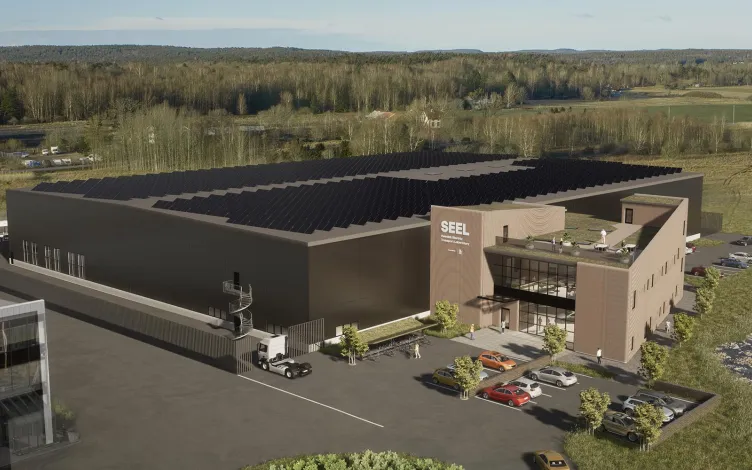
SEEL

A unique opportunity to develop new electromobility products and services has opened up. In September 2023, three new test centers for electric vehicles and components were inaugurated within the initiative SEEL, Swedish Electric Transport Laboratory. The goal is clear: The testbed is to comprise one of the few open meeting places for collaboration and innovation in Europe. 

“It's been a crazy time to make a billion dollar investment like this. But we are extremely proud and happy to now be able to open the doors to three new test environments for electromobility. And the interest, well, that’s grown more than the construction index and timber prices,” says Henrik Svenningstorp. 

Full-scale vehicle testing 

Henrik Svenningstorp is CEO of SEEL,owned by RISE and Chalmers University of Technology and which in 2023 will begin testing vehicles and components for electromobility on a full scale in Gothenburg, Borås and Nykvarn. 

“We’re not trying to be the best at making batteries or electric motors, we’re simply trying to be the best at measuring them. In Säve, we have facilities covering some 15,000 square metres with essentially everything you need to test whatever needs to be tested within electromobility: batteries, shafts, vehicles, electrical components, noise and vibration, charging systems… The facility in Nykvarn is a little smaller, with a focus on heavy vehicles. This is where, for example, we have the most powerful equipment for testing electric motor shafts. The only thing we can’t do in Gothenburg or Nykvarn is safety-critical and destructive testing. That we do in Borås.” 

"The lab for safety-critical testing in Borås is a world-leading test environment with the greatest possible concern for the environment. All tests take place in a controllable and fully repeatable indoor environment, and thanks to a state-of-the-art treatment plant, both flue gases and extinguishing water are taken care of, which means the highest possible environmental friendliness when testing batteries", says Michael Rahm, department manager for Fire and Safety at RISE.

The fume treatment plant can handle 170,000 cubic metres of smoke an hour. This makes it possible to incinerate an entire passenger car in an orderly fashion, taking care of all the fumes and measuring their composition. Since the facility is run by RISE, certification will be possible from the outset. The long-term ambition is to accumulate extensive technical expertise that will enable the testbed to offer virtual testing as well. 

We want to be a neutral meeting place conducive to new collaborations

The goal: A neutral meeting place for small, innovative companies to meet major players 

“Our goal is clear: We want to be a neutral meeting place conducive to new collaborations, whether between large and small companies or industry, academia and institutes. Europe has relatively few open and accessible testing facilities of this size. And we’re well aware that large companies appreciate the innovation boost they can gain from collaborating with smaller, innovative companies. Similarly, smaller companies may need to test their ideas in the environments in which major players are found while protecting their future patents,” Svenningstorp explains. 

In collaboration with RISE, it will be possible to support small companies seeking funding for their first major investments. SEEL will be judged by its owners on how well it succeeds in encouraging collaboration. Four major industrial companies are involved in the project as guaranteed customers, and their testing needs are extensive. Parallel to this, there is room for other companies of different sizes, and should space prove to be limited as time goes by, there are ambitions to expand.  

Sharply increased interest in recent years 

“There’s a great deal going on right now. Since receiving our EU approval in 2019, interest has only increased. We’re also busy on several fronts. In Säve, parts of the laboratory are even prepared for hydrogen and fuel cells, a possible replacement power source for all large vehicles with internal combustion engines currently trafficking the roads that need to transition. We’ve entered into a partnership with the shipping industry and signed an MoU (memorandum of understanding) with several stakeholders.”  

Initial contact has been made with the aviation industry. Svenningstorp underlines that while there are major differences between truck and jet engines, the differences between electric motors for different types of transport are smaller. 

“In principle, if we can measure rotational speed, torque, current and voltage, then we can test a powertrain regardless of whether it’s for a vehicle, a ship or an aircraft.” 

“We’ll also be able to test infrastructure, such as charging stations. For some areas of the recycling industry, our labs may prove necessary when making new products from what is currently treated as waste. The same applies to the energy industry, which is developing vehicle-to-load and vehicle-to-grid – different systems for using electric vehicle batteries for energy storage.” 

Facilities designed for education and training 

On top of all this, there is a need to train the workforce for all the battery factories and other operations in the growing electromobility industry. The testbed facilities are designed to enable education and training. 

“We are now ready to open our three sites with grand openings in September. These are exciting times,” Svenningstorp ends. 

SIGNING UP FOR THE NEW TESTBED

Many stakeholders are currently expressing great interest in testing solutions for different aspects of electromobility. 

Founded on the combined expertise of RISE and Chalmers University of Technology and with four guaranteed major industrial customers, the testbed now has the capacity to help small, medium and large organisations with both small and large-scale electromobility innovation projects. 

The testbed can help customers with all types of electric vehicle testing activities. 

Henrik Svenningstorp

Chef inom strategisk forskning och affärsutveckling
+46 73 840 59 14 Read more about Henrik
Profile image

Contact Henrik

CAPTCHA

* Mandatory 

By submitting the form, RISE will process your personal data.
Profile image

Contact Magnus

CAPTCHA

* Mandatory 

By submitting the form, RISE will process your personal data.
Electromobility Sekundär områdes navigation:
Metrology
Fire safety
Energy storage
Production and manufacturing

CIRPASS - Shaping the future of the Digital Product Passport

CIRPASS

CIRPASS is funded by the European Commission, is a collaborative initiative to lay the foundations for the implementation and expansion of a standards-based digital product passport (DPP) with an initial focus on ICT, batteries and textiles.

Specialist competence regarding information needs for circularity, especially regarding textiles and batteries
Completed
System innovation
Not applicable
18 månader
Division: Division Materials and Industry

RISE participates as an associated partner in the project consortium consisting of 30 partners representing thousands of industrial, research, digital, international, standards, organizations across Europe and beyond. The 18-month project will respond to the European Commission's call to create a clear concept for DPP, define a cross-sectoral product data model and DPP system with proven benefits for the circular economy, and develop roadmaps for its implementation. RISE focuses here on information needs linked to textiles and batteries.

CIRPASS has the following objectives:

- Present a clear cross-sectoral definition and description of DPP

- Define a cross-sectoral product data model for DPP useful for the circular economy

- Clarify the requirements related to product identification

- Propose an open DPP data exchange protocol adapted to the needs of circular economy stakeholders and propose such a protocol based on updated digital technologies

- Build stakeholder consensus on key data for circularity and related open European and global vocabulary standards to be included in the DPP for batteries, electronics and textiles

- Develop case studies and roadmaps for pilots, implementation and generation of business value based on cross-sector DPP

Lisa Bour

Avdelningschef
+46 10 228 48 07 Read more about Lisa
Profile image

Contact Lisa

CAPTCHA

* Mandatory 

By submitting the form, RISE will process your personal data.
12. Responsible consumption and production
Projekt logo: CIRPASS project logo Project end date: Circular transition Sekundär områdes navigation:
Data Science
Energy storage
Textiles
Digital infrastructure

Composites a key component for hydrogen-powered aviation

Aircraft with illustrated greenery Photo: RISE

The European aviation industry has the ambition of reaching net-zero emissions by 2050. Hydrogen-powered aircraft will play an important role in achieving this, and hydrogen is one of the aviation solutions expected to deliver the greatest climate benefits. At best, up to ninety percent of the aviation industry’s current carbon emissions can be eliminated by using hydrogen.

Last year saw the start of a two-year project, H2JET, in which GKN Aerospace and the Swedish Energy Agency, together with several other partners, are investing SEK 24 million in the development of key components for hydrogen-powered aircraft engines.

“The project came about when we started looking at possible future fuel alternatives and realised that hydrogen was a strong contender. We then wanted to identify different technical solutions to enable a future switch to hydrogen fuel,” explains Henrik Runnemalm, head of research at GKN Aerospace.

Competence in composites

RISE is one of the project partners, contributing its expertise in composite materials, such as within material selection, design, automated manufacturing techniques and, not least, testing and simulation design.

“Our role is to support the development of new technology. We can offer, for example, access to the facilities that GKN Aerospace lacks for testing and developing prototypes and demonstrating the resulting technology. This will also support their future development objectives and offer commercial advantages,” says Tim Unerman, project manager and researcher at RISE.

Collaboration provides new knowledge

RISE’s key understanding of this type of technology and its current maturity will enable both organisations to develop knowledge as well as experience together, he explains. 
“The way in which we’re working together on this project provides an overview at system level as well as our more detailed approach.”

The collaborative efforts that arise when you bring together various areas of expertise comprise an important part of the project, Henrik explains.  

“We’re creating completely new areas here, and this is where RISE comes in with its expertise in and experience of composite technology for handling hydrogen, for example. We each collaborate by contributing our share, enabling us to create new knowledge together.”

For a more sustainable society

To develop the technology that GKN Aerospace needs, RISE is currently highly focused on its part of the research central to the project. Always, however, with an eye to the bigger picture: enabling hydrogen-based aviation and, in the long run, achieving a sustainable society.

“Without these types of projects, we’ll never escape our fossil fuel dependency. These types of technologies are critical to achieving a society with lower carbon emissions,” Tim concludes.

Last published: Sekundär områdes navigation:
Energy storage
Production and manufacturing
Composites

Electrochemical processes for biorefinery and sustainable fuels

Electrochemical processes
Elektrokemiska bioraffinaderiprocesser

During 2021, a lab-scale electrochemistry test bed has been established in Örnsköldsvik. This technology can use renewable electricity to create valuable chemicals and alternate fuels from industrial waste streams.

Laboratory testbeds (LT)
Region Västernorrland

Chandani Singh

Forskare
+46 10 516 67 81 Read more about Chandani
Profile image

Contact Chandani

CAPTCHA

* Mandatory 

By submitting the form, RISE will process your personal data.
Off
Division: Division Bioeconomy

The goal is to create a platform for scaling up electrochemical conversions that can be integrated with other unit operations to evaluate and optimize new process concepts.

The new testbed at RISE Processum is a flexible, innovative platform for carrying out research and development on industrially relevant electrochemical processes. The aim is to develop electrochemical methods for an efficient and sustainable industrial growth. The main objectives of this testbed are:

To establish a platform for electrochemical conversions that can be integrated with other unit operations into a complete process concept.

To scale up process concepts and perform techno-economic evaluations.

To develop technology for the conversion of CO2 (CCU) and industrial side streams to chemicals, fuels, polymers or materials.

The test bed in Örnsköldsvik is a complementary tool to the other biorefinery pilots on the site, for more information click here. Initially, research is ongoing in collaboration with KTH, SU, LTU, UmU and SLU in the following areas:

  • Valorization of industrial side streams for the production of bio-fuels and chemical feedstock.
  • Carbon Capture and Utilization (CCU), where CO2 is converted into C1-C3 chemicals.
  • Generation of green hydrogen and purification of industrial waste water.
Other
Biorefinery
Not applicable
2021

Address

Hörneborgsvägen 10, Örnsköldsvik/Domsjö

Division (OLD): Division Bioeconomy Biobased circular processes Sekundär områdes navigation:
Circular transition
Energy storage
Production and manufacturing
Chemical products and processes
Power production
Biotechnology

Hydrogen embrittlement – Slow strain rate testing

Name of service (page headline, shown in promos – maximum of 70 characters incl. spaces): Hydrogen embrittlement – Slow strain rate testing Lead (include SEO-words and the main benefits for your target groups. Stick to one paragraph, maximum 2-3 sentences):

Metallic materials exposed to a hydrogen atmosphere can exhibit degradation of their mechanical properties during their service life due to hydrogen embrittlement. Slow Strain Rate Testing (SSRT) in hydrogen atmosphere is a mechanical testing method that evaluates loss of ductility in metallic materials caused by hydrogen embrittlement.

Purpose/Benefit:

The performance of materials used for example in hydrogen storage and transport systems can be severely affected by degradation caused by hydrogen embrittlement. An appropriate materials selection is a cost-effective way to reduce the risks of hydrogen embrittlement for the hydrogen industry.

Method (what/which methods are used to perform the service):

The testing is carried out in the lab according to the principles of relevant standards. During the Slow Strain Rate Testing (SSRT), the specimens are subjected to an increasing uniaxial strain while exposed to gaseous hydrogen. The test continues until fracture occurs and the loss of ductility due to hydrogen embrittlement is compared against a specimen tested in an inert environment. We offer testing in hydrogen gas environment up to 150 bar.

Delivery (what does the client get after performed service – e.g. a report, certificate etc.):

Written report in English together with the acquired data.

Area:
Energy
Fossil free fuels
Climate neutral industry
Corrosion
Material transition
Mobility
Production and manufacturing
Testing
Hydrogen
Contact person (Enter one name per field. Activated personal contact pages will appear automatically): Rikard Norling, Gruppchef Field measurements: No Price type: 1 Division: Division Materials and Industry Preparation: Description of preparation Preparation information:

Specimens according to agreement can be provided directly by the client. We can also receive raw material from which the specimens are made.

Certification and marking: Not applicable Type of service: Testing / Analysis / Evaluation Instrument: Not applicable General area: Not applicable Order information: Please e-mail your interest to the contact person listed on this page. Divison (OLD): Division Materials and Industry Delivery level: Non-accredited
rikard.norling@ri.se
/en/node/9710
7. Affordable and clean energy
9. Industry, innovation and infrastructure
12. Responsible consumption and production
13. Climate action
Request for quote
form
Corrosion Sekundär områdes navigation:
Metrology
Energy storage
Production and manufacturing
Tjänstetyp tagg: Provning

Energy communities make it possible to share electricity with each other

Hammarby sjöstad

Energy communities are a smart way to produce, recycle and share energy between homes, industries and other types of buildings. Since the beginning of the year, energy sharing between residential buildings has been authorized, opening up new possibilities.

An energy community involves connecting neighboring buildings into a small system where energy can be generated, shared, recycled, and even stored. Until now, the ability to do this was limited because electricity could not be shared between residential buildings. This was changed in an amendment to the regulation that came into effect on January 1, 2022, provided that the buildings are on the same plot of land or neighboring properties.

– There are great opportunities for energy efficiency improvements that are favorable both from a climate perspective and in terms of reducing energy costs within the Energy Community. RISE is therefore building expertise in a number of projects with national and international partners from cities, academia, energy companies and industry, says Monica Axell, Research and Business Developer in the Energy and Resources Department at RISE.

Building on increased interaction

Within the energy community, for example, it is possible to produce solar power that can be shared and stored, to work with low-temperature networks for district heating, to use different types of waste heat from buildings, and to build a system of charging stations for electric cars – which can also be shared in a carpool. With efficient control, it is possible to reduce peak demand and distribute energy to where it is needed most. Another important benefit for the energy system is that energy communities can contribute to flexibility, i.e. the adaptation of energy use to a more dynamic energy production.

– Energy communities are based on increased interaction between prosumers, consumers and other actors in the energy system to increase the share of renewable energy, save energy and increase flexibility. "By working with innovative technologies and system solutions, it is possible to reduce the share of purchased electricity by 30 percent, says Monica Axell.

This is both an important climate issue and a cost issue

Pilot project on energy communities

In order to really study energy communities in a broad sense - innovative technology, legal aspects, forms of collaboration, and governance and business models for energy communities - RISE, in collaboration with KTH, is running the project "System change with locally shared energy". Two pilots, one in existing buildings in Hammarby Sjöstad, and another in Örebro in the not yet completed residential area Tamarinden.

– In this way, we get two different perspectives with different governance needs. In Örebro, it is the city that has to make the decisions, while the initiatives in Hammarby Sjöstad must come from below from those who own the properties, says Monica Axell.

Ten properties by 2025

In Örebro, the planned energy community will consist of ten properties with 700 apartments, which are scheduled for completion in 2025.

– This is both an important climate issue and a cost issue, where we will jointly be able to save SEK 3-5 million a year in reduced energy costs, says Jonas Tannerstad, Head of Electricity and Automation at ÖrebroBostäder.

At present, decisions have been made on a joint low-temperature network for district heating, a joint infrastructure for sharing electricity and a joint automation solution. The next step will be to create a trading centre for local trade in electricity and to form the energy community itself.

– Hopefully we can have an energy exchange with companies in the neighbourhood as well. For example, there is a large ICA store here that needs energy as well as giving up energy, says Jonas Tannerstad.

Climate neutral by 2030

In Hammarby Sjöstad, the energy community is based on ElectriCITY Innovation, an economic association with around 80 members including property companies, 56 housing associations, the City of Stockholm, RISE, KTH, energy companies and a large number of other companies. The goal is for the neighbourhood to be climate-neutral by 2030 – ten years earlier than the City of Stockholm as a whole.

– The energy community is part of our efforts to achieve this. The idea is that, together, we can create a model that can be shared not just here, but across the world. The climate benefit is the most important. But we also see that we can contribute to social benefits in other ways. In Stockholm, there is a power shortage at least until 2028 and this is one way to contribute to the power reserve. And there is also a security policy aspect. If there is a power cut, we can manage the electricity supply ourselves for a period, says Jörgen Lööf, CEO of ElectriCITY.

Five Energy and Environmental Goals of the Locally Shared Energy System Transformation Project

  • Halve power peaks.
  • Save 30 percent energy.
  • Enable greater production of locally generated solar power.
  • Reduce district heating losses and CO2 emissions through low-temperature district heating.
  • Increase the use of fossil-free transportation through charging stations and carpools. The goal is to reduce CO2 emissions by 20 percent.

They are participating in the project "System Change with Local Shared Energy".

RISE, KTH, Örebro Municipality, ÖrebroBostäder (ÖBO), E.ON, ElectriCity (leading the pilot in Hammarby Sjöstad), Enstar, KTC, Siemens and Ellevio.

Erika Lönntoft

Projektledare
Read more about Erika
Profile image

Contact Erika

CAPTCHA

* Mandatory 

By submitting the form, RISE will process your personal data.

Monica Axell

Affärsutvecklare
+46 10 516 55 19 Read more about Monica

Contact Monica

CAPTCHA

* Mandatory 

By submitting the form, RISE will process your personal data.
Sekundär områdes navigation:
Circular transition
Power production
Resource-efficient cities
Built environment
Solar energy
Energy storage

Can more electric cars lead to a more stable energy system?

EVs charging along street

We are now accustomed to charging stations refuelling our cars with energy, but what if the growing fleet of electric cars could also feed energy back into the grid when needed? So-called vehicle-to-grid technology could be a future solution that both contributes to a more stable electricity system and offers a number of advantages for households.

In Japan, where power outages are relatively common, electric car batteries are often used as a backup power source when the grid goes down temporarily. In this case, the car's battery feeds back the energy it stored when it was last charged.

Value for consumers

In Sweden, we do not have the same problem. In fact, power outages are becoming less frequent. However, even here, more and more households are looking into ways of securing their electricity supply in the event of a temporary outage, particularly in light of recent social developments such as the Coronavirus pandemic and the current unstable security situation in Europe. This can also help other motorists whose cars have run out of power and enable households to balance energy usage during the day when prices are highest.

– But whether it is economically viable for end users remains an open question in Sweden, says Mattias Persson, a researcher in electrical power systems at RISE. Stefan Pettersson, a professor and the head of the electromobility unit at RISE, agrees.

– Something of value must be created before consumers will buy this. You could get paid for the electricity you feed back into the grid, become more self-sufficient in combination with solar cells, or contribute to a green transition, which some people find valuable.

Future network benefits

In a future where this technology is commonplace, electric cars could contribute to increased grid stability. Smart charging ensures that cars are charged when there is plenty of electricity in the grid. At critical energy consumption peaks, it sends energy back to the grid instead.

– The individual car doesn't make much difference here, says Stefan Pettersson, but collectively, many vehicles can create opportunities.

If you collect a large number of rechargeable vehicles, the potential energy they generate can be fed back into the grid. This also presents a potential business opportunity for grid owners.

Due to increased electrification and greater energy needs, it is possible that we in Sweden may find ourselves in a situation where the infrastructure is unable to deliver the desired output at certain times.

– Even if the network is stable, problems can still arise due to highly fluctuating usage. In such cases, this can be a way of stabilising the frequency from a more local perspective, says Stefan Pettersson.

– In Gothenburg, for example, local flexibility markets have been set up to counteract transmission constraints. This means that smaller, more local grids can benefit from this too, as well as the large electricity grid, says Mattias Persson.

It is the laws, not the technology, that get in the way.

Legislative changes are required

When it comes to technology and infrastructure, there are few technical obstacles. According to Stefan Pettersson, charging points need to be designed so that they can also receive energy, but this technology is not difficult to implement.

Instead, a few other elements are required, such as standards, laws and policies. Today's electricity law was not written with mobile consumers, such as electric cars, in mind and it may limit what players in the system can do to find profitability.

– It is the laws, not the technology, that are getting in the way. There are grey areas and white areas in the legislation. On the one hand, existing legislation can hinder the technology, and on the other, the concept of feeding energy back into the grid is not even defined. Is it permitted at all?

Interdisciplinary collaboration is required

RISE has the capacity to be a valuable partner in many areas where questions remain unresolved, whether that involves developing and reviewing standards, or drafting legislation and policies.

– We have test sites for battery wear and IT security, which will be very important issues, says Mattias Persson.

– For a vehicle-to-grid solution to be widely implemented, many different areas of expertise need to collaborate to gain an understanding of the bigger picture. Stefan Pettersson says that these areas of expertise are available at RISE.

This is where electricity, vehicles and telecommunications converge. We can work across disciplines and conduct research into the remaining obstacles. At RISE, our expertise ranges from technology and behaviour to business models, laws and policies. By working together with partners in the field, we can get closer to finding a solution.

Mattias Persson

Forskare
+46 10 516 50 18 Read more about Mattias

Contact Mattias

CAPTCHA

* Mandatory 

By submitting the form, RISE will process your personal data.
Electromobility Sekundär områdes navigation:
Energy transmission
System innovation
Energy storage
Digital infrastructure