Next-Generation Power Semiconductor Innovation for Electrification
02 December 2025, 11:10
RISE Research Institutes of Sweden and The Inter-University Semiconductor Research Center (ISRC) at Seoul National University has signed a strategic Memorandum of Understanding (MoU) to jointly develop next-generation power semiconductor technologies in response to the accelerating global shift toward electrification.
Through this partnership, the two organizations aim to establish a close collaborative framework to secure high-efficiency and high-reliability power semiconductor solutions for rapidly growing sectors such as electric vehicles (EV:s), renewable energy, data centers, rail systems, and aviation. Both sides will concentrate joint capabilities on the development of high-voltage power devices based on silicon carbide and gallium nitride, which are seeing soaring global demand.
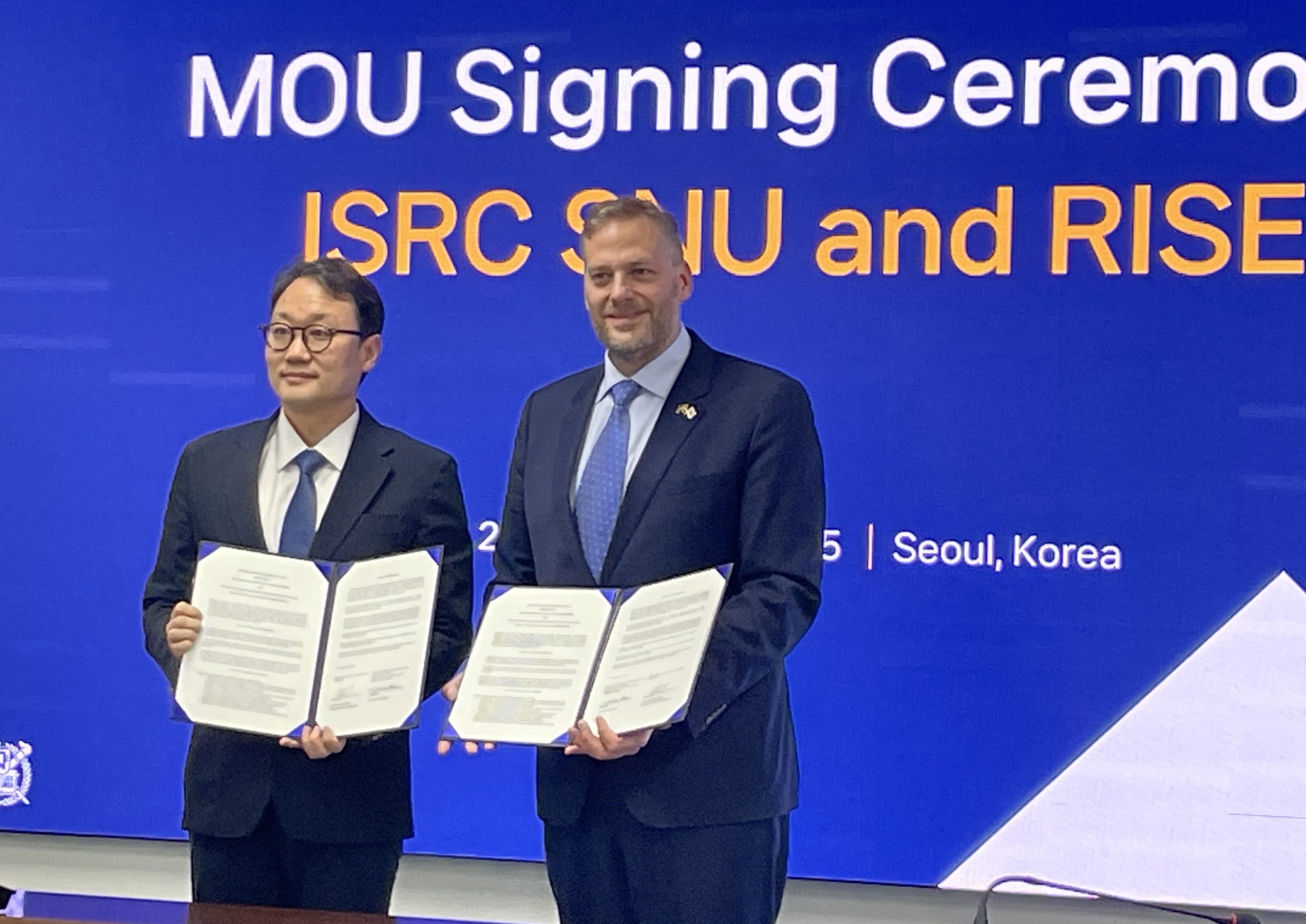
Björn Samel, Head of Smart Hardware and Vice President at RISE said, “Through our collaboration with Seoul National University, we will combine our research and development strengths to make a tangible contribution to solving the core challenges of future electrified industries.”
Professor Jae-Ha Kim, Director of Operations at the Inter-University Semiconductor Research Center (ISRC) at Seoul National University, stated, “We expect that this collaboration will lead to even broader partnerships in the future.”
Professor Sang-Won Yoon from the Department of Electrical and Computer Engineering at Seoul National University added, “We look forward to close cooperation through this opportunity and hope to expand our collaboration beyond compound semiconductors into various semiconductor fields.”
With the expansion of EV adoption, the integration of renewable energy, the power challenges of hyperscale data centers, and the electrification trend across all industries, the strategic importance of power semiconductors has become greater than ever. SiC- and GaN-based power devices, known for reducing power losses and maximizing system efficiency, are now recognized as essential infrastructure for the electrification era and a key technology shaping national and industrial competitiveness.
This collaboration not only connects the research ecosystems of the two institutions and the two countries but also aligns with the Korean government’s Hyper-Innovation Economy initiative, particularly in the development of power semiconductor materials and components. The partnership is expected to generate significant impact across the electrification industry and accelerate advancements in next-generation power semiconductor technologies.
Media contact:
Niklas Jälevik, Head of Media Relations, niklas.jalevik@ri.se