Brain Research Can Transform the Way We Build Cities
23 April 2026, 05:46
A new pilot project will show how brain research can contribute to creating cities that support public health. By integrating knowledge about the brain into urban planning, researchers aim to develop environments that reduce stress and enhance wellbeing. Fridhemsplan in Stockholm, Sweden, is the first living laboratory — with the goal of providing urban planners with scientific support to design urban environments that promote health.
“This is the first time brain research is being integrated into Swedish urban planning. We aim to provide decision-makers and urban planners with scientific support to integrate health considerations into their planning processes. Despite extensive research on the psychological and physiological effects of environments, there has been a lack of structured methods to identify and integrate knowledge about how the built environment affects the people who inhabit it,” says Camilla Berggren-Tarrodi, Project Manager for Architecture and Urban Development at RISE Research Institutes of Sweden.
Neuroarchitecture and Neurodesign Can Contribute to Public Health
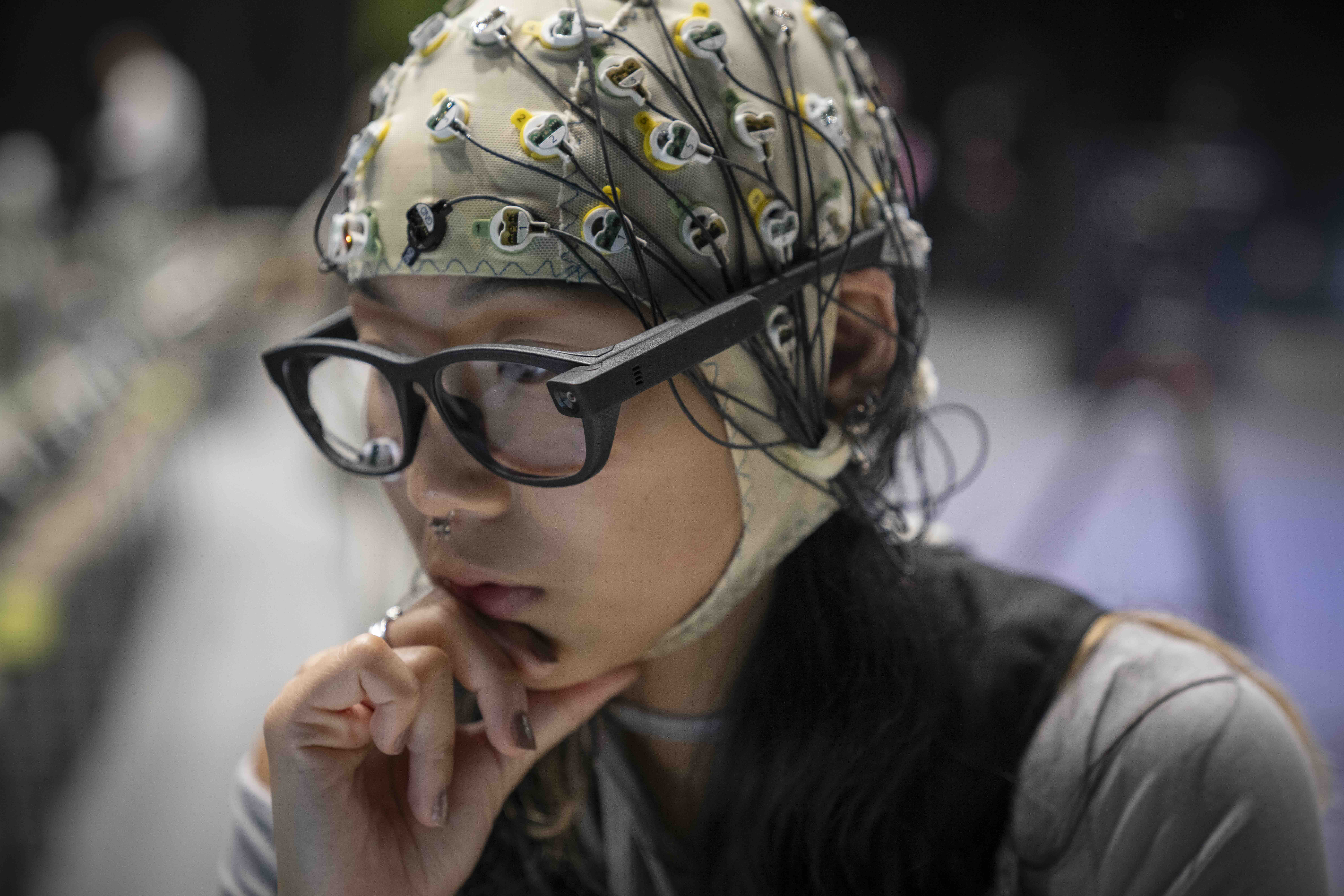
Research shows that urban environments affect stress levels, immune systems, cognition, and psychological wellbeing — yet this knowledge is rarely reflected in how cities are designed. The research field of neuroarchitecture and neurodesign combines neuroscience, AI, architecture, and design to create environments that benefit health and wellbeing. Studies demonstrate improved focus, reduced stress, and reduced inflammation levels, among other benefits.
“We are exploring how to build cities that are not only functional but also promote mental health and sustainable quality of life. When neuroscience is integrated into urban planning, we take a step towards an entirely new standard for how future cities can be designed,” says Camilla Berggren-Tarrodi.
Fridhemsplan, in Central Stockholm, Will Become a Test Bed
The methodology will be tested in urban outdoor environments, starting with the city block Väktaren at Fridhemsplan. Fridhemsplan is a busy traffic junction in central Stockholm, characterised by its fast pace and numerous visual stimuli — an environment with several potential stress factors, but also great potential as a meeting place. The aim is to create a knowledge base that can be used broadly in future urban development.
“We are facing a unique opportunity to create cities that are not only functional but actively strengthen people’s health and quality of life. By translating research into practice — with test beds in urban environments — we are taking a step towards future urban development,” says Helena Ågren, Business Manager for Urban Development at Alecta Fastigheter.
The project employs neuroarchitectural principles that consider light, sound, scent, greenery, water, movement patterns, social interaction, and spatial form. It uses the NeuroDesign/NeuroArchitecture Index (NDIX), a research-based tool developed by researchers at RISE and University College London (UCL).
NDIX enables measurement of how design choices affect the brain and health — from stress levels to cognitive recovery — and translates the results into practical recommendations. The index is built on advanced techniques, including fMRI, EEG, and biomarkers. The tool has previously been applied in urban development projects in London and in office spaces in Stockholm.
“We conduct a site analysis and apply the index as a predictive model where we identify how different design choices affect performance, wellbeing, and mental recovery. In this way, we can provide recommendations that support planning processes when these sites are being redeveloped to promote health and wellbeing,” says Isabelle Sjövall, Neuroscientist and Scientific Leader for Neurodesign and Cognitive Innovation at RISE.
Scientific Tools for the Future of Urban Planning
The new index enables more accurate and better-informed decisions in urban planning and the development of built environments through data-driven and evidence-based decision support.
“The results will serve as concrete tools for municipalities, urban planners, property developers, architects, and decision-makers. The goal is to create a new norm where urban planning is based on scientific insights about people’s wellbeing — for cities that strengthen both people and communities,” says Camilla Berggren-Tarrodi.
Project Partners
The project, Neuroarchitecture for Mental Health and Wellbeing in an Urban Context, is a collaboration between RISE Research Institutes of Sweden, UCL, Alecta Fastigheter and Nordr with support from a reference group including Boverket, Hjärnfonden, the City of Stockholm, and Stockholm Business Region. The research is funded by Formas.
Read More:
Neuroarchitecture for Mental Health and Wellbeing in an Urban Context
https://www.ri.se/en/expertise-areas/projects/neuroarchitecture-for-mental-health-and-well-being-in-an-urban-context
Neurodesign and Neuroarchitecture Index measures spaces’ health impact
https://www.ri.se/en/neurodesign-and-neuroarchitecture-index-measures-spaces-health-impact-0
What is Neuroarchitecture and Neurodesign?
https://www.ri.se/en/urban-development/architecture-and-planning/neuroarchitecture-and-neurodesign/offer
Contact:
Camilla Berggren-Tarrodi, project leader RISE
camilla.berggren-tarrodi@ri.se
Phone: +46 73 620 38 21